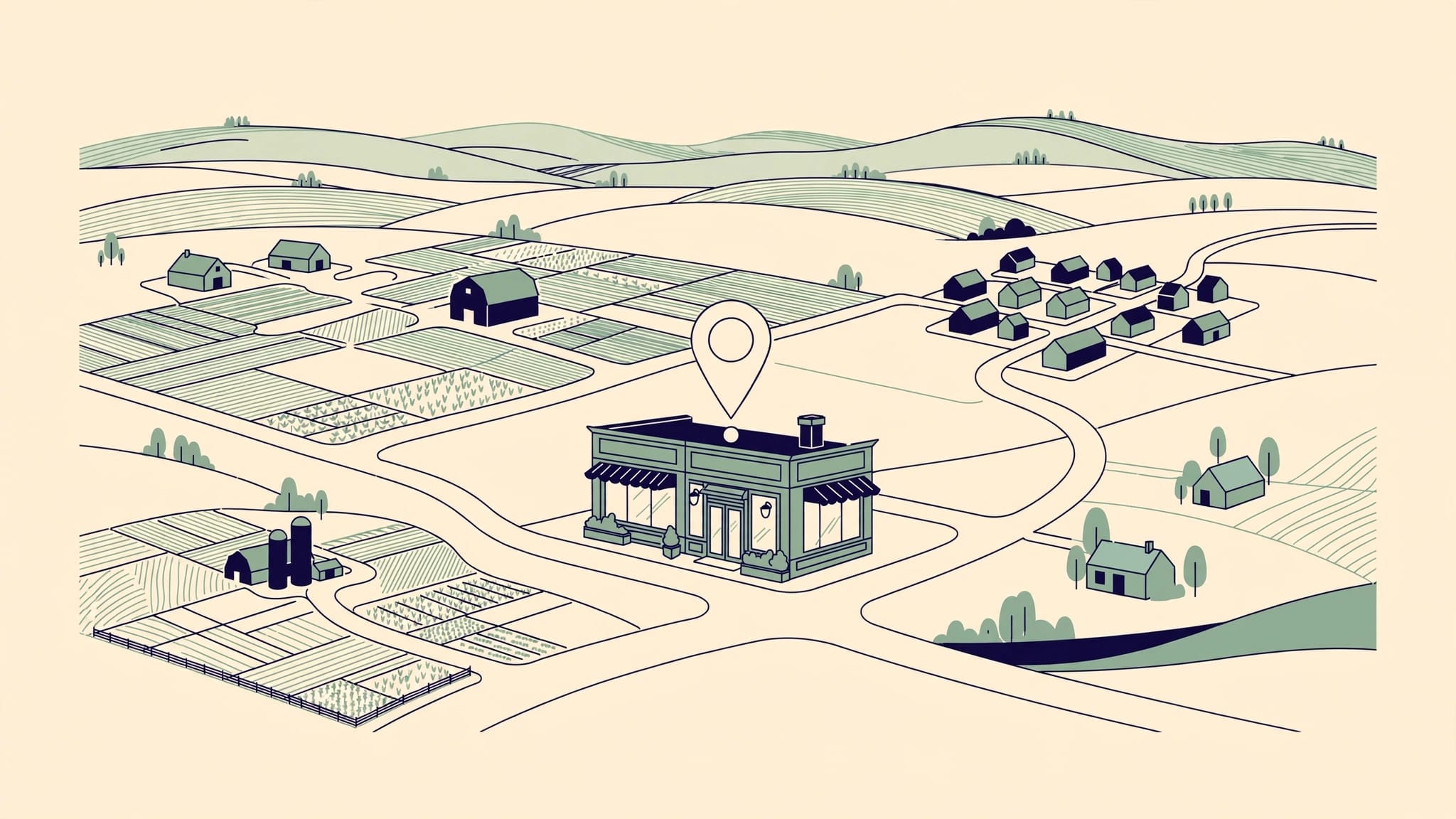
You’re driving at 65 mph, and instead of typing into your phone, you start a hands-free conversation with Google Maps, posing a complex question like, Find me a roofer in Maui who doesn’t overcharge and can come out this week. A few seconds later, the voice guidance delivers one name with driving directions.
That simple moment creates a billion-dollar question for local businesses. Why did that roofer get picked, while dozens of others were ignored? The answer sits inside Google Ask Maps, your Google Business Profile, and a new kind of local SEO powered by Google Ask Maps that many owners still haven’t prepared for.
Key Takeaways
- Ask Maps uses Gemini AI in Google Maps to deliver one top local business recommendation from complex voice queries, making a strong Google Business Profile essential for visibility.
- Optimization focuses on three pillars: rich profile details (categories, hours, services), natural-language review text, and fresh visual content like photos and posts.
- Small businesses risk ‘AI guilt’ and lost customers if ignored by AI; agencies scale fixes with automation tools like GoHighLevel for audits, review replies, and scheduled posts.
- Traditional local SEO shifts to feeding trustworthy data to AI, with prospecting targeting Google Ads users and audits revealing gaps like outdated photos or weak reputation.
- Future trust in recommendations may challenge over-engineered content, but clean, current profiles win short-term in this conversational search era.
The new AI gatekeeper is already shaping local search
Google rolled out Ask Maps with little fanfare, adding the Gemini models into Google Maps and the navigation experience. That matters because search behavior changes fast when the easier conversational experience saves time.
In the old model, people had to stop, type, scroll, compare, and guess. Now they can ask a full question out loud, and the system pulls one direct answer from reviews, listings, and profile data. These are often real-world questions, which means the user is close to spending money.
Most people, including many business owners, don’t see the process behind that answer:
- They don’t know how the AI filters local options.
- They don’t know which details the AI trusts.
- They don’t know why one business wins and another disappears.
A short comparison makes the shift clear:
| Search style | Old Google search | Ask Maps |
|---|---|---|
| User action | Type a short keyword | Speak a full question |
| Work required | Read listings and reviews | Receive a summarized answer |
| Business impact | Page-one ranking helps | Top one or two results matter most |
Convenience usually wins. Once people learn they can ask, “Does this cafe have outlets for a laptop?” and get an instant answer on Android and iOS, many won’t go back to manual searching.
In AI-driven local search, being third often feels the same as being invisible.
Why small businesses feel “AI guilt”
This shift hits local owners where it hurts most, at the phone line and the front door. A 20-year-old pool cleaning business can do solid work, have loyal customers, and still lose calls if the AI never mentions it during local exploration.
That fear has a name in the discussion around Ask Maps: AI guilt. Owners hear about AI every day. They know competitors are testing new tools. Yet they still have to run crews, answer customers, and manage payroll. Many don’t know how to make a brick-and-mortar business readable to a conversational search tool.
Marketers are building strong recurring revenue around that gap. One example shared was an agency collecting $15,900 in a single month for local AI search work. Another example featured Brandon landing a recurring deal worth $4,997 per month for the same type of service.
Part of that demand comes from sales pressure, but the fear is not fake. If Ask Maps gives only one or two personalized recommendations, a business that lacks visibility in Google Maps can lose customers before the customer ever sees its name. That is why this matters for roofers, pool cleaners, cafes, and service firms that once depended on word of mouth, where customers turn plans into action.
This is also why many owners are now reviewing more than SEO alone. For some, the conversation includes social media posting, review management, voice receptionists, and chat bots that support customer response times.
Ask Maps optimization starts with your Google Business Profile
A major misconception keeps showing up in local marketing. Owners assume there is a separate AI trick, or a hidden setting, that makes a business appear in Gemini or Ask Maps.
The discussion makes the opposite point. If you want local AI visibility, you first need a strong, active Google Business Profile in Google Maps. If the profile is missing, weak, or outdated, the AI has little reason to trust your business.
A useful analogy compares Gemini to a skilled librarian who cannot see the street outside. It can answer well, but it can only work from the records in one filing cabinet. In local search, that filing cabinet is the business profile, its reviews, and the supporting media tied to it.
There is a technical reason for this. Large language models can make things up. To avoid sending someone to a fake cafe or a dead storefront, the AI leans on verified and structured data as its ground truth.
The optimization playbook described around Ask Maps centers on three pillars:
| Pillar | What Google reads | Why it matters |
|---|---|---|
| Rich profile details | Categories, hours, services, access info | Helps match detailed spoken searches |
| Review text | Customer wording, not only star ratings | Reveals facts the owner may not list |
| Visual content | Photos and posts | Shows the business is active and current |
Rich profile details go far beyond name, phone, and address. Holiday hours, accessibility options, service descriptions, and category choices help the AI generate a customized map to answer questions such as “Find me a cafe open after 8 p.m. with wheelchair access.”
Review text is even more revealing. If a customer writes, Great coffee, but there are no outlets for a laptop, the AI can use that natural language detail later and filter the cafe out for work-friendly searches. Insider tips from community contributors reveal facts the owner may not list. In other words, reviews shape local SEO for humans and AI at the same time.
Photos also matter because they show the business is active. Google can read visual cues from photos, posts, Street View imagery, and community contributor uploads to build spatial understanding of the location and support the rest of the listing.
Agencies are scaling this work with automation
Doing this for one business takes time. Doing it for 20 or 50 clients by hand would drain most agencies. That is why the software stack matters so much in this model.
The platform highlighted most often was GoHighLevel. In this setup, the software connects to a client’s profile, checks for missing information, and scores the Google Maps listing. A business might show a 14 out of 16, for example, because its description is too short, its hours need confirmation, photos are older than 30 days, or it lacks specifics on restaurant reservations, traffic conditions, or parking help. That simple scoring system helps an agency show progress in a way clients can see.
Review management also gets automated. The system can draft replies to real reviews based on what the customer said. If someone praises a pool company for being prompt, the reply can thank them for mentioning prompt service. To make it feel natural, the response can wait a few hours before publishing.
Another tactic is the “reputation blast.” Past customers from Stripe or Square can be imported, then the system sends a text or email with a direct review link. That removes friction and helps generate fresh reviews with useful detail.
The same setup can create ongoing posts for a profile and for social media. In the example discussed, AI drafted multiple caption options, generated an image, and scheduled posts weeks in advance. That keeps a profile active with real-time updates without daily manual work.
For businesses trying to sort out this setup, a No-cost discovery call is a practical way to review where your current profile stands. If you want to test the software behind this workflow, EarningCoach Marketing also shares a GoHighLevel 14-day trial request.
Frequently Asked Questions
What is Google Ask Maps?
Ask Maps integrates Gemini AI into Google Maps for hands-free, conversational local searches, like finding a roofer in Maui who won’t overcharge and can start this week. It pulls one direct answer from business profiles, reviews, and photos instead of listing many options. This shift prioritizes convenience, changing how users discover and choose local services.
Why does one business win in Ask Maps results?
The AI selects based on verified data from Google Business Profiles, prioritizing rich details, relevant review text, and current visuals that match the user’s spoken question. Weak or outdated profiles get filtered out, as the AI trusts structured info to avoid hallucinations. Top one or two spots matter most, making others feel invisible.
How do I optimize for Ask Maps?
Start with a complete Google Business Profile: add detailed categories, hours, services, accessibility info, plus fresh photos and posts. Encourage detailed reviews that reveal unique facts, and use tools to automate replies and reputation blasts. This makes your business ‘readable’ to AI for real-world queries.
Can agencies help with Ask Maps SEO?
Yes, agencies use platforms like GoHighLevel to audit profiles (e.g., scoring 14/16), automate review responses, generate posts, and prospect via Gemini audits of Google Ads users. This scales work for multiple clients, turning AI readiness into recurring revenue like $4,997/month deals. Owners can start with a no-cost discovery call to check their profile.
What happens if I ignore Ask Maps optimization?
Your business may lose calls and foot traffic to AI-picked competitors, even with loyal customers and solid work, due to ‘AI guilt’ from lacking visibility. Over time, engineered content could erode trust, but currently, unoptimized profiles vanish from conversational searches. Proactive steps ensure you stay in the one-spot race.
The business model is strong, but the bigger question remains
The prospecting side is just as systemized. Marketers can use Gemini capabilities to find local businesses already running Google Ads. That tells them two useful things right away: the business has a budget, and it is already willing to pay for visibility.
From there, Gemini models power audit tools that spot weak listings. One case shown, Handy Cool Cleaners, scored 44 out of 100 because of old photos, weak reputation signals, and missing hours. That kind of audit gives a cold email real context. A pitch like “I noticed you’re not showing up in new AI responses. Want help fixing that?” speaks to a problem the owner may have sensed but could not name.
This has created a new middle layer in local marketing. Agencies are selling local SEO work that helps businesses feed better data into Google’s AI systems. That work can be useful, and it can also become an echo chamber. AI writes business posts, AI drafts review replies, and then AI reads that content back to consumers.
The next fight in local search may center on trust, not only ranking.
That concern should not be ignored. If recommendations rely too heavily on engineered posts and aggressively requested five-star reviews, consumers may start to question how authentic those recommendations are, especially as Immersive Navigation introduces more detailed 3D views.
The short-term reality is still clear. Ask Maps is changing how people find local businesses, and local visibility now depends on clean, current, trustworthy business data more than many owners realize. These tools offer broader utility too, like suggesting alternate routes on a digital map through Immersive Navigation, all available on Android and iOS.
If you want help reviewing your profile, audit gaps, or local AI readiness, you can Schedule Call. For ongoing discussion around these changes, the Accountability for Success Mastermind is another place to keep up.