To improve your WordPress SEO and AI content optimization, focus on using relevant keywords
naturally, optimizing meta titles and descriptions, and ensuring fast page load times.
Additionally, enhance content readability and structure with clear headings, and leverage AI
tools to generate unique, engaging content that meets user intent. Regularly update your site
and monitor SEO performance for continuous improvement.
Qualifying leads using AI is no longer just a trend; it is a competitive necessity for businesses looking to convert inquiries into revenue without overwhelming their staff. By automating the screening process, you can ensure your sales team spends their time on high-intent prospects while never missing an opportunity to grow your business. But can an AI receptionist actually tell the difference between a high-value prospect and a dead-end inquiry?
For many businesses, that is the question that matters most before they invest in new software. Modern AI receptionists, powered by sophisticated AI agents, do far more than simply answer calls. They can act as a diligent front-line filter, asking custom screening questions, capturing contact details, judging urgency, and routing top-tier prospects directly to your sales team or booking calendar. That capability is critical if you are trying to save manual labor hours, stop missing leads after hours, and significantly improve the quality of your inbound opportunities.
If you are currently comparing AI tools with the cost of hiring more front-desk personnel, the real issue is simple: will this system streamline your lead generation process to help you catch better leads faster?
Key Takeaways
- AI receptionists qualify leads effectively by asking custom screening questions, scoring intent, tagging fits, and routing hot prospects directly to sales or calendars, saving staff time on low-value inquiries.
- They excel in high-volume, repeatable intake like after-hours calls, missed leads, and simple screening for businesses such as contractors, law firms, and med spas, boosting booked appointments and response speed.
- Success depends on clear setup, custom logic, CRM sync, and human handoff for complex cases; start with pilots tracking qualified leads, close rates, and hours saved.
- Faster responses under 30 seconds improve conversions, capture revenue from existing demand, and provide cleaner data without adding hires.
What lead qualification looks like when an AI receptionist handles the first conversation
Automated lead qualification means finding out whether an inquiry is worth your team’s time. In plain English, it answers a few basic questions: What does this person need, are they a fit, and should someone follow up right away?
An AI receptionist can handle that first screening by phone, text, or web chat. Instead of taking a vague message, it follows a set path using natural language processing to handle conversation paths naturally. It asks what service the person wants, where they are located, how soon they need help, and whether they are ready to move forward. It can also capture budget range, insurance details, or project size if those details matter to your sales process.
That makes a big difference in day-to-day operations. Your team doesn’t have to sort through every caller manually. The system can separate serious buyers from bad fits, spam, price shoppers, or people outside your service area.
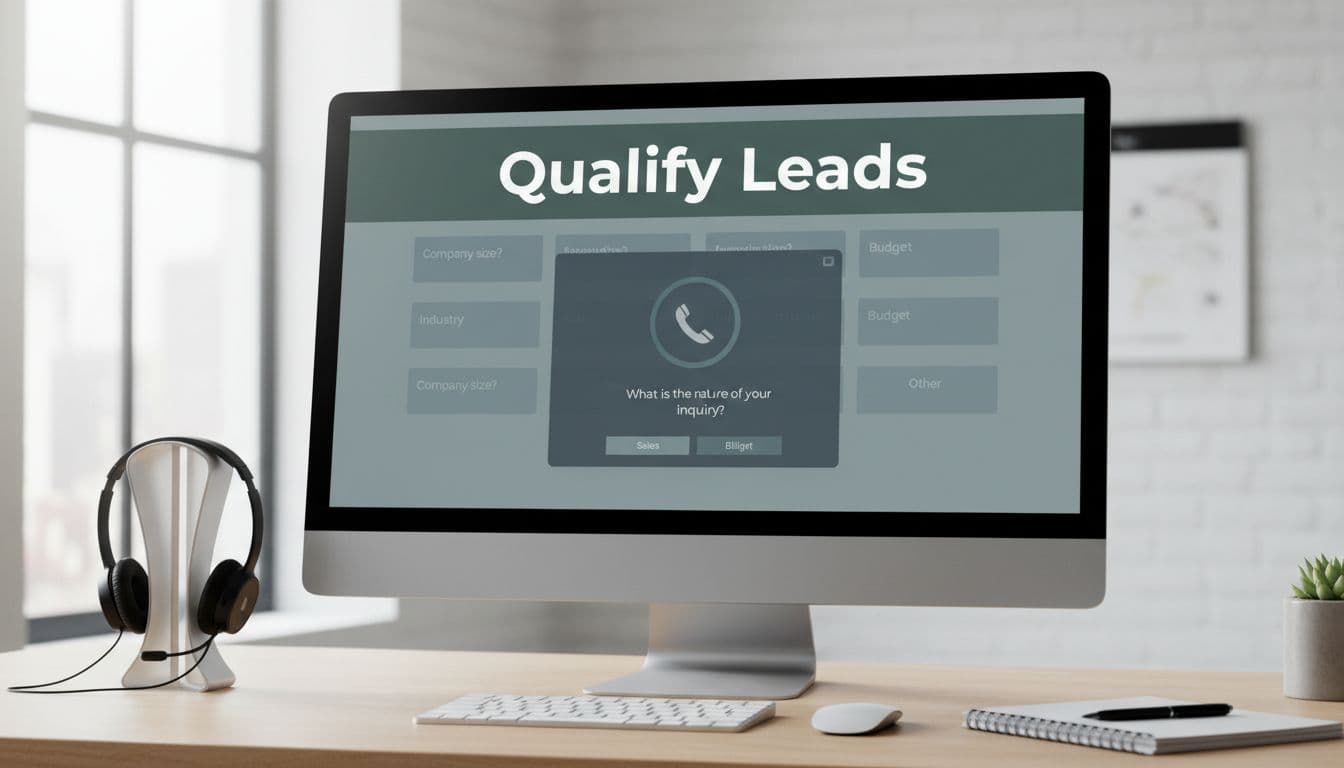
For businesses focused on qualifying leads with AI, the goal isn’t to sound impressive. The goal is to make the first touch useful. A good AI receptionist gives your staff cleaner information and clearer next steps.
The questions an AI receptionist can ask to spot a good fit
The best systems ask short, relevant questions. They don’t interrogate people. They guide the conversation and gather what your team needs to act.
A contractor might ask about the type of job, zip code, and how soon work is needed. A law firm may ask what kind of case the caller has, whether there is an upcoming court date, and where the matter happened. A med spa might ask about treatment interest and preferred appointment times. An agency could screen for monthly budget, service type, and decision-maker status.
This is the type of information an AI receptionist can collect early, checking intent signals, ideal customer profile, and firmographic data to judge fit:
| Qualification detail | Why it matters |
|---|---|
| Service needed | Confirms the inquiry matches your offer |
| Location | Filters out leads outside your area |
| Timeline | Identifies urgent and ready-to-buy prospects |
| Budget or scope | Helps judge fit and sales priority |
| Decision readiness | Shows whether sales should engage now |
The takeaway is simple: the better the questions, the better the leads your team sees.
How AI scores, tags, and routes leads to the right next step
Lead scoring models sound technical, but the idea is simple. The system uses predictive lead scoring to give more weight to answers that suggest a strong match. A person who needs help this week, lives in your service area, and asks for a core service may score as “hot,” creating sales qualified leads. Someone who is browsing for future plans may land in “warm,” generating marketing qualified leads. A poor-fit inquiry gets marked low priority.
Then lead routing kicks in. Hot leads can book directly into a calendar or get transferred to a human rep. Warm leads might receive a text follow-up. Low-priority leads can go into a nurture sequence or stay in the CRM for later review.
A smart AI receptionist doesn’t stop at intake. It decides what should happen next.
That routing piece is where many businesses see the real value. When the AI syncs notes, tags, and call outcomes into your CRM systems, your sales team starts with context instead of guesswork.
Where AI receptionists do the best job, and where a human still matters
AI receptionists work best when the first conversation follows a repeatable pattern. If most callers ask similar questions and your team uses the same intake flow over and over, AI powered by machine learning algorithms that improve over time can handle a large share of that work well.
This is especially true for after-hours coverage, missed-call recovery, overflow periods, and simple screening. Recent 2026 reports from Scheduling Kit, Resonate, and CloudTalk describe strong gains in booked appointments, faster response, and lower missed-call rates when businesses answer inbound leads right away. Some reports also point to high acceptance of AI for quick answers, especially when the alternative is voicemail or a long hold.
Still, there are limits. A complex legal case, an upset patient, or a high-stakes sales conversation may need sales reps. AI can gather facts and interpret buyer intent from caller behavior, but emotional tone and judgment still matter in situations where trust is fragile or the conversation goes off script.
Best-fit use cases for businesses that get lots of calls and web inquiries
Businesses with high inbound volume tend to benefit first. That includes contractors, home service companies, gyms, agencies, med spas, legal offices, and multi-location businesses.
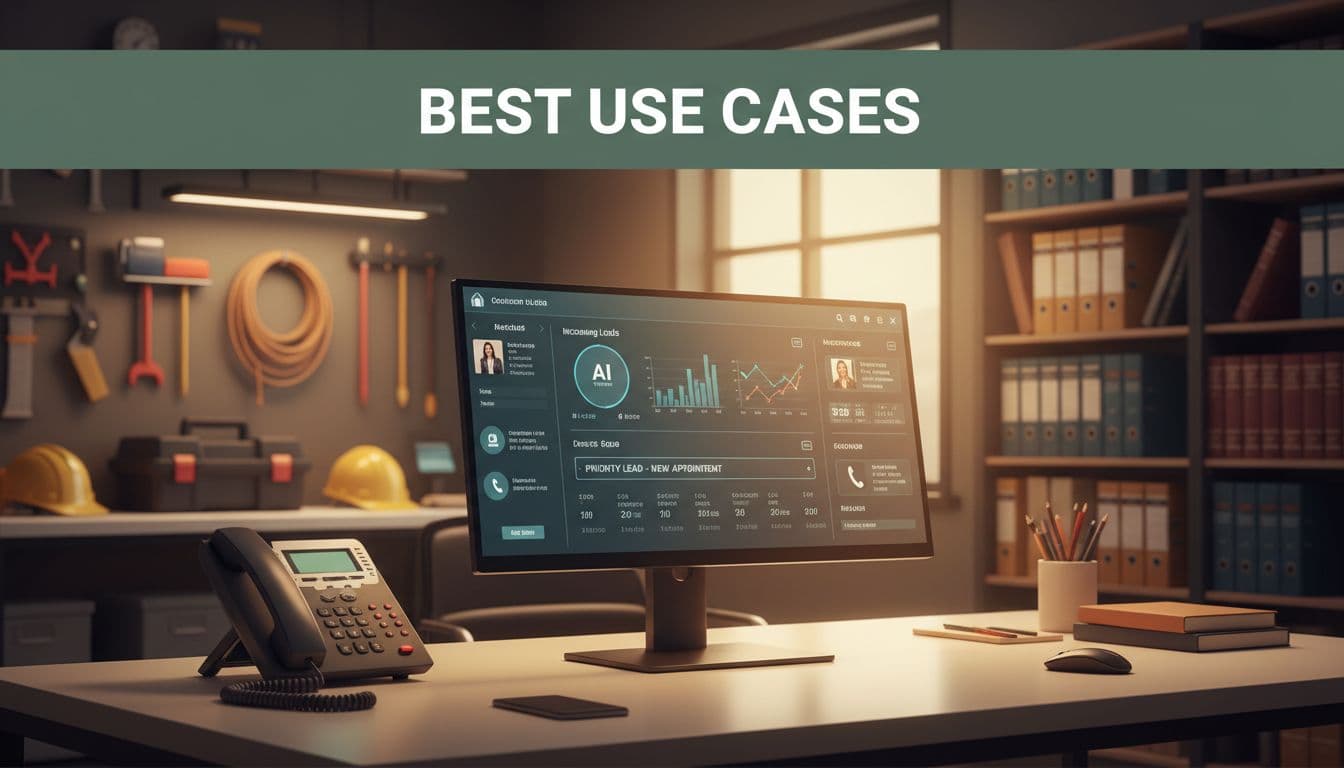
Gyms often need fast replies for trials, memberships, and class questions. Contractors lose leads when calls come in during jobs. Law firms spend time filtering cases that don’t match their practice. Finance and service firms also benefit when intake rules are clear and response speed matters.
In these settings, AI helps because the first step is often similar. The system can gather facts, route urgency, and book the next action to boost lead quality without waiting for office staff to become available.
The limits of AI lead qualification that buyers should know before they invest
An AI receptionist is only as good as the setup behind it. Weak scripts produce weak results. Poor CRM mapping creates messy data. Bad handoff rules leave strong leads waiting.
Some callers also ask unusual questions. Others explain their situation in a long, messy way. If the system can’t recover gracefully or interpret buyer intent from unusual caller behavior, the experience drops fast.
That’s why buyers should look past demos. A polished sample conversation means little if the qualification flow doesn’t match your real sales process.
Bad AI intake usually comes from bad design, not bad technology.
The business case for qualifying leads with AI
Most companies adopt AI receptionists for one reason: they want fewer missed opportunities, especially in B2B lead generation. When calls go to voicemail, web forms sit untouched, or staff get buried in admin, revenue slips through the cracks. Qualifying leads using AI is the most effective way to ensure every inbound inquiry is captured, screened, and prioritized without requiring a massive increase in overhead.
How AI can improve speed to lead and cut lost opportunities
Speed matters because leads cool off fast. A prospect who doesn’t hear back may call the next company on the list. That’s common in home services, legal, healthcare, and local service categories.
AI helps by answering on the first ring or replying right after a form comes in. That means after-hours leads, lunch-break calls, and overflow inquiries don’t disappear. Some 2026 reports tie sub-30-second response times to stronger ROI and much higher conversion rates. Those numbers vary by industry, but the direction is clear: faster follow-up wins more business and keeps the sales pipeline full.
For many teams, the biggest gain isn’t magic. It’s coverage. You capture leads you were already paying to generate, strengthening the lead generation process.
What to measure if you want proof before a full rollout
You don’t need to guess whether the system works. Run a pilot and compare it with your current process, using historical customer data to gain revenue intelligence on performance shifts.
Track missed-call rate, response time, booked appointments, qualified lead rate, close rate, and staff hours saved. If the AI collects cleaner intake notes, that’s another gain worth measuring; it also aids lead nurturing by ensuring no prospect is ignored. Compare two or four weeks before launch against the same period after launch.
A short pilot often shows whether AI is helping sales focus on stronger prospects or simply creating more noise, while optimizing the lead generation process overall.
How to choose an AI receptionist that can qualify leads well
The right platform should fit your intake process, not force you into a generic script. Start with the basics: can it ask custom questions, perform predictive lead scoring, sync with your CRM systems via workflow automation, book into your calendar, send personalized outreach through text follow-ups, and hand off to a person without friction?
Reporting also matters. If you cannot see which sources produce qualified leads, which scripts work, and where calls drop off, you cannot improve automated lead qualification.
Questions to ask before you buy any AI receptionist platform
Before you commit, ask direct questions that reveal whether the product can handle real intake:
- Can it follow custom qualification logic for our business?
- Does it leverage predictive analytics or behavioral data to refine intake questions?
- Does it sync notes, tags, and outcomes into our CRM systems correctly?
- Can it book straight into our team’s calendar?
- How does the handoff work when a caller needs a human now?
- How quickly can we update scripts when offers or policies change?
These questions help you avoid buying a tool that sounds good in a demo but struggles with live leads.
Start with a narrow use case, then expand once the system proves itself
Start small. Use the AI for missed calls, after-hours inquiries, or one intake flow first. That gives you cleaner data and fewer moving parts.
Once results look good, expand to more services, more locations, or more traffic sources. This phased approach reduces risk and makes script changes easier. If you want to talk through fit, setup, or rollout strategy, book a No-cost discovery call. We are happy to provide you with a free 7-Day Trial to experience your own personal AI Voice Receptionist for your business.
Frequently Asked Questions
Can an AI receptionist truly qualify leads like a human?
Yes, modern AI receptionists use natural language processing to ask targeted questions on service needs, location, timeline, budget, and readiness, then score and route leads based on fit. They handle phone, text, or chat naturally, separating hot prospects from low-priority ones without manual sorting. This front-line filtering ensures sales teams focus on high-intent opportunities.
What are the best use cases for AI lead qualification?
AI shines for high-inbound volume businesses like contractors, gyms, law firms, and med spas with repeatable intake patterns, especially after-hours, overflow, or missed calls. It gathers facts, books appointments, and nurtures warm leads, improving speed to lead and reducing lost revenue. Complex emotional cases still need human intervention for trust and nuance.
Conclusion
Yes, an AI receptionist can qualify leads well, but only when your intake process is clear and the handoff rules are solid. It works best as a front-line filter that captures details, ranks urgency, and moves strong prospects to the right next step.
For many businesses, that’s enough to save time, reduce missed revenue, and boost lead quality. Still, AI lead qualification works best with human backup for complex or sensitive conversations, ensuring a positive customer experience through a seamless journey for the caller.
If your team loses leads because calls go unanswered or intake takes too much staff time, this kind of system is worth a serious look.