
Most businesses asking this want a number. Google doesn’t give one, and neither should anyone else.
The better answer is simpler and more useful: you need enough recent, credible reviews to be competitive in your market, while your Google Business Profile, website, and local SEO are strong enough to support them. A business with 40 fresh reviews can outrank one with 300 old ones if proximity, relevance, and prominence are better.
That’s where the real work starts on proximity, relevance, and prominence, the key pillars that support your review strategy.
Key Takeaways
- There’s no magic number of Google reviews for local ranking—match and beat your top local competitors on total count, recency, and consistency while building a strong Google Business Profile foundation.
- Reviews boost prominence and relevance but work best alongside complete profiles, accurate hours, optimized websites, consistent citations, and engagement signals like calls and directions.
- Benchmark winners in your market: document review counts, 90-day activity, ratings, responses, and profile setup for your key search terms to set realistic targets.
- Prioritize recent, detailed, authentic reviews over sheer volume—steady velocity and owner responses signal activity and trust to Google’s algorithm.
- Build reviews ethically: ask satisfied customers 24-48 hours post-service via direct links, respond promptly, track monthly, and avoid fakes or gating to prevent penalties.
The short answer: match your market, not a magic number
When people ask about google reviews local ranking, they’re often looking for a shortcut. There isn’t one. Review count matters, but the right target depends on your category, your city, and the businesses already showing in the Map Pack of local search results.
A dentist in a smaller town might become competitive with 25 to 50 strong reviews. A roofer in a large suburb may need 80 to 150. A personal injury firm in a major metro could be staring at 300 plus. Same platform, different market.
There isn’t a universal review target. The right goal is to match the top local competitors, then beat them on recency and consistency.
This is why chasing a random review number can waste time. If the top three businesses near you average 62 reviews, getting to 40 is progress, but it may not be enough. If they average 18, hitting 30 could put you in a strong spot, assuming your other signals are in good shape.
Star rating matters too, but not in isolation. A 4.8 with steady recent activity usually looks healthier than a perfect 5.0 with only a handful of reviews. Google’s systems want signs of real customer activity, not a polished but inactive profile.
So yes, more reviews can help. No, review count alone doesn’t decide who ranks. Even a business with no reviews yet can compete locally if the rest of its foundation is strong.
Why review count is only one of the local ranking factors
Google still leans on the same core ideas for local visibility: relevance, proximity, and prominence. In 2026, a practical fourth factor matters more than many owners expect: whether your business is open and your hours are accurate.
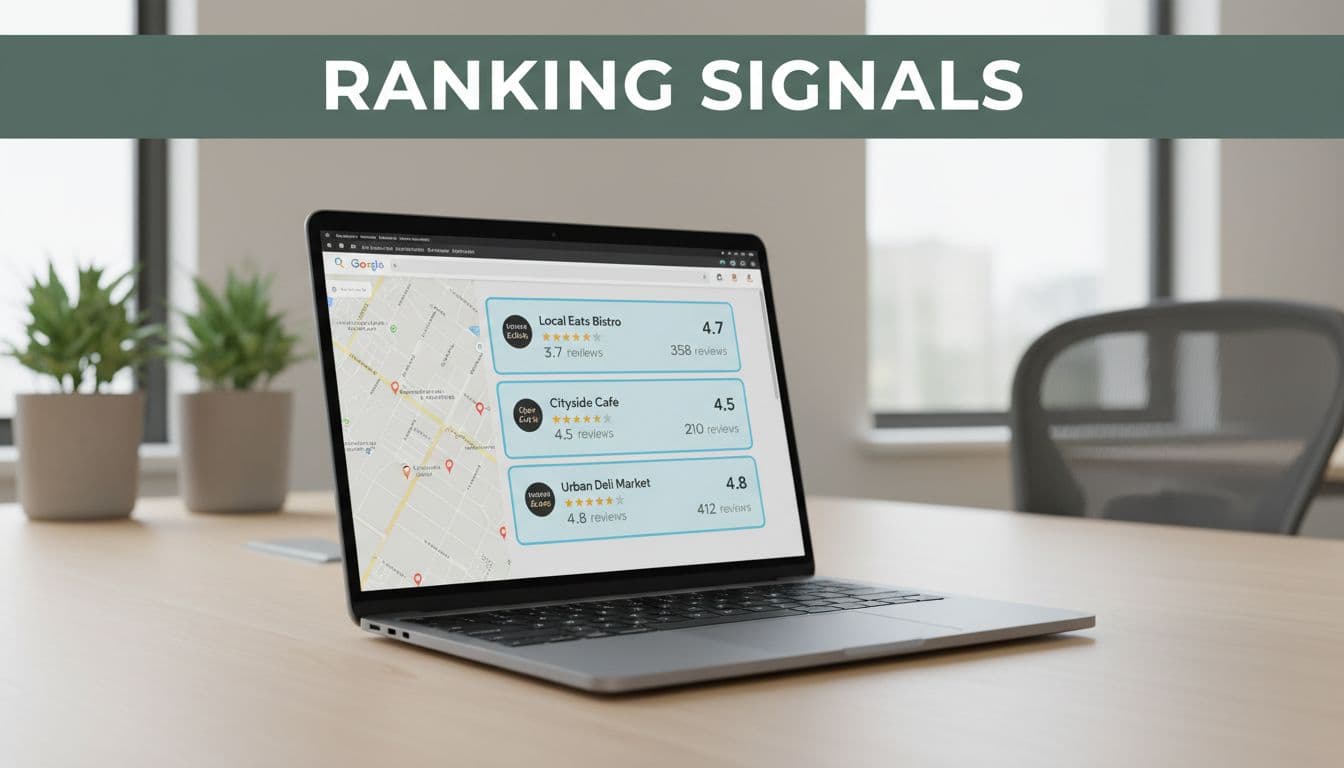
Reviews feed prominence. They also help relevance when customers mention services, neighborhoods, or real experiences. But if your Google Business Profile is incomplete, your primary GBP category is wrong, or your hours are outdated, review count won’t carry the whole load.
Recent analysis of weighted local SEO factors points in that direction. Review signals are strong, but profile completeness still sits near the top. Another piece of benchmark research on local rankings reinforces something many owners learn the hard way: proximity still explains a lot of who gets seen.
That means local rankings depend on more than public feedback. They also depend on:
- A complete and accurate Google Business Profile with consistent business information
- Strong on-page optimization on your local landing pages
- Consistent citations across directories
- Quality backlinks and local brand mentions
- Behavioral signals like calls, clicks, direction requests, and branded searches
Your website matters more than some local businesses think, especially when paired with quality backlinks. If the site is slow, thin, or unclear about location and services, Google has less confidence in your relevance. If your citations are inconsistent, that trust weakens further.
Even social media can play a supporting role. It usually won’t push map rankings on its own, but it can increase brand searches, customer familiarity, and repeat engagement. Those signals can help your broader local presence.
The main point is simple. Reviews are one of the strongest visible signals, but they work best when the rest of the local foundation, starting with your Google Business Profile, is solid.
How to benchmark the review gap in your market
If you want a real answer, start with competitor analysis: benchmark the businesses already winning. Don’t compare yourself to a national average. Compare yourself to the top results for your money terms in your service area.

Start with five to ten searches that matter. Use terms like “family dentist,” “roof repair,” or “estate planning attorney,” plus your city or neighborhood. Use a rank tracker or geogrid to check results from different parts of your service area, because proximity changes the pack.
Then document five things for each top-ranking profile:
- Total review count
- Review count from the last 90 days
- Average rating
- Owner response rate
- Category, services, and profile completeness
This gives you a usable benchmark. You’re not trying to copy every competitor. You’re trying to understand the gap between your current profile and the visible winners.
These ranges are useful starting points:
| Market type | Review count often seen in top results | What usually matters next |
|---|---|---|
| Small town, low competition | 15 to 40 | Recent reviews and solid profile setup |
| Mid-size suburb | 40 to 120 | Steady monthly review flow and strong website relevance |
| Dense metro, legal, medical, home service businesses | 150+ | High review velocity, strong local SEO, and strong engagement |
The takeaway is not “hit this number and you rank in localized organic search.” The takeaway is that context decides the target.
A good working goal is to reach the median review count of the top three, then improve recency. If they average 75 reviews and only two arrived in the last month, a profile with 75 and eight fresh reviews may become more competitive faster than you expect.
If you manage multiple locations or need help reading the gap by category and geography, a No-cost discovery call can save a lot of guesswork.
What kinds of reviews help the most in 2026
Not all reviews carry the same practical value. In 2026, count still matters, but recency, consistency, and review quality matter more than many businesses assume.
A profile with 200 reviews and no activity for six months can lose ground to a competitor with 80 reviews and a steady weekly flow. That’s why many local SEO teams now track review velocity, not only total count. The case for review recency is strong across competitive categories.
Review text also matters, serving as one of Google’s key ranking factors. When customers naturally mention services, staff, speed, or location details, Google gets better context about what your business does. That doesn’t mean you should script reviews. It means you should ask for honest feedback after a real result. Coverage of the local SEO impact of review content points to the same pattern.
Owner responses help too. They show activity, customer care, and profile management while boosting user engagement. A fast, professional response rate won’t fix weak rankings on its own, but it supports trust and conversion.
As AI-generated local answers become more common, detailed reviews can also help machines summarize what customers value. That gives your business better odds of improving AI search visibility, not only being displayed.
What should you avoid? Fake reviews, paid reviews, and review gating. Buying reviews can trigger removals, profile issues, or lasting credibility damage. Gating is risky too. If you ask happy customers to leave public reviews but route unhappy ones somewhere else, you’re creating policy and reputation problems at the same time.
How to build more reviews without creating risk
The best review strategy is boring in the best way. It is consistent, simple, and tied to real customer moments. Customers feel more comfortable leaving feedback for a business with a verified business profile, which builds the trust needed for honest responses.

Ask soon after a successful interaction. For most businesses, 24 to 48 hours is the sweet spot. The experience is fresh, and the customer still remembers who helped them.
Keep the process easy:
- Send a direct review link to your Google Business Profile by SMS or email.
- Ask every satisfied customer, not a hand-picked few.
- Train staff to make the ask part of the closeout process.
- Reply to reviews within a few days.
- Track review volume, recency, and response rate each month.
Technology can help if you use it well. Many teams now use ai follow-up tools, voice receptionists, and chat bots to confirm service completion and send a review request. That’s fine when the request is neutral and the customer can ignore it. Automation should support the process, not pressure the customer, and it works best when pulling accurate business information from your CRM.
A good system often includes your CRM, email, SMS, and website, all synced with reliable business information. Social media can reinforce the message, but it shouldn’t be your main review engine. Direct outreach works better because it reaches people right after the service experience.
Also, don’t hide from negative feedback. A fair complaint handled well can build credibility. Respond, fix what you can, and move on. Future customers read those responses.
If your team needs help building a clean review process that supports rankings, lead flow, and customer communication, you can Schedule Call.
Frequently Asked Questions
How many Google reviews do I really need to rank locally?
There’s no universal target—it depends on your market, category, and competitors. A small-town business might compete with 15-40 reviews, while dense metro services often need 150+. Benchmark the top three results for your key terms and aim to match their median count with better recency.
Do more reviews always mean better local rankings?
No, review count alone doesn’t decide rankings. Recent, consistent reviews with detailed text help prominence and relevance, but they need support from a complete Google Business Profile, strong website SEO, citations, and proximity. A profile with fresh activity often outranks one with high totals but no momentum.
How do I benchmark reviews against my competitors?
Search your top money terms plus location, note the top pack’s review counts, 90-day recency, ratings, response rates, and profile completeness. Use tools like rank trackers for accuracy across your service area. Set goals to hit the median, then exceed on velocity and quality.
What types of reviews help local rankings the most in 2026?
Recent reviews with natural details on services, locations, and experiences carry the most weight, signaling real activity and relevance. Owner responses boost engagement and trust, while steady monthly flow beats stagnant high counts. Avoid fakes, paid incentives, or gating to prevent removals and damage.
How can I get more reviews without risking my profile?
Ask every satisfied customer 24-48 hours after service via direct Google links sent by SMS/email, train staff to prompt naturally, and respond to all reviews promptly. Track volume and recency monthly, integrate with CRM for automation, but keep requests neutral. Handle negatives professionally to build credibility.
Conclusion
The number of reviews you need is not a universal target. It is a competitive target, shaped by your category, your location, and the businesses already winning nearby.
If you want better local visibility, focus on recent, authentic reviews first. These are crucial signals in Google’s local algorithm. Then back them up with a complete Google Business Profile, NAP consistency across citations, accurate hours, strong website SEO including optimized title tags and quality links from industry-relevant domains, and better customer engagement signals. That’s when reviews stop being a vanity metric and start helping local rank in a measurable way.