Author: Marvin Drobes, Owner of EarningCoach Marketing, Lakewood, NJ
Date: June 1, 2026
Multi-location service businesses must treat each branch as a unique local entity in 2026. Avoid duplicate content by creating authentic, location-specific pages and Google Business Profiles with tailored reviews and up-to-date info. Success depends on strong local proof, consistent data, personalized workflows, and branch-level performance tracking to build trust and drive genuine leads.
The biggest mistake multi-location service brands still make is treating every branch like a copy of the last one. Google does not rank duplicate content well in local search results, and customers rarely trust identical, generic websites.
In 2026, success is less about publishing more pages and more about proving each location is real, active, and useful in its own market. If you run HVAC, plumbing, dental, legal, roofing, pest control, or any service business with several branches, the win comes from tight systems and strong local proof. Focusing on a strategic approach to multi-location local SEO is the key to gaining visibility and building trust across every territory you serve.
Key Takeaways
- Prioritize Location Authenticity: Google prioritizes locations that demonstrate real-world activity, so avoid duplicate, thin, or generic content across your branch pages.
- Standardize Branch-Level Infrastructure: Each location requires its own dedicated landing page, unique Google Business Profile, and localized schema markup to effectively capture local search intent.
- Differentiate Your Setup: Storefronts and service-area businesses face different rules; optimize your profile and content based on whether customers actually visit your physical location.
- Implement Repeatable Workflows: Success at scale requires a central strategy that empowers branches to contribute local facts, photos, and testimonials, ensuring every profile remains fresh and trustworthy.
- Focus on Actionable Metrics: Move beyond “vanity” rankings by tracking actual lead quality, call volume, and conversion rates for each individual branch to accurately identify market growth.
Why branch-level local SEO matters more in 2026
A brand can be strong across a region and still underperform in local search city by city. That is because local intent happens at street level. When a user searches for a service, they are not looking for your corporate footprint; they are looking for the nearest trusted option that feels like a neighbor.
This shift has become more obvious as search results pull from maps, business profiles, reviews, service pages, and AI-generated answers. Google is comparing one branch against nearby competitors rather than grading the company as one blended entity. A weak location page, outdated hours, or a mixed-up phone number can drag down a specific branch even if the rest of the brand looks polished.
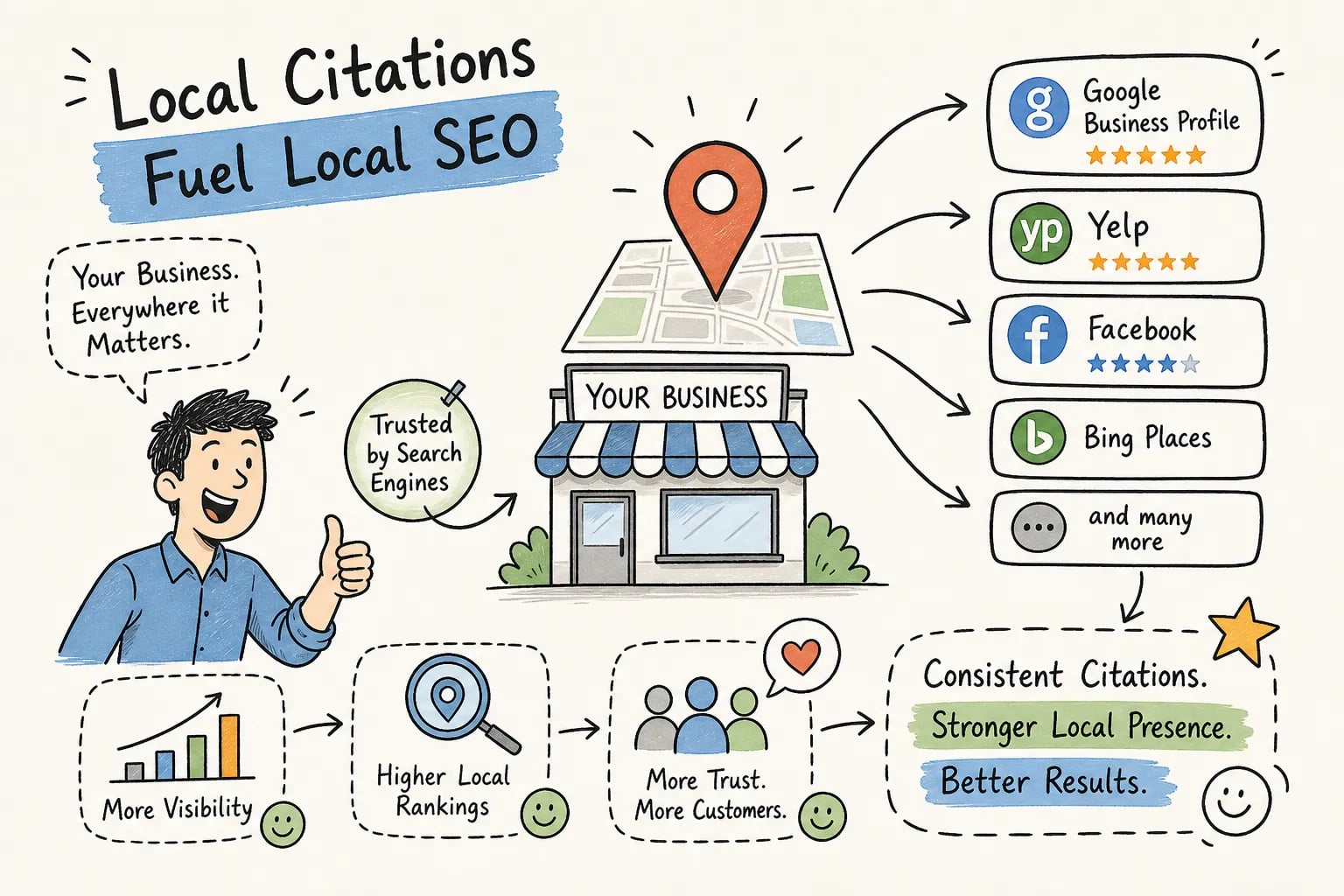
The practical takeaway is simple. Each location needs its own profile, its own reviews, and its own signals of trust. This shift toward using location-specific landing pages is essential for modern search visibility. A clean website structure, typically organized using subfolders, ensures that Google understands your geographic reach. This is consistent with Volume Nine’s 2026 look at local SEO and AI search, which points to a central truth: central strategy works best when each branch operates like a real local asset.
For service businesses, this matters even more because lead value is high. One local pack placement can produce calls, form fills, and booked jobs for months. Because high-intent searches often happen on the move, mobile optimization is a critical component of capturing these leads. Conversely, one broken branch setup can waste budget, confuse users, and send potential customers to the wrong office.
Good multi-location SEO also protects your reporting. When every location has clean pages, consistent data, and clear tracking, you can see which markets are growing and which ones need attention. Without that structure, all local performance gets blurred together, and bad business decisions often follow.
Service-area businesses and storefronts need different local setups
A storefront and a service-area business can both rank locally, but they do not play by the same rules. If customers visit your office, showroom, or clinic, your location signals should reflect that. If your team goes to the customer and does not receive walk-ins, your setup has to match that reality.
For storefront locations, you can lean into visible address details, driving directions, parking notes, and photos of the building. Maintaining NAP consistency across your profiles and website is critical here, as these signals help both users and search systems connect your listing to a verified place.
For service-area businesses, Google’s expectations are narrower. If customers do not visit the office, the address can be hidden in the profile. Service areas should stay realistic, not stretched across half the state. A large radius does not make a branch more local. It usually makes it less believable.
This quick comparison helps clarify the difference:
| Local element | Service-area business | Storefront location |
|---|---|---|
| Address in profile | Hide it if customers do not visit | Show it clearly for NAP consistency |
| Service area | Keep it limited to real coverage | Use only if it supports operations |
| Page content | Focus on local service routes and crews | Focus on visit details and directions |
| Lead action | Calls, forms, bookings | Calls, forms, and walk-ins |
| Review prompts | Mention the service team and city served | Mention the visit experience and on-site staff |
A plumbing company with hubs in Tampa, St. Petersburg, and Clearwater should not use one Gulf Coast page with a city selector. Each hub needs its own identity while maintaining brand consistency across the entire organization. At the same time, that company should not publish 40 thin suburb pages with the same text swapped out, as this creates issues with duplicate content that can harm your rankings. That is where many service brands lose the plot.
If a page does not reflect real local operations, it usually will not hold rankings for long.
The better approach is to build true branch pages first, then add area pages only where there is meaningful local value. This includes pages backed by separate crews, distinct testimonials, or market-specific offers that utilize localized keywords to better connect with your target audience.
Build location pages that deserve to rank
Your location-specific landing pages are the center of the whole system. If these are weak, everything else becomes more difficult. If they are strong, your profiles, reviews, links, and local content have a clear destination to convert visitors into customers.
Each branch page should have its own URL, primary service summary, phone number, hours, and local proof. For service businesses, that also means service-area details, neighborhoods served, photos from actual jobs, and branch-specific trust signals such as licenses, team members, certifications, or years in that market. E-E-A-T shows up here. Not as a badge, but as evidence that real people do real work in a real place.
A strong page usually includes:
- Optimized meta titles that capture local search intent
- A clear local headline and a short opening that matches the market
- The location’s contact details and service availability
- Hyperlocal content that avoids generic city filler to provide genuine value
- Local testimonials tied to that office or service team
- Photos from the market, staff shots, or completed work
- FAQs based on real local questions, pricing patterns, weather, or regulations
Internal linking is where many multi-location sites leave easy gains on the table. Your main service pages should link to the relevant location pages. Each location page should link back to the top services offered there. Nearby branches should also link to each other when customers could reasonably choose either office. This strategy helps users pick the right branch, helps search engines understand market relationships, and makes it easier to earn local backlinks.
That branch-to-page structure is reflected in PowerChord’s multi-location SEO guide, and it still holds up because the basics haven’t changed. Every location needs a page with a clear job to do.
Local schema markup belongs here too. Use LocalBusiness or the closest subtype for each branch, with the correct name, phone, hours, address when appropriate, geo data, and areaServed where relevant. You should implement this structured data markup to stay aligned with on-page content and profile data. Do not mark up reviews, services, or FAQs that do not actually appear on the page.
Run Google Business Profile and reviews like local assets
A lot of multi-location brands treat their Google Business Profile as a one-time setup. That is a mistake. In 2026, each profile acts as an active local asset. It needs clear ownership, accurate categories, current hours, fresh photos, and regular attention.
Every eligible branch should have its own Google Business Profile (formerly known as Google My Business). Storefronts should show the location address plainly, while service-area businesses should hide the address when customers do not visit the site. Either way, keep the name, phone, category set, and service details accurate. Avoid keyword stuffing in the business name. Avoid fake suites, virtual offices, and duplicate listings, as those shortcuts cause suspensions, confusion, and support headaches.
Ownership is another common weak point. Multi-location companies need a master record of profile owners, managers, linked emails, review URLs, and branch contacts. When staff members leave, access should not leave with them. Holiday hours, temporary closures, and service changes should update on a schedule, rather than when someone remembers to check.
Online reviews deserve a system, not just a wish. You need a dedicated approach to reputation management to ensure you ask customers at the right moment, route them to the specific branch profile, and reply with local context. A good review for the Austin branch should not land on the Dallas profile. That sounds obvious, yet it happens often when brands use one generic review link.
The strongest programs for online reviews make it easy for field teams to participate. Text requests after completed jobs work well, as do email sequences tied to closed tickets. AI can help classify themes, but the requests and responses still need a human, local tone. That local proof is part of E-E-A-T. It shows experience, trust, and recent activity in the market.
Your content should also support your wider local presence. Photos, service updates, and Q&A topics feed into Google Maps to improve your overall visibility. Local wins on social media can become profile posts, branch page proof, or outreach material for local links. For teams managing many locations, Uberall’s local search strategy resources are useful for thinking through central governance without flattening the local detail that makes each profile unique.
Create a repeatable workflow for content, AI, and lead capture
The best multi-location local SEO programs do not rely on heroic effort. They run on repeatable inputs. Headquarters sets standards; branches supply local facts; the marketing team turns those facts into usable content and updates.

A practical rollout looks like this:
- Build one master template for location pages, profile updates, review requests, schema fields, and internal links.
- Create a short monthly intake for each branch, with recent jobs, new photos, staff updates, service issues, and top customer questions.
- Incorporate a brief competitor analysis into this process to identify local content gaps and opportunities for your specific market.
- Publish only what is unique enough to help a customer in that market.
- Review branch performance every month and feed the findings back into content, profiles, and lead routing.
This is where AI can help, as long as it is used with restraint. It can summarize call themes, organize photos, draft page outlines, tag review sentiment, or help staff turn rough notes into clean copy. It should not be trusted to publish city pages that all sound the same. Thin, generic local pages are still thin, generic local pages, even when a machine writes them faster.
Lead capture tools also have to be location-aware to maintain a positive user experience. Chat bots on branch pages should route users to the right office, confirm service availability, and pass the lead into the correct pipeline. Voice receptionists can help after hours, but they need branch-specific scripts, scheduling rules, and service-area logic optimized for voice search queries. Otherwise, they create the same confusion they were meant to fix.
If your team is trying to clean up location pages, profile ownership, and reporting across many branches, you can Schedule Call to map the rollout before more issues pile up.
Measure calls, leads, and map visibility by location
If you cannot separate performance by branch, you cannot manage local SEO well. A blended report for all locations hides weak markets and overstates strong ones. Prioritizing accurate SEO performance tracking is the only way to ensure each of your business units is actually growing.

Start with branch-level reporting inside your Google Analytics, call tracking, CRM, and rank tracking tools. Every location should have its own view of calls, form fills, booked leads, close rate, and revenue where possible. Add UTM-tagged profile links so website visits from maps and profiles are easier to trace. If you use call tracking, keep number management disciplined so branch data stays consistent across the site, listings, and internal systems.
For storefront locations, direction requests and profile actions matter. For service-area businesses, those numbers matter less than qualified calls and booked jobs inside the target service area. Either way, map visibility should be tracked by location and by search area, not only by an average rank.
A useful monthly scorecard includes:
- Map pack visibility by branch and target ZIP codes
- Website sessions and conversions from local landing pages
- Calls from profiles and location pages
- Form fills and booked appointments by branch
- Review volume, review quality, and response rate
- Accuracy and health of local citations across major local directories
- Geo-targeted phrases and keyword movement for the branch’s core services
- Lead quality, not only lead volume
Average ranking is a comfort metric. Branch-level lead quality is the business metric.
Set review and reporting cadence centrally, but let local managers see their own numbers. That tends to improve accountability fast. When a branch drops in map visibility, you can inspect the real causes, such as weaker reviews, stale photos, missing links, thin content, or a profile issue, instead of guessing.
Frequently Asked Questions
Can I use the same content for my different branch pages if I just swap out the city names?
No, you should avoid this at all costs. Google does not rank duplicate content well, and using identical text with only the location name changed provides a poor experience for users who want to know what makes that specific branch unique.
Should I hide my address if I run a service-area business?
Yes, if you do not have a storefront where customers walk in for services, you should hide your address on your Google Business Profile. This aligns your profile with Google’s guidelines and prevents confusion for potential customers.
How many service areas should I list on my profile?
Keep your service areas realistic and limited to the actual geographic regions you serve. Stretching your service area across a massive territory does not improve your rankings and can make your business appear less credible to both users and search algorithms.
Why is my overall company ranking different from my local map visibility?
Local search results are highly dependent on the “street-level” proximity of the user and the strength of the specific local branch profile. Google evaluates individual branches against nearby competitors, so a strong national brand does not automatically guarantee top-tier local rankings for every specific office.
Conclusion
Winning multi-location local SEO across many branches comes down to one discipline: treat every location like a real business, not a line item in a spreadsheet. That means unique pages, accurate profiles, strong reviews, clear internal links, honest schema, and reporting that shows what each branch is doing.
The brands that grow in 2026 are not the ones with the most pages. They are the ones with the best local proof, the cleanest systems, consistent online reviews, and the clearest branch-level measurement.