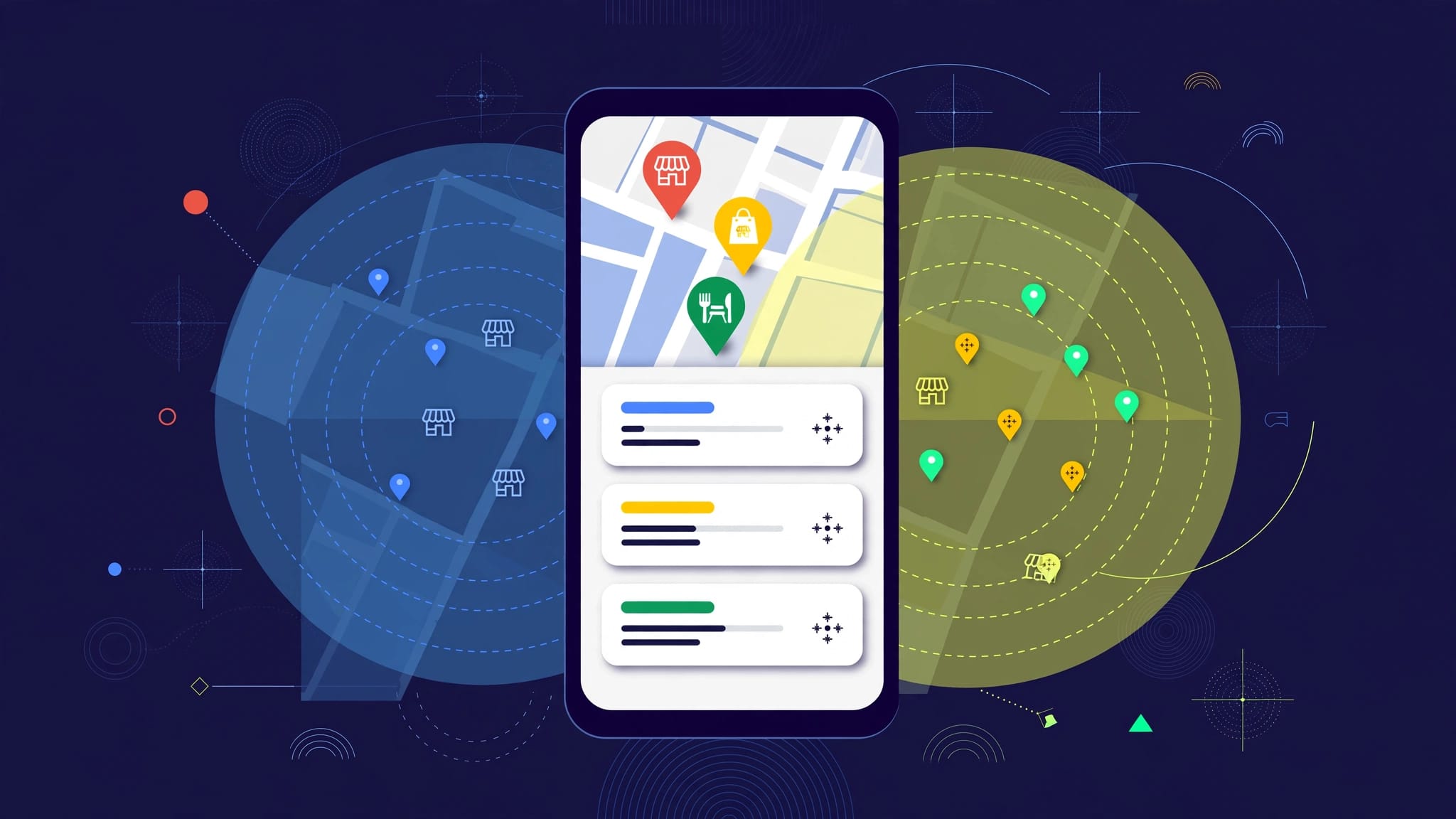
Local SEO competitor analysis reveals why other businesses win urgent service calls by showing up first and appearing trustworthy. By manually researching your competitors’ profiles, reviews, and websites from a customer’s location, you can identify gaps in your own local presence. Focus on improving your Google Business Profile, mobile usability, and hyperlocal content to increase calls and outrank rivals in high-intent searches.
The business with the best technicians does not always win the call. When someone needs emergency plumbing at 2 a.m. or fast furnace repair, the company that appears first and looks trustworthy often gets the job. Conducting a local SEO competitor analysis is the most effective way to understand why other businesses earn those calls instead of you.
This process replaces assumptions with a clear look at what customers see, trust, and choose. By evaluating the local search results of your top rivals, you can identify gaps in your own strategy, boost your local visibility, and ensure your business is the one customers reach out to when they need help the most.
Key Takeaways
- Focus on Customer Needs: Local SEO is not just about rankings; it is about providing the most trustworthy and accessible information to customers the moment they face an urgent need.
- Manual Research is Essential: While software is helpful, performing manual, location-based searches allows you to see the real search engine results page (SERP) from a customer’s perspective, free of personalized search bias.
- Audit Competitor Strengths: Rather than copying rivals, analyze their Google Business Profiles and review patterns to identify service gaps that you can fill to differentiate your business.
- Prioritize Conversion over Perfect Metrics: Focus your website improvements on mobile usability, such as clear click-to-call buttons and fast load times, rather than chasing vanity metrics like perfect page speed scores.
- Execute with a Structured Plan: Use a 90-day roadmap to systematically improve your business listing accuracy, service page content, and review management to drive more qualified leads.
Your Real Competitors May Not Be Who You Think
Your biggest real-world competitor might be a large company that bids on the same jobs. However, your biggest search competitor could be a smaller business with recent reviews, a complete Google Business Profile, and a website that works better on a phone.
Local search is not a popularity contest based on how long you have been in business. Google Maps results and your visibility in the local pack change based on various local ranking factors, including relevance, distance, profile quality, and what the searcher needs at that moment. This is often quite different from the criteria used to determine your organic rankings on the main search results page.
Performing a local SEO competitor analysis is a simple process: find out why customers choose the businesses appearing above you, then fix the gaps in your own digital presence. There is no need for fake profiles, keyword-stuffed business names, or spammy tactics. Those shortcuts create problems and do not build customer trust.
Your goal is not to copy competitors. Your goal is to identify what they do well, then give customers a better reason to call you.
Find the Businesses Showing Up for High-Value Searches
Start by performing local keyword research to identify the services you want more of, rather than focusing on broad terms that bring weak leads. Using geo-targeted keywords is the best way to uncover the businesses that are successfully attracting the customers you need right now.
High-intent searches may include:
- “Ductless mini-split installer”
- “Furnace repair in Toms River”
- “Emergency plumber near me”
- “Water heater repair in Brick”
- “Electrician for panel upgrade in Freehold”
Use your phone when you conduct a SERP analysis, as this helps you see exactly what the local pack looks like for potential customers. Local search results often appear differently on mobile devices, and performing these searches from inside your service area is vital because proximity plays such a major role in how Google ranks businesses. While paid SEO tools can provide data, manual searches remain the most effective way to understand how location and proximity influence your visibility. Turn off personalized results if you can, so your prior search history does not distort what you see.
You do not need expensive software to begin. A basic spreadsheet gives you a useful picture of the businesses taking visibility for the services and towns that matter most as you build your competitor audit.
| What to track | Why it matters |
|---|---|
| Primary category | Shows how Google understands the business |
| Review count and recency | Reveals current customer trust |
| Star rating | Gives a quick view of reputation |
| Visible service areas | Shows where the business is targeting |
| Website and call options | Exposes conversion strengths and weaknesses |
Look for patterns, not one-off details. If the same competitor appears for multiple profitable searches, that business deserves a closer review.
Audit Every Google Business Profile Like a Customer Would
Performing a comprehensive Google Business Profile Audit is essential because your listing is often the first interaction a potential customer has with your company. Many people will decide whether to call you before they ever visit your website.
Do not stop at the star rating when evaluating your competition. A company with a 4.7 rating and 400 recent, detailed customer reviews can look far more credible than a company with a 5.0 rating built on 12 reviews from three years ago. The volume and recency of these reviews show that a business is active and currently serving customers.
Check what competitors show in their Google Business Profile:
- Are their categories accurate for the work they perform?
- Do their photos show real staff, trucks, completed work, and a real location?
- Do customer reviews praise fast arrival times, clean work, good communication, or fair pricing?
- Are customers raising the same complaints repeatedly?
Those reviews are free market research. If people praise a competitor for answering quickly, response time matters in your area. If customers complain about missed appointments or unclear estimates, your business can stand apart by focusing on reputation management and handling those details better than the competition.
Consistent review management is a powerful tool. By analyzing where others are failing, you can adjust your service to capture the business they are losing. Finally, use authentic photos whenever possible. A real technician at a completed job on your Google Business Profile builds more confidence than a stock photo that could belong to any company.
Turn Website Visits Into Actual Calls
Map visibility gets attention, but your website has to earn the phone call through effective on-page SEO.
Someone standing in a flooded basement does not care about a perfect PageSpeed score. They do care if the page loads quickly, the text is readable, and the phone number is easy to find. A large click-to-call button should appear early on mobile pages, especially for emergency services.
Run your key pages through Google PageSpeed Insights, but do not chase a perfect score at the expense of usability. Focus on fast load times, stable pages, clear buttons, and visible contact options. Local traffic is mobile-heavy, and many visitors are ready to act without reading five paragraphs of company history. Your website should work in tandem with your Google Business Profile to provide a seamless experience that guides the user toward booking a service.
Replace Generic Location Pages With Hyperlocal Content
Thirty location pages with the same copy and different city names do not help customers or search engines. Thin, cookie-cutter location pages look copied because they are exactly that.
To improve your rankings, give each important service area unique details that fit the region. Mention specific neighborhoods you serve, common property types, local permit considerations, or issues customers often face. A water heater repair page should act as a helpful resource for the person with the problem rather than just a repetitive list of towns. By creating this type of hyperlocal content, you demonstrate expertise and relevance to both your customers and search algorithms.
Help Google Understand Your Business With Schema Markup
Adding schema markup gives search engines clearer information about your business. Local business schema markup can identify your business name, address, phone number, hours, service details, and other structured information.
It can also support accurate business information and eligible review details in search results when Google chooses to display them. Schema markup does not replace useful content or a complete profile, but it removes some of the guesswork regarding what you do and where you operate.
Build Trust Beyond Google Maps
Google is important, but customers may find your business through Apple Maps, directories, social media, local organizations, or referrals. Maintaining NAP consistency across these platforms is essential, as your name, address, and phone number must match everywhere. Managing your local citations is a foundational step in your SEO strategy, so check your primary citation sources to ensure they provide accurate information.
A wrong phone number is not a minor technical issue. If Apple Maps shows one number and your website shows another, the customer may call the next company instead of trying to figure out which listing is correct. Review old listings, duplicate profiles, outdated suite numbers, old hours, and tracking numbers that create confusion. These local citations act as digital signals that verify your business legitimacy to both users and search engines.
Competitor backlink profiles can also reveal community opportunities. Look at where competing businesses earn links to identify potential avenues for local link building. Local chambers, neighborhood organizations, suppliers, sponsorships, and community events can create legitimate local mentions when there is a real connection. Prioritizing this type of local link building helps solidify your standing in the community and boosts your visibility.
Your social media does not need daily influencer-style posting. A steady record of before-and-after work, team photos, customer updates, and positive customer reviews supports trust when someone checks your business before calling.
After-hours coverage matters too. AI tools, voice receptionists, and chat bots can capture calls and messages when staff is unavailable. They should collect information and arrange follow-up, not promise an arrival time or price your team cannot honor.
Frequently Asked Questions
Why should I perform competitor analysis manually instead of using software?
While SEO software provides useful data trends, it cannot replicate the real-world experience of a customer searching from a specific location. Manual searches on your mobile device allow you to see exactly how Google prioritizes proximity and profile quality for your specific service area.
How many reviews do I need to compete with established rivals?
Focus on the quality and recency of reviews rather than just the total number. A business with a steady stream of new, detailed feedback regarding specific service experiences will often appear more credible to potential customers than a competitor with older, generic five-star ratings.
Do I need to create a new page for every town in my service area?
Avoid creating generic, low-quality pages for every location, as this often results in thin, duplicate content that harms your rankings. Instead, focus on building high-value, hyperlocal content for your most important areas that addresses specific local needs, common issues, and community context.
What is the most important element for converting a local search into a phone call?
Usability and accessibility are paramount, especially for emergency services. Ensure your phone number is easily visible, your site loads quickly on mobile devices, and you provide a clear, one-touch way for customers to contact you immediately.
Put the Findings Into a 90-Day Plan
A spreadsheet full of competitor notes does nothing until it changes how your business appears and responds. Do not try to rebuild your entire strategy in one week. Instead, start by addressing the issues that are most likely costing you lost calls. Use your competitor audit to prioritize these tasks and ensure you are making data-backed decisions.
| Time frame | Primary focus | Actions |
|---|---|---|
| Month 1 | Accuracy | Update your Google Business Profile and ensure consistency for all local citations across major directories |
| Month 2 | Core pages | Improve two or three profitable service pages with clear local details and visible calls to action |
| Month 3 | Conversion and reviews | Fix mobile friction and implement a structured review management process after completed jobs |
Track outcomes that actually affect your revenue, such as qualified calls, form submissions, booked appointments, and lead quality. While rankings matter, a high position does not pay the bills if calls are not coming in. Use professional SEO tools to keep an eye on your search visibility and incorporate consistent rank tracking into your workflow to measure your progress against local competitors.
Check the same search terms and competitors each month. Keep in mind that a one-position change is often normal market fluctuation. However, a steady decline in calls or visibility for your most profitable services deserves immediate attention.
If you need help turning the findings into practical SEO, profile, and website improvements, book a No-cost discovery call or Schedule Call time with EarningCoach Marketing.
Win Calls With a Better Digital First Impression
The company that earns the emergency call is often the one that looks easiest to trust and contact in the moment. Accurate profiles, recent customer reviews, useful local pages, and a mobile-ready website all support that decision. When you prioritize these elements, you strengthen your reputation management and ensure your business stands out to those in need.
AI can organize information, and software can track competitors, but genuine customer care still creates the ultimate advantage. By focusing on your local visibility, you can find the biggest gaps your competitors leave open. When you address these gaps effectively and improve your standing in local search results, you give local customers a clear, compelling reason to call your business first.