One of Marvin Drobes’ recent digital marketing wins began with a South Carolina tradesman who was born blind and wanted to give back to his industry. The project grew into a directory, a podcast, and a plan to help more people enter trade careers.
On Penji’s Fully Managed podcast, Marvin talked with partnership coordinator Daniela about building a digital marketing agency and understanding the client’s goals behind the work. His experience includes finding early customers, growing a worldwide team, and adjusting a campaign when a client explained that the original plan wasn’t enough.
His path into that work began long before social media.
Marvin’s Business Experience Started Before the Internet
Marvin introduced himself as a “young 74-year-old” who remains in business because he loves what he does. His career has included education, photography, financial services, network marketing, and automotive sales.
After college, he taught children in special education for seven years. Photography was a hobby, but he turned it into a business by building a studio, buying a camera store, and operating a film-processing lab before digital photography became common.
The photography organization grew to seven photographers. Its work included weddings, anniversary parties, and portraits.
He later entered financial services as a stockbroker. Within a year and a half, he became a manager. About a year later, the company gave him his own office, where he led a group of 11 people.
Network marketing was another chapter. Marvin and his fiancée built an organization that brought them a combined annual income of just under $120,000.
Then, in 1998, a friend approached him about the car business. The opportunity went beyond selling vehicles: the dealership wanted someone to start its internet department.
An Internet Sales Department Led to a Family Business
Marvin worked with Toyota and General Motors before joining a large Chevrolet dealership in New Jersey. There, he helped build an internet sales department that increased its monthly sales from about 16 or 17 vehicles to 73 in six months.
The economic downturn changed the situation. Around the period of General Motors’ bankruptcy, the dealership’s overall monthly sales fell from roughly 160 vehicles to somewhere in the 50s.
Management blamed the internet department for not producing enough appointments and sales. The department closed, leaving Marvin unemployed.
His son offered a new role
Marvin’s son had left nursing, returned to school, and started a website development business. When Marvin came home early after losing his job, his son offered him a position as the business’s sales manager.
There was another need, too: $16,800 to help fund the company.
As Marvin put it, “Daddy became a bank, too.”
His son already had some customers. The first piece of business Marvin brought in was a dentist he knew. Together, they began building the website and design business that would become the foundation for his agency.
Early Social Media Clients Helped the Agency Grow
Around 2011, Marvin saw an opportunity in social media. Facebook and Twitter were attracting attention, and he persuaded friends who owned a party store to try social media marketing.
The work went well. Marvin spent time at the store to understand what was happening in the business, but he also had a sales reason for being there.
He met contractors and talked with them about why they needed a website or social media support. Those conversations helped bring in more business.
Outsourcing became the next step
Before COVID, Marvin’s son received an offer from a New York City firm that specialized in websites for doctors, dentists, and hospitals. The starting salary was almost double what Marvin was paying him through their partnership.
Marvin encouraged him to take the job. His son initially planned to help the family business at night and on weekends, but the commute could take two to three hours each way. He also had a wife and two children.
When that arrangement became difficult, his son suggested outsourcing. Marvin didn’t know what the term meant and asked for help getting started.
By the time of the conversation, the agency had nearly 40 employees worldwide.
His son also connected him with another provider offering reasonably priced medical websites. That allowed Marvin to work with clients such as new dental practices and chiropractors without competing with his son’s employer.
Social Media Became a More Crowded Market
Marvin described early social media marketing through the familiar comparison of a “blue ocean” and a “red ocean.”
A blue ocean has room for opportunity and relatively few competitors. A red ocean is crowded with businesses pursuing the same customers.
When Marvin started, he saw social media as a blue ocean. Businesses were still learning what Facebook, Twitter, LinkedIn, and Google My Business could do for them. Google My Business is now Google Business Profile.
He viewed LinkedIn as more business-to-business, while Facebook offered businesses a way to communicate with consumers. Facebook’s original friend-to-friend purpose also reminded him of network marketing, where conversations often started with friends, neighbors, and family.
COVID brought more people into the market
Marvin believes the pandemic drew many people into social media work because it appeared to be an accessible part of digital marketing.
A business owner might hand the responsibility to a son, daughter, spouse, or another relative who already knew how to use the apps. That increased competition, but familiarity with a platform didn’t always come with the skills needed to market a business.
His concern was that businesses often received general posting activity without the analysis needed to understand whether it was working.
Posting Familiarity Doesn’t Replace Social Media Strategy
Marvin identified several gaps between knowing how to use social media and managing it for a business.
Those gaps included understanding analytics, identifying the best times to post, deciding what to follow, and reviewing results before making changes. Without that work, a business could keep posting without learning much about its audience.
He also warned against turning every post into a sales message.
“We have a rule of thumb: every five posts, one of them will be promotional. The rest of them are for engagement reasons.”

Why businesses are returning to professional help
Marvin sees businesses seeking professional support after informal posting failed to deliver useful results. They want someone who can interpret statistics, recommend content, and adjust the approach.
That focus also appears in EarningCoach Marketing’s social media approach: reviewing engagement, reach, and conversions, then using the results to improve the plan.
AI, in Marvin’s view, is making relevant content easier to produce. He still places the emphasis on knowing what to publish and how to evaluate it.
His description of the opportunity was optimistic but qualified: the ocean may be turning blue again, while the waves are getting bigger.
Digital Targeting Changed the Economics of Marketing
Marvin called traditional advertising a “buckshot approach.” Businesses tried several channels and hoped to reach people who needed their products or services.
Those channels included newspaper ads, radio spots, coupon mailers, billboards, and television. TV advertising was often too expensive for small and medium-sized businesses.
Google and Facebook advertising gave those businesses another option. Instead of casting a broad net, they could be more selective about whom they wanted to reach.
Traditional channels still have a role
Marvin didn’t suggest that print advertising had disappeared. Businesses still use postcards, mailers, and coupon services such as Valpak and Money Mailer. Some of those activities now have online versions as well.
Billboards interested him because his agency sells digital billboards. He explained that a driver may notice a roadside advertisement at first, then stop paying attention after seeing it on the same commute every day.
When that person later needs the advertised service, the next step is often an online search. They may recognize the business they saw on the billboard and make contact.
Daniela added that she also searches for companies on Instagram. Their discussion showed how an offline advertisement and an online presence can contribute to the same customer decision.
A Website Helps Customers Find and Understand a Business
Marvin’s position on online visibility was direct: businesses need a website that tells people who they are and what they offer.
He also emphasized mobile search. People can look up a company on their phones rather than trying to remember a billboard’s telephone number or keep a printed advertisement nearby.
Daniela connected that point with the importance of having a website, a social media presence, and an SEO strategy early in a business’s development.
His outlook for the next five to ten years
Asked about the future of marketing, Marvin focused on adoption rather than naming a new platform. He believes businesses must add digital marketing to their existing marketing activities.
He warned that brick-and-mortar companies that refuse to adapt could lose business over the following eight to ten years. That was his prediction, not a reported outcome.
He also connected targeted marketing with lower customer acquisition costs. When businesses reach the right people and manage the relationship well, he believes digital marketing can support longer-term customer relationships.
For Marvin, the practical change is the ability to move beyond one-to-one word of mouth and communicate with many relevant people at once.
Meeting the Client Known as America’s Blind Tradesman
When Daniela asked about a campaign he was proud of, Marvin described Michael, a South Carolina client around his own age who was born blind.
Marvin shared Michael’s account that he was the first American-born blind child to attend public school in the United States. After two years of college, Michael chose a career in the trades despite people telling him he wouldn’t succeed.
He began as a roofer and later earned trade certifications, including electrical certification.
Michael joked that a blind electrician needs an assistant who isn’t color blind, so the assistant can distinguish the wires correctly.
A successful career and a reason to give back
Marvin recalled watching Michael use a table saw to remove one-hundredth of an inch from a piece of wood. He contrasted that precision with his own difficulty making a straight cut.
Michael became known as “America’s Blind Tradesman.” Some members of his team had worked with him for 33 years.
His family circumstances also shaped his plans. His wife, who had been a nurse, was injured in a car accident and used a wheelchair.
The trades had provided Michael with a good living. He wanted to support the industry and brought several initiatives to Marvin’s team.
Building a Free Directory for South Carolina Tradespeople
Marvin proposed a directory dedicated to tradespeople in South Carolina. He explained the concept by comparing it with services such as Angie’s List.
The directory would give local trade businesses free advertising and help residents find service providers.
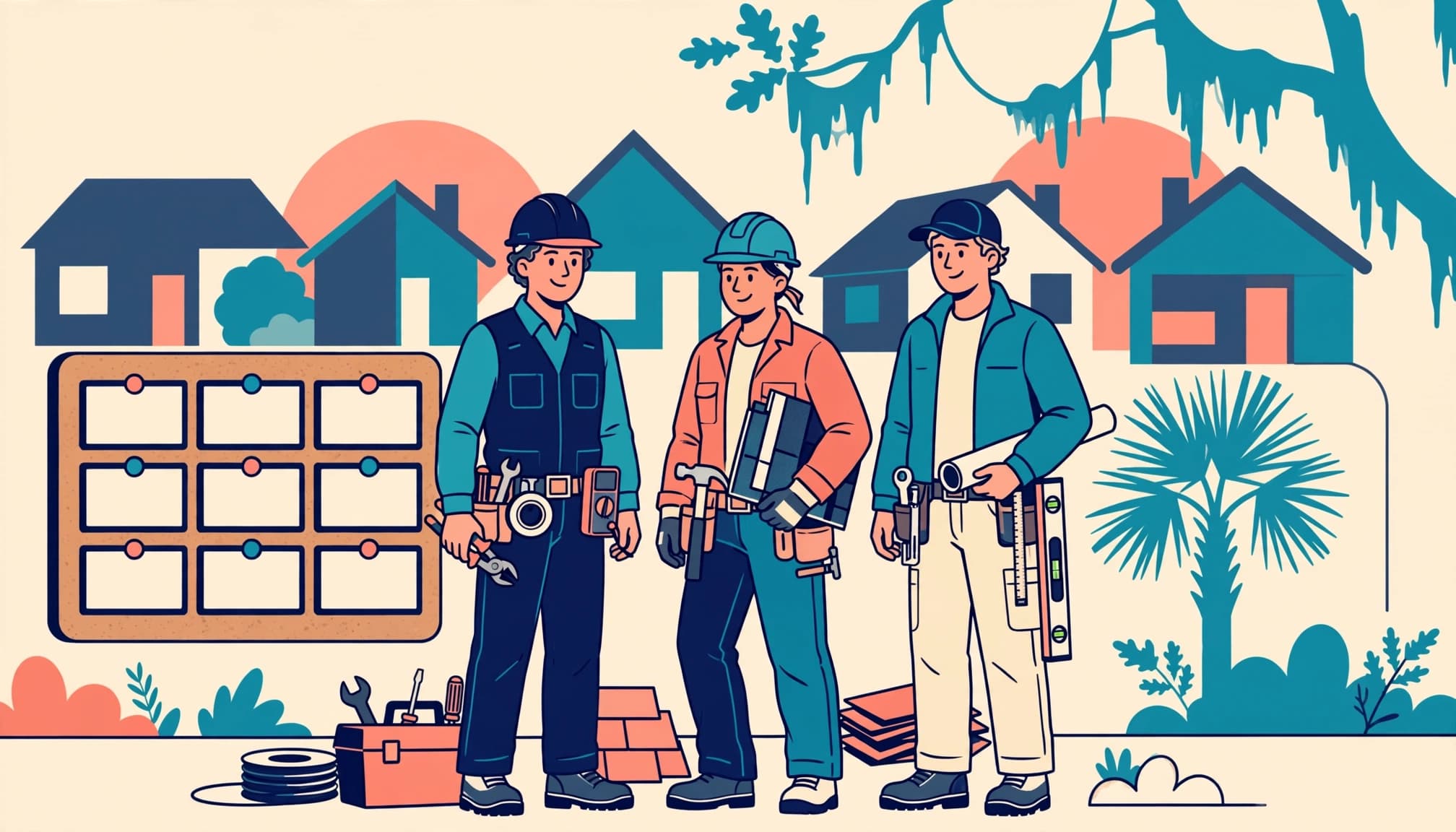
Marvin’s team researched companies for the directory. At the time of the conversation, it covered about 36 categories and had nearly 4,000 listings. Those categories included home remodeling, electrical work, plumbing, and roofing.
Michael paid for Google and Facebook advertising to bring visitors to Home Service Pro Finder’s trades directory. The businesses received free listings while he funded the effort to attract potential customers.
The directory didn’t cover the whole mission
As the team built the directory, Michael explained that they hadn’t fully understood his goals.
“America’s Blind Tradesman” was his brand. His work also included other projects that needed attention.
That clarification changed the campaign. The directory remained important, but Marvin’s team needed to build support for Michael’s media work and broader plans for the trades.
A Radio Show and Podcast Expanded the Campaign
Michael had previously hosted a radio show called I Love My Tools. It included discussions and demonstrations intended to help both new and experienced tradespeople.
Marvin’s team added recordings of earlier radio segments to the website. Those recordings gave visitors another way to hear Michael’s story and learn about his work.
They later created a podcast, starting in February, so he could continue those conversations.
Corporate sponsorship supported the next stage
Michael’s radio and podcast work also created opportunities for corporate sponsors.
Marvin gave an example involving Ford. He said listeners using a code from Michael’s radio show could receive an additional $5,000 off a vehicle beyond the best price they had negotiated.
Michael wanted sponsorship to help fund his initiatives. He also recognized that he and his wife would need more assistance as they aged.
In Marvin’s account, Michael described needing more people to be his wife’s legs and more people to be his eyes. Sponsorship was part of the financial plan behind that continuing support and his work for the industry.
The Million Job Movement Connected Marketing With Trade Careers
Michael’s next initiative addressed his concern about a shortage of tradespeople in the United States.
He called it the Million Job Movement, with a goal of helping one million people enter trade careers. His message was that tradespeople had helped build America and could continue to support its growth.
How he planned to fund the work
Michael intended to use corporate sponsorship from the radio show and podcast to provide scholarships to trade schools.
He also planned to invest in advertising for the directory. That would help connect residents with local providers and keep more business activity within their communities.
His longer-term ambition was to have Marvin’s team build a directory for every state. It was a proposed expansion, not something Marvin said had already happened.
“Anyone Can Win” reached beyond disability
Michael also had an initiative called Anyone Can Win. Marvin explained that the message wasn’t limited to people with disabilities.
It was intended for people who felt unhappy with their work, overlooked, or convinced that opportunity belonged only to people with money.
Michael shared that message through speaking engagements and podcast conversations. His own career gave him personal experience to draw on when discussing what people could achieve despite others’ expectations.
Marvin’s Warning About Building a Digital Marketing Agency
Near the end of the conversation, Marvin challenged the way some marketers promote agency work as an easy side hustle.
He objected to promises of earning $10,000 a month with only a few hours of work each week. In his experience, that presentation leaves out the time and skill the work requires.
Part-time participation is possible, he said, but immediate high earnings shouldn’t be the expectation.
Master one area before expanding
Marvin’s recommendation was to begin with one service or platform and learn it thoroughly.
Even social media is broad enough to require a narrower focus. He named Instagram, Facebook, Google, and LinkedIn as possible areas to master.
His emphasis was on learning the details before trying to offer everything. The warning was familiar: don’t become a “jack of all trades and master of none.”
For someone building a digital marketing agency, his recommendation was grounded in his own experience of entering new fields, learning the work, and adding capabilities over time.
EarningCoach Marketing’s Services and AI Work
Marvin described five main areas of work available through EarningCoach Marketing’s services:
- SEO, including work with Google Business Profile.
- Website design, development, and implementation.
- Social media marketing.
- Communication through text messages, email, and online newsletters.
- Text-based and voice chatbots.
The agency’s service approach emphasizes customized work tied to a client’s goals and measurable performance. Its website and social media chatbots can answer visitor questions and help capture leads.
Voice bots and AI podcast presenters
Marvin said the agency had moved into voice chatbots capable of handling inbound or outbound calls. He described a restaurant using one to take orders in a conversational way.
He also discussed his podcast, Online Digital Marketing Today, which covers current digital marketing topics and is available on Spotify, Apple Podcasts, and other platforms.
The presenters on that podcast are AI-generated. Marvin supplies the information used to produce the episodes.
These were two different uses of AI in his business: handling customer conversations and presenting information he provides.
The Personal Side of Marvin’s Rapid-Fire Answers
Daniela ended the interview with a timed round of personal questions. Marvin’s answers covered his routines, interests, and preferences.
Here are the responses he shared:
| Question | Marvin’s answer |
|---|---|
| Coffee or tea? | Coffee |
| Early bird or night owl? | Night owl |
| Favorite social media platform? | |
| Go-to karaoke song? | He doesn’t have one |
| Books or podcasts? | Both |
| One word that describes him? | Intuitive |
| Dream vacation destination? | An island somewhere in the Pacific |
| Most-used phone app? | Facebook direct messages |
| Favorite emoji? | The winking smiley |
| Hidden talent? | A “lost musician” |
| Comfort food? | Pizza |
Music was the interest he expanded on afterward. He enjoys jazz and blues, particularly music without vocals, which helped explain why he didn’t have a karaoke song.
He also said he’d been trying to play guitar for 40 years. One teacher eventually told him to stop spending money on lessons and simply play for his own enjoyment.
Where to Find Marvin and the Episode’s Sponsor
Marvin’s professional background is available through Marvin Drobes’ LinkedIn profile. His office number is 732-523-2600, and EarningCoach Marketing lists info@earningcoachmarketing.com as its general contact email.
He said he’s usually in the office starting around 8:30 a.m. and often stays until 6:30 or 7 p.m. Calls can forward to his cell phone after he leaves, but he asked callers to respect Eastern Time and avoid calling after 9 p.m.
Businesses interested in discussing their marketing needs can book a No-cost discovery call.
Penji supported the conversation
The episode was sponsored by Penji, a creative subscription service offering access to pre-vetted, agency-trained creative professionals worldwide.
The services discussed included graphic design, illustration, social media management, and web development under one monthly subscription, with work produced by people.
The episode description provided the code FULLYMANAGED15 for 15% off the first month through Penji’s creative subscription pricing.
Client Goals Give the Campaign Its Direction
Michael’s campaign expanded when Marvin’s team understood the full scope of his mission. The directory connected local tradespeople with customers; the radio recordings and podcast supported sponsorship and his plans for trade education.
Marvin’s agency story carries the same practical emphasis on learning the work and responding to real needs. His growth came through early client relationships, new capabilities, and a worldwide team.
The campaign he described went beyond promoting a personal brand. It supported Michael’s plans to give back to the trades that had supported his own career.