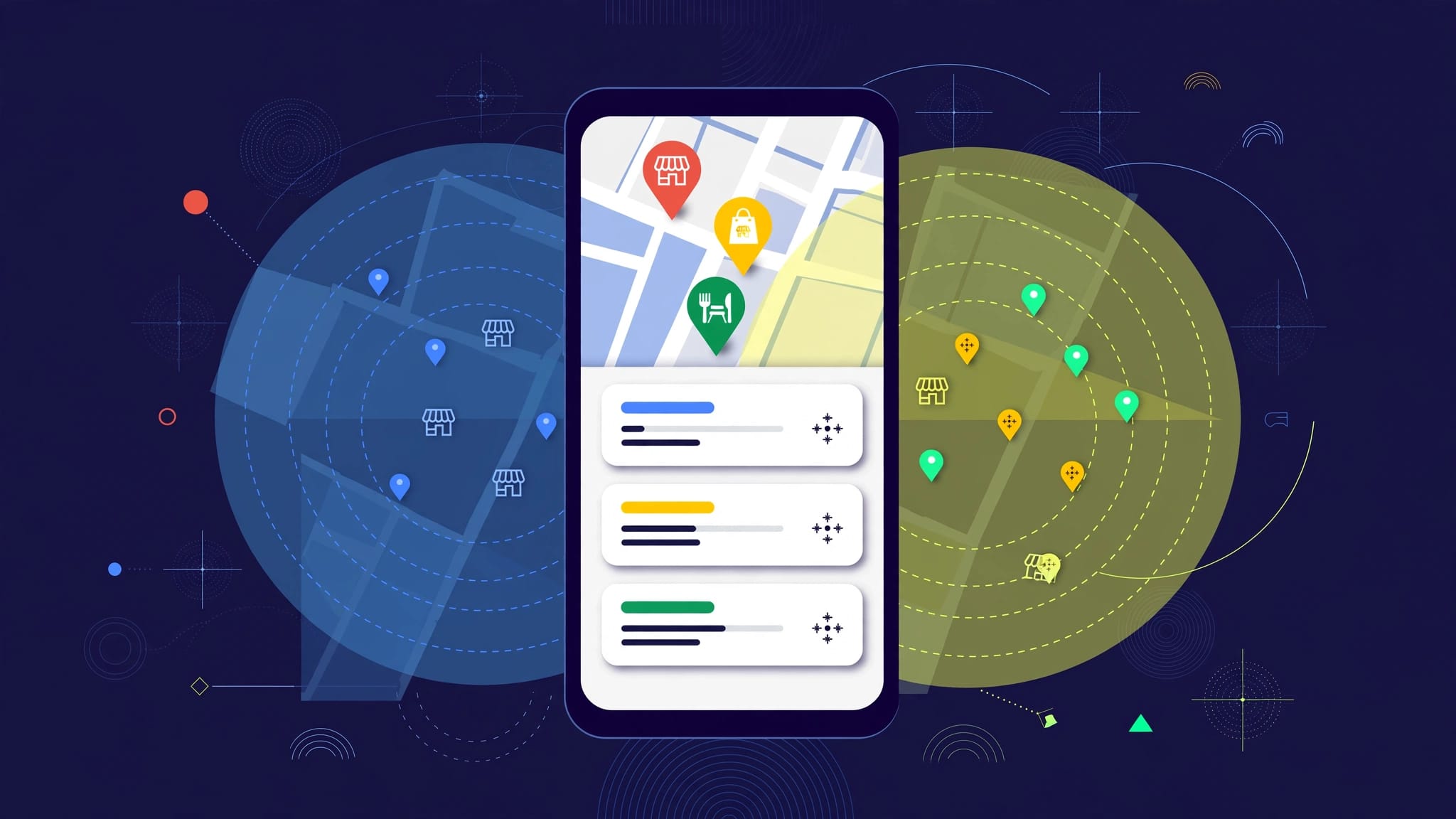
A business can appear first in the Google Local Pack on Google Maps for one customer and seventh for another, even when both search for the same service. That’s why Google personalization local pack results can feel unpredictable across devices and locations.
The Google Local Pack responds to nearby, action-ready searches quickly. For a local business, the goal isn’t one fixed position. It’s building online visibility and measuring local pack rankings across the areas where customers search.
What the Google Local Pack Shows
Often called the Map Pack or Local 3-Pack, this feature appears in local search results for searches with clear local intent. It shows a map and three business listings before, or alongside, standard organic results.
A listing can include ratings, hours, address details, photos, a phone option, directions, and a website link. That makes it a high-value placement for restaurants, attorneys, contractors, medical practices, and other businesses that depend on calls, visits, or appointments.
Local Pack results are not organic rankings
Organic search results primarily point users to website pages on a search engine results page. The Local Pack pulls listing information from Google Maps and a Google Business Profile.
Your website still matters. It helps Google understand your services, locations, and authority. However, a strong organic page doesn’t guarantee a top-three Maps position, and a visible Maps listing doesn’t guarantee a first-page organic ranking.
The result can change before a customer scrolls
Local search results now compete with ads, reviews, videos, AI-generated answers, and map features. A customer may call directly from a profile without ever visiting your site.
That’s why your local SEO reporting should connect visibility with calls, direction requests, website visits, booked appointments, and lead quality. A ranking by itself is only one part of the customer journey.
Google Personalization local pack Results: What Actually Changes
Google doesn’t show every person the same local businesses because each search has a different local context. Location and query wording can change which businesses appear, even within the same city.
Google explains that local results are mainly based on relevance, distance, and prominence. These standard ranking factors apply broadly. Personalization changes how Google interprets the searcher’s situation.
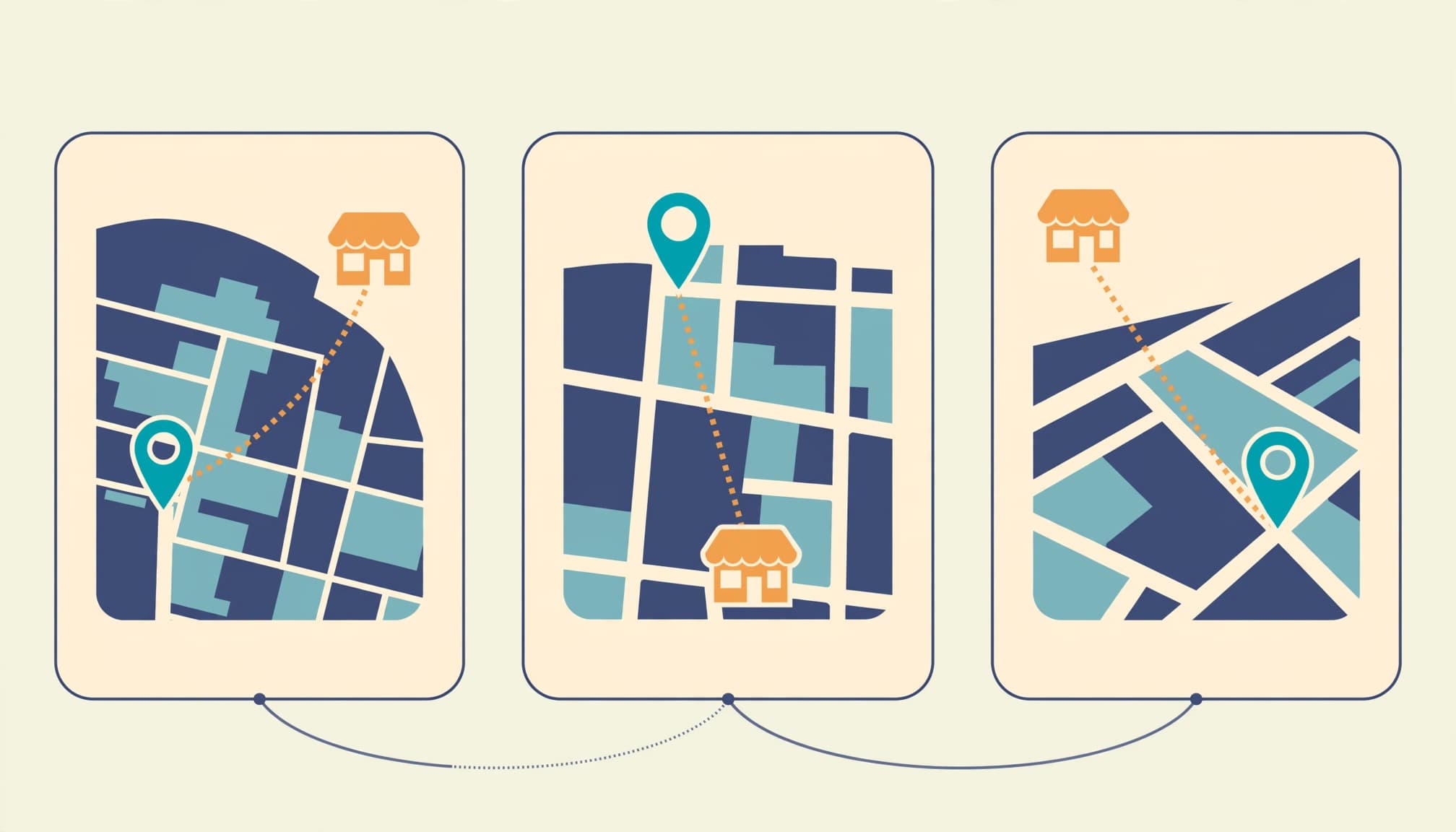
Searcher location changes the distance calculation
Google can use the searcher’s current location and other proximity signals to assess which businesses are nearby. A customer searching for “coffee shop” at home may see different options than when searching from work or across town.
Google Maps and other local surfaces use this local context when presenting results. This is why a bakery might rank well within a few blocks but appear lower three miles away. The business didn’t necessarily lose visibility. Google is responding to a different geographic starting point.
Location also matters when the searcher names an area. “Plumber in Edison” and “plumber near me” may produce different Local Pack listings because the search context is different.
Query intent changes which business looks relevant
The search query tells Google what the customer needs. Someone searching “emergency HVAC repair” has a different local intent than someone searching “HVAC maintenance.” An explicitly geographic request can also differ from a generic service search.
A complete Google Business Profile, accurate categories, a clear business description, and matching website content help Google connect your business to local relevance. Your profile should describe what you actually provide, not every service you hope to rank for.
A Local Pack position is a location-based observation, not a permanent score that applies across an entire city.
Avoid assumptions about hidden personalization signals
A searcher’s location, search history, device type, language settings, and query intent can change the context Google evaluates. Google publicly confirms location and local context, but the influence of some individualized signals isn’t fully documented.
Don’t treat browsing history, device type, or language settings as guaranteed ranking inputs. Focus on what you can measure. Track consistent queries from defined locations, watch profile activity, and review lead outcomes. That creates a practical view of performance without claiming control over Google’s personalization.
The Three Factors Behind Local Pack Rankings
Google’s local search algorithm uses three primary ranking factors. They work together, so the closest business doesn’t always appear first.
Relevance helps Google match the search
Relevance measures how well your profile and website match the search query. Google looks for accurate details about your services, business type, hours, address, and service area.
Choose business categories that reflect your actual offerings. Your primary category should describe your core service, while secondary categories should represent accurate services you provide.
Use local keywords naturally in your service and location language. Don’t force them into generic or duplicate pages.
For a practical framework, review Google Business Profile optimization and make profile maintenance part of your regular marketing routine.
Distance depends on the customer, not your target map
Distance measures how far a business is from the searcher or the location named in the search. You can’t remove that limit by listing every nearby city in your service areas.
A business serving customers at their locations should define a realistic service area. A storefront should keep its public address correct. Both should avoid location pages that only swap city names into the same generic copy.
Useful local pages include real neighborhood details, common service needs, local regulations, parking information, or location-specific proof of experience.
Prominence reflects real-world recognition
The prominence factor reflects how well-known and trusted a business appears online and offline. Reviews, ratings, links, and broader business recognition can support prominence, but none guarantees a Local Pack position.
Customer reviews matter because they give searchers quick proof before they call. Build a steady process for requesting honest feedback after completed work. Respond professionally to both positive and negative reviews.
A stronger review profile takes consistency, not shortcuts. Use Google review generation strategies to support a credible reputation over time.
Build Signals Google Can Understand
You cannot directly control personalized Local Pack results. You can improve the accuracy, local relevance, and trust signals Google uses to evaluate your business. These signals can support your online visibility over time.
Keep your profile accurate and active
Review your Google Business Profile at least monthly. Confirm your address, hours, phone number, business categories, services, website link, and appointment options are current.
Add recent photos that show your actual location, team, products, or completed work. Publish timely updates when they help customers, such as seasonal hours, events, or service changes.
Accurate NAP citations across major directories support dependable business information. Your name, address, and phone number should match across your website and social media profiles. Broader local citations from community sources can add context, while consistent listing management helps prevent customer confusion.
Build local authority beyond your profile
Your website should support the claims made in your profile. Create helpful service pages that answer local customer questions, use local keywords naturally, load well on mobile devices, and offer direct ways to call or book.
Local links can also support prominence. Look for legitimate mentions from chambers of commerce, neighborhood organizations, suppliers, professional associations, local media, and community sponsorships.
Schema markup can help search engines interpret business details on your site, but it is not a shortcut to the Local Pack. Use it alongside accurate content and technical SEO, not in place of them.
If you need help finding gaps in your profile, website, and local listings, explore our local SEO services.
Track Local Visibility by Neighborhood
A single manual search gives you one answer from one place. It can’t show how Google personalization affects local pack rankings across the market.
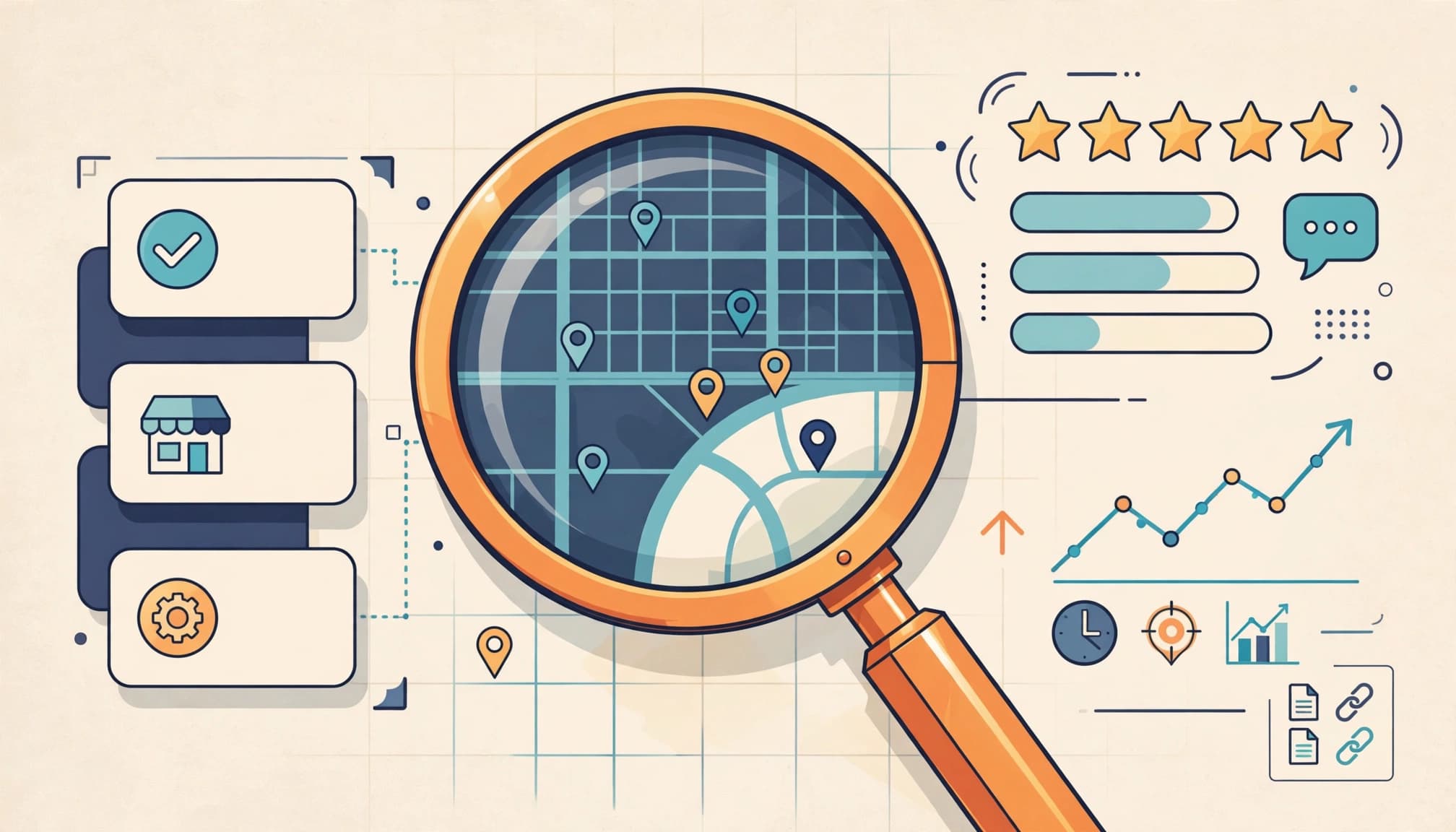
Use a geo-grid rank tracker to test priority terms across multiple points in your actual service area. Google Maps results can vary significantly between nearby locations.
For local SEO, one reliable paid tracker provides useful position tracking. Pair it with free Google Business Profile data and Google Search Console.
Establish a baseline before making changes
Record the search query, date, grid area, competitors, devices, and current Local Pack position. Then repeat the same test monthly or every few weeks.
Results can vary by location, device, time, search wording, and user context. Standardize what you can, but don’t claim to reproduce every user’s personalized result.
Run separate checks for desktop and mobile searches when device differences matter. Weekly checks help identify major changes, while daily monitoring often creates noise.
| Metric to track | What it tells you |
|---|---|
| Average map position | Your typical visibility across tested locations |
| Strong visibility area | Where you regularly appear near the top |
| Profile actions | Whether visibility produces calls, directions, and website visits |
| Organic landing-page clicks | Whether service and location pages earn relevant traffic |
The strongest report combines visibility with outcomes. A lower ranking in one neighborhood may matter less than a position that brings qualified calls and booked work.
Separate Maps data from website data
Google Search Console doesn’t report your exact local pack rankings. It’s better for understanding organic search results, impressions, clicks, queries, page indexing, and technical SEO issues.
Review individual location and service pages instead of relying on site-wide averages. Page-level data provides a clearer view of local relevance.
High impressions with a low click through rate may mean your title tag and meta description don’t match the searcher’s immediate need.
If traffic stays level but calls decline, check profile activity, booking data, phone logs, and conversion paths. Search visibility can begin on Google Maps and end later through a direct call or social media visit.
Use AI Automation to Support, Not Replace, Local SEO
AI tools can help teams supporting a local business handle repetitive marketing tasks. They can draft review responses, identify missing profile fields, organize customer feedback, and flag inconsistent listing details.
They don’t replace accurate business information or customer service. Review every AI-generated response before it goes live, especially when a customer shares a complaint or sensitive issue.
Chatbots and voice receptionists can also capture after-hours leads when customers find you through the Local Pack. They won’t raise rankings on their own, but they can prevent missed opportunities while your SEO work builds momentum.
For businesses managing reviews at scale, AI-powered local SEO can support faster review management, drafts, and follow-up while keeping human oversight in place.
Key Takeaways
- Google Local Pack results vary because search location, wording, relevance, distance, and prominence vary.
- Proximity matters, but ranking factors work together. A stronger match may appear above a closer competitor.
- Your Google Business Profile needs accurate categories, current hours, useful service details, and authentic customer reviews.
- Measure Google Maps visibility through a geographic grid, not one local SEO search from your office.
- Track calls, direction requests, booked jobs, and qualified leads alongside ranking reports.
Conclusion
Google Local Pack personalization doesn’t make local rankings impossible to improve. It makes a universal position unreliable, so online visibility must be measured where customers actually search.
Build a clear Google Business Profile, earn trust through real reviews, support it with useful local pages, and track Google Maps performance by neighborhood. When your local business needs a clear local SEO plan, schedule a No-cost discovery call.
FAQ
Why do Google Local Pack results differ between my phone and office computer?
Your phone and office computer may be in different locations, use different settings, or reflect different search contexts. Google Maps may also use location signals tied to each device. Test defined locations with the same query before judging a ranking change.
Can I rank in every nearby city by adding more cities?
No. Adding cities you don’t realistically serve won’t overcome distance. Focus on the service area you can support with accurate profile information, useful local content, and reliable customer service.
How often should I review local ranking data?
Most businesses benefit from a weekly check-in and a monthly performance review. Review data more often after a major profile change, a new location launch, or an unexpected decline in calls.
What should I do if my Google Business Profile is visible but calls stay low?
Review your ratings, recent reviews, hours, photos, service details, and call handling. Strong review management can help reveal why your listing earns views but loses customers. Ready to review the full picture? Schedule Call.