
Local schema markup is essential for service businesses in 2026 to clearly communicate their location, services, and business identity to search engines and AI systems. Properly implemented, it improves local search visibility by ensuring consistent, machine-readable data that boosts trust and helps your business stand out across Google, Maps, and emerging discovery platforms.
Many service businesses still treat local schema markup like a minor bonus task. In reality, it is one of the cleanest ways to tell search engines exactly what your business is, where you operate, and how your pages connect.
This precision matters more in 2026 because the search landscape has become increasingly fragmented. Your website must make sense to Google, Maps, and emerging AI summaries. By providing this data as a machine-readable language, you improve your AI search optimization and ensure your site remains structured for the next generation of discovery. Ultimately, these small technical adjustments are essential for boosting your local search visibility and ensuring your business stays competitive across all platforms.
Key Takeaways
- Clarify Your Digital Identity: Local schema acts as a label for search engines, helping them understand your business type, location, and services without guessing.
- Prioritize Semantic Accuracy: Use the most specific schema types possible and ensure the structured data exactly matches the visible content on your website to maintain trust.
- Maintain Consistency: Keep NAP (Name, Address, Phone) information uniform across your website, Google Business Profile, and other citations to avoid conflicting signals.
- Build for AI and Search: Structured data helps both traditional search engines and emerging AI systems classify your business, making it a critical component for long-term visibility in 2026.
What local schema markup does in 2026
Think of schema as a label maker rather than a ranking button. It does not push your business to the top by itself, but this structured data helps search engines classify your company with far fewer guesses.
For a service business, that usually means providing clearer signals regarding your specific LocalBusiness type, physical address, business hours, service areas, and location relationships. Whether you operate a plumbing company, law firm, HVAC business, med spa, cleaning service, or repair shop, structured data helps tie those facts together in a machine-readable format.
That matters for Local SEO because your website is only one source of truth. Search engines constantly compare your site data against your citations, online reviews, and your Google Business Profile. When those sources match, trust is easier to build; when they conflict, confusion creeps in.
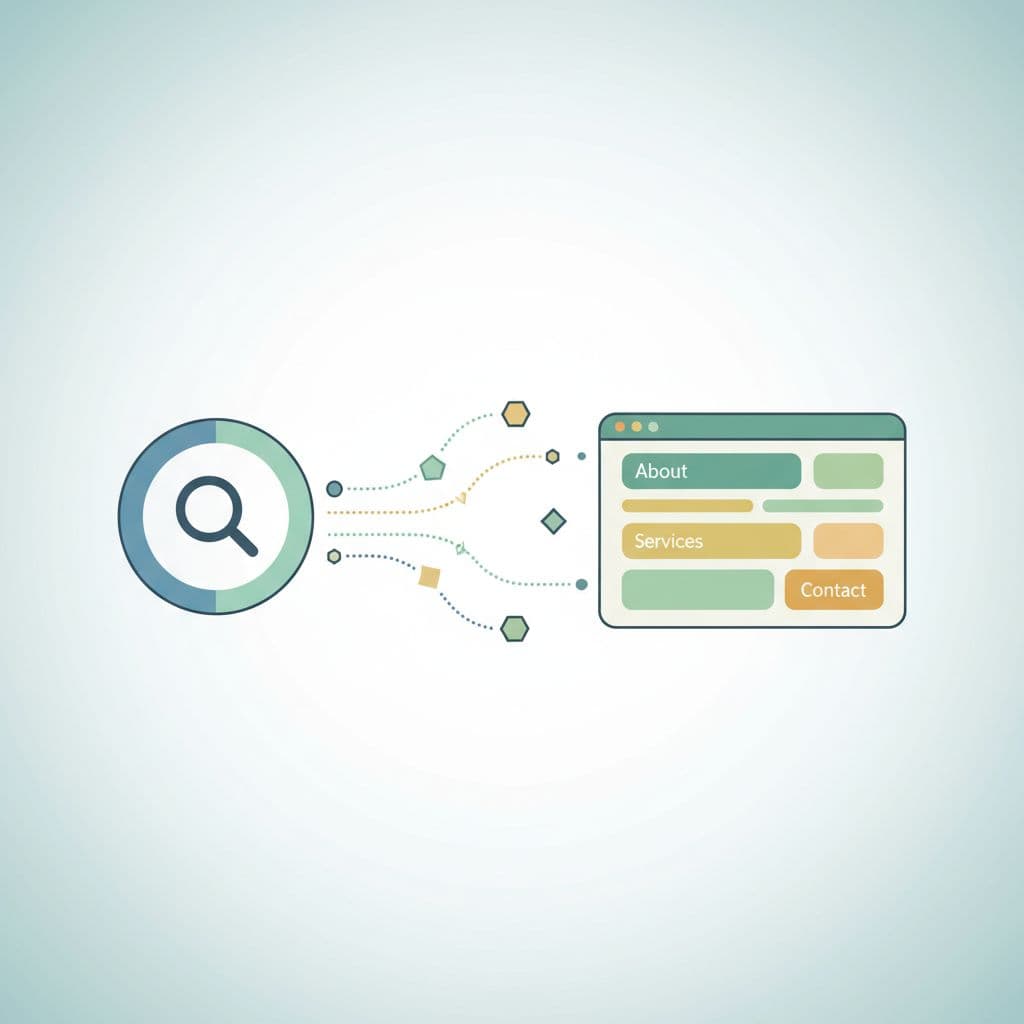
Current guidance remains straightforward. Use JSON-LD as your primary implementation method, choose the most specific business category possible, keep your name, physical address, and telephone number consistent across the web, and ensure each location has its own dedicated data block. A broader local SEO and GEO guide makes the same point from a different angle. True local visibility comes from alignment, not just from installing a single plugin or tag.
If your schema says one thing and the text on your page says another, the markup loses its value very quickly.
Which schema types matter most for service businesses
Most service businesses do not need twenty schema types. They need the right few, used well according to the Schema.org vocabulary.
Here is the quick view:
| Schema type | Best use | Google rich result potential | Semantic value |
|---|---|---|---|
| LocalBusiness or a more specific subtype | Describes a physical business location | Limited direct display | High |
| Organization schema | Describes the parent brand for multi-location companies | Limited | High |
| Service | Describes what you offer | Rarely a visible feature by itself | High |
| FAQ schema | Marks up visible Q&A content on the page | Limited for local businesses | Medium to high |
| Review and aggregate rating | Describes visible reviews and ratings | Restricted for local business stars | Medium |
| areaServed | Clarifies cities, counties, or regions you serve | No standalone feature | High |
LocalBusiness is the essential base model for a local entity. If a more specific subtype fits, use it instead. Labels like Dentist, Electrician, Plumber, Attorney, and ProfessionalService provide search engines with more context than a generic description. A recent 2026 schema markup guide also stresses this point.
Organization schema matters when your brand has multiple offices, franchises, or departments. The brand can live at the top level, while each location page carries its own local markup. That provides a clean relationship between the company and its various branches, which can help in generating rich results.
Service is useful when you want to define what each page is about. A service page for water heater repair or family law mediation can be linked to the local provider. While it may not create a flashy feature, it improves semantic clarity.
FAQ schema is still valid when the page contains real questions and answers that users can read. For most service businesses, Google is unlikely to show FAQ rich snippets in standard search, but the markup still helps machines understand page structure.
Review and aggregate rating fields need restraint. Google has been strict for years about self-serving review stars on local business pages. Mark up only reviews that are actually visible on the page, and do not expect stars to appear for your own local business pages.
areaServed is one of the most useful fields for service-area businesses. Use it to name real cities or regions you cover. Do not turn it into a wish list of areas where you do not actually operate.
What Google may show, and what still helps behind the scenes
This is where many teams get tripped up. They ask, “Will this schema give me a rich result?” That is not always the right question to ask.
Some markup types can still influence visible search features like rich snippets, which can directly improve your click-through rates. Others might not change how you look on the results page, but they still help search engines and AI systems interpret your site. A helpful structured data cheat sheet after I/O 2026 points out that some schema is now close to inert for visible Google lift. That does not mean it is useless.
Use schema for clarity first. Treat rich results as a possible bonus, not the sole reason to publish it.
For service businesses, LocalBusiness, Organization, Service, and areaServed are often more valuable for entity understanding than for flashy result features. This type of implementation reinforces your E-E-A-T signals, helping search engines verify your authority and expertise even if visible features do not appear. FAQPage can help page comprehension even if Google never shows the dropdown. Review and AggregateRating may be valid data, but Google’s star display rules are tight.
A good rule is simple. If the markup makes your site easier to understand, matches visible page content, and lines up with your business records, it is worth keeping.
JSON-LD example for a single-location service business
For a single-location company, the cleanest setup is to use an @graph structure that features a primary LocalBusiness entity linked to your specific offerings. While you can use specific types like Plumber or Electrician, ProfessionalService is a safe, versatile choice if no narrower subtype fits.
{
  "@context": "https://schema.org",
  "@graph": [
    {
      "@type": "ProfessionalService",
      "@id": "https://www.brightpathhomeservices.com/#business",
      "name": "BrightPath Home Services",
      "url": "https://www.brightpathhomeservices.com/",
      "image": "https://www.brightpathhomeservices.com/images/office.jpg",
      "telephone": "+1-555-555-0119",
      "description": "Residential repair and maintenance services in the Madison area.",
      "priceRange": "$$",
      "address": {
        "@type": "PostalAddress",
        "streetAddress": "1250 Oak Street",
        "addressLocality": "Madison",
        "addressRegion": "WI",
        "postalCode": "53703",
        "addressCountry": "US"
      },
      "geo": {
        "@type": "GeoCoordinates",
        "latitude": 43.0747,
        "longitude": -89.3842
      },
      "openingHoursSpecification": [
        {
          "@type": "OpeningHoursSpecification",
          "dayOfWeek": ["Monday","Tuesday","Wednesday","Thursday","Friday"],
          "opens": "08:00",
          "closes": "18:00"
        }
      ],
      "areaServed": [
        { "@type": "City", "name": "Madison" },
        { "@type": "City", "name": "Fitchburg" },
        { "@type": "City", "name": "Sun Prairie" }
      ],
      "sameAs": [
        "https://www.facebook.com/brightpathhomeservices",
        "https://www.instagram.com/brightpathhomeservices"
      ],
      "hasMap": "https://www.google.com/maps/place/BrightPath+Home+Services"
    },
    {
      "@type": "Service",
      "@id": "https://www.brightpathhomeservices.com/#home-repair",
      "name": "Home repair service",
      "serviceType": "Home repair and maintenance",
      "provider": {
        "@id": "https://www.brightpathhomeservices.com/#business"
      },
      "areaServed": [
        { "@type": "City", "name": "Madison" },
        { "@type": "City", "name": "Fitchburg" },
        { "@type": "City", "name": "Sun Prairie" }
      ]
    }
  ]
}
This JSON-LD example keeps the business identity and the service offering separate but connected. Because this represents a service area business, we include the areaServed property at both the business and service levels, which helps search engines understand where your company operates.
The code block utilizes essential fields like PostalAddress for physical location details, GeoCoordinates for precise mapping, and an opening hours specification to manage user expectations. Additionally, you can include the priceRange field to provide financial context for customers. We also use the sameAs property to connect your official social profiles and the hasMap property to link directly to your business location on a map service. Remember to use sameAs only for official profiles you control, rather than third party directory listings.
JSON-LD example for a multi-location business
A multi-location business requires a more nuanced approach to structured data. The homepage should define the parent brand using Organization schema, while each individual landing page must describe its own LocalBusiness entity. This hierarchy ensures that search engines correctly associate each specific address, phone number, and opening hours specification with the corresponding branch rather than the brand as a whole.
Avoid publishing one blended local block for five different offices, as that makes the data muddy and confuses search crawlers. A cleaner local schema overview makes the same point: each physical site needs its own digital identity.
{
  "@context": "https://schema.org",
  "@graph": [
    {
      "@type": "Organization",
      "@id": "https://www.summitcleaning.com/#org",
      "name": "Summit Cleaning Co.",
      "url": "https://www.summitcleaning.com/",
      "logo": "https://www.summitcleaning.com/images/logo.png",
      "sameAs": [
        "https://www.facebook.com/summitcleaningco",
        "https://www.linkedin.com/company/summitcleaningco"
      ]
    },
    {
      "@type": "ProfessionalService",
      "@id": "https://www.summitcleaning.com/locations/denver/#location",
      "name": "Summit Cleaning Co. - Denver",
      "url": "https://www.summitcleaning.com/locations/denver/",
      "parentOrganization": {
        "@id": "https://www.summitcleaning.com/#org"
      },
      "telephone": "+1-555-555-0131",
      "address": {
        "@type": "PostalAddress",
        "streetAddress": "820 Lincoln Street",
        "addressLocality": "Denver",
        "addressRegion": "CO",
        "postalCode": "80203",
        "addressCountry": "US"
      },
      "geo": {
        "@type": "GeoCoordinates",
        "latitude": 39.7294,
        "longitude": -104.9849
      },
      "openingHoursSpecification": {
        "@type": "OpeningHoursSpecification",
        "dayOfWeek": ["Monday", "Tuesday", "Wednesday", "Thursday", "Friday"],
        "opens": "08:00",
        "closes": "17:00"
      },
      "areaServed": [
        { "@type": "City", "name": "Denver" },
        { "@type": "City", "name": "Lakewood" }
      ]
    },
    {
      "@type": "ProfessionalService",
      "@id": "https://www.summitcleaning.com/locations/aurora/#location",
      "name": "Summit Cleaning Co. - Aurora",
      "url": "https://www.summitcleaning.com/locations/aurora/",
      "parentOrganization": {
        "@id": "https://www.summitcleaning.com/#org"
      },
      "telephone": "+1-555-555-0132",
      "address": {
        "@type": "PostalAddress",
        "streetAddress": "14080 East Mississippi Avenue",
        "addressLocality": "Aurora",
        "addressRegion": "CO",
        "postalCode": "80012",
        "addressCountry": "US"
      },
      "geo": {
        "@type": "GeoCoordinates",
        "latitude": 39.6972,
        "longitude": -104.8227
      },
      "openingHoursSpecification": {
        "@type": "OpeningHoursSpecification",
        "dayOfWeek": ["Monday", "Tuesday", "Wednesday", "Thursday", "Friday"],
        "opens": "09:00",
        "closes": "18:00"
      },
      "areaServed": [
        { "@type": "City", "name": "Aurora" },
        { "@type": "City", "name": "Centennial" }
      ]
    }
  ]
}
On your actual site, publish the Denver block specifically on the Denver page and the Aurora block on the Aurora page. Keep the brand-level Organization on the homepage and optionally repeat it in the graph where it helps connect the entities.
Implementing local schema markup correctly
Most implementation problems stem from site structure rather than syntax. Your code can validate perfectly while still describing the wrong content.
Place your main business entity on the homepage or contact page. Assign each location entity to its corresponding location page. Use service markup only on the page that explains that specific service, and include FAQ markup only on pages where those questions and answers are clearly visible to users.

A short checklist helps keep your rollout on track:
- Match the schema to visible page content rather than what you wish the page said.
- Use the most specific @type available for your business category.
- Keep the business name, physical address, telephone number, hours, and URL consistent across your entire site and your Google Business Profile.
- Ensure every location has its own dedicated page, unique address, phone number, and map coordinates.
- Validate your work using the Schema Markup Validator and the Google Rich Results Test to confirm your implementation is recognized.
- Monitor your site health in Google Search Console to catch any indexing issues related to your data.
- Regularly re-check your JSON-LD and overall structured data implementation after theme updates, plugin changes, or site redesigns.
If you are working through a complex rollout involving many service pages or multiple branches, it can help to Schedule Call before you publish broken markup at scale.
Common errors that make markup look spammy or invalid
Using one page to represent several locations
This is common with franchises and home-service brands. One block tries to cover multiple offices, multiple phone numbers, and a giant service radius. Search engines struggle to map the correct PostalAddress to a specific location, which weakens your signal.
Marking up reviews that Google won’t use
If you add Review or AggregateRating, the content must be visible on the page. Do not invent counts, do not pull stars from third-party platforms without permission, and do not expect self-serving reviews to trigger rich snippets in Google Search. If your data is misleading, you risk a manual action.
Stuffing areaServed with every nearby city
The areaServed property should reflect your actual service coverage. If you do not send crews to a town, leave it out. A bloated list looks spammy and often conflicts with the geographical relevance of your individual service pages.
Letting plugins create duplicate or conflicting entities
Many SEO plugins, theme tools, and page builders inject their own schema automatically. That can leave you with two business names, two addresses, or a generic Organization entity fighting with a more accurate LocalBusiness type. One clean, consolidated graph is always better than three messy ones. Always use the Rich Results Test to ensure your code is unified and valid.
Structured data should clarify your business information, not complicate or multiply it.
Linking sameAs to anything that ranks
The sameAs property is strictly for official profiles you control. Use it for your primary social media accounts, not for generic Yelp pages, chamber of commerce listings, or random citations that have no clear relationship to your entity.
Schema is one signal in a bigger local system
Structured data works best when the rest of your digital presence is consistent. This alignment between your on-page SEO, location pages, reviews, and internal links creates a strong foundation for your Google Business Profile, which is essential to enhance your local search visibility. It also includes your internal response systems. Even if your site is perfectly marked up, you will still lose leads if nobody answers the phone or replies to contact forms.

This is where local marketing becomes truly practical. By utilizing the LocalBusiness schema type as the foundation, you help machines better understand your offerings while good operations help customers choose you. If your site connects local intent with fast follow-up, chatbots, voice receptionists, and sensible AI automation can help convert after-hours traffic into booked conversations. This broader view lines up with a comprehensive Local SEO strategy in 2026, where technical clarity and efficient lead handling work together to improve your bottom line.
If you want help mapping your structured data, landing pages, and local conversion paths into one cohesive plan, a No-cost discovery call is a practical next step.
Frequently Asked Questions
Does local schema markup guarantee a rich result in Google search?
No, schema markup is primarily a tool for clarity and entity understanding rather than a guarantee of visual rich snippets. While it helps search engines process your site data, Google’s display policies for rich results are often restrictive and independent of the markup itself.
Can I use a single schema block for all my business locations?
It is highly recommended to avoid this, as it often confuses search crawlers and leads to inaccurate local signals. Each physical location should have its own dedicated page with a unique schema data block that lists its specific address, phone number, and opening hours.
What is the most effective way to implement local schema?
JSON-LD is the industry standard and the preferred implementation method for structured data. You should use a clear, consolidated graph structure that links your parent Organization schema to specific LocalBusiness entities for each of your locations.
Should I include every city I serve in the areaServed property?
You should only list cities or regions where your business actively provides services and operates. Overstuffing this property with locations you do not serve can make your markup appear spammy and may negatively impact your search relevance.
Conclusion
The best local schema markup in 2026 is clear, honest, and tightly matched to the page it lives on. It tells search engines who you are, where you are, what you offer, and how each location relates to the brand.
For service businesses, that kind of clarity remains essential for success. When you implement structured data correctly, you provide search engines with the precise details they need to categorize your business accurately. This does not mean schema is a magic bullet, but it does ensure that your high quality local schema markup makes every other local signal easier to trust and verify.