A service page can rank well and still fail. It gets clicks, but no calls. It shows up in search, but nobody fills out the form. That’s the gap service page SEO has to close.
The best pages function like a landing page for your target audience. They don’t read like brochures. They match what people searched for, answer the next question fast, and make the next step feel easy. That’s where rankings and conversions start to work together for lead generation.
Key Takeaways
- One service, one page: Align with search intent using problem-first content, location-specific headlines, and dedicated pages to avoid duplicate content and rank better across Google, AI, Maps, and voice.
- Structure like a sales conversation: Start with H1, above-the-fold CTA, problems solved, benefits/outcomes, simple process, proof (reviews, cases), FAQ, and clear next-step CTAs.
- Boost trust and local signals: Place reviews, guarantees, real photos, and service areas near CTAs; link tightly to Google Business Profile and consistent site-wide info for stronger local SEO.
- Reduce barriers for conversions: Use specific CTAs like ‘Get a Free Quote,’ set expectations for next steps, add schema/FAQ markup, and leverage AI for research—not generic copy—to drive leads alongside traffic.
Start with search intent and a clear offer
Most weak service pages make the same mistake: they talk about the company before they talk about the customer’s problem. Searchers don’t want your history first. They align with search intent through problem-first searches and want to know if you do the job, in their area, and what happens next.
That means one service, one page. If you offer web design, local SEO, paid ads, and email campaigns, each needs its own page. A page trying to rank for everything usually creates duplicate content and ranks for nothing important. Dedicated pages ensure unique content optimized for each service.
In 2026, that matters even more. Search can start in Google results, AI summaries, Maps, and voice queries. A focused page is easier for search engines, users, and AI tools to understand. This point is reinforced in this guide to service pages that convert in 2026.
A strong headline should name the service and, when relevant, include geographic terms or local keywords for location-specific outcomes. Compare the difference:
| Element | Weak example | Better example |
|---|---|---|
| H1 | Our Services | Kitchen Remodeling in Denver |
| Subheading | We help businesses grow | Custom designs, clear pricing, local crews |
| call to action | Contact Us | Request a Free Estimate |
The same rule applies to title tag and meta description. Keep them specific with local keywords. If someone searches “roof repair in Tulsa,” your page shouldn’t open with “Welcome to our company.” Connect it to your Google Business Profile for stronger local SEO.
A service page should answer one search, one problem, and one next step.
Build the page like a sales conversation
Once the click happens, your page needs structure. Good rankings bring visitors in. Good copy moves them forward, boosting conversion rates for your target audience.
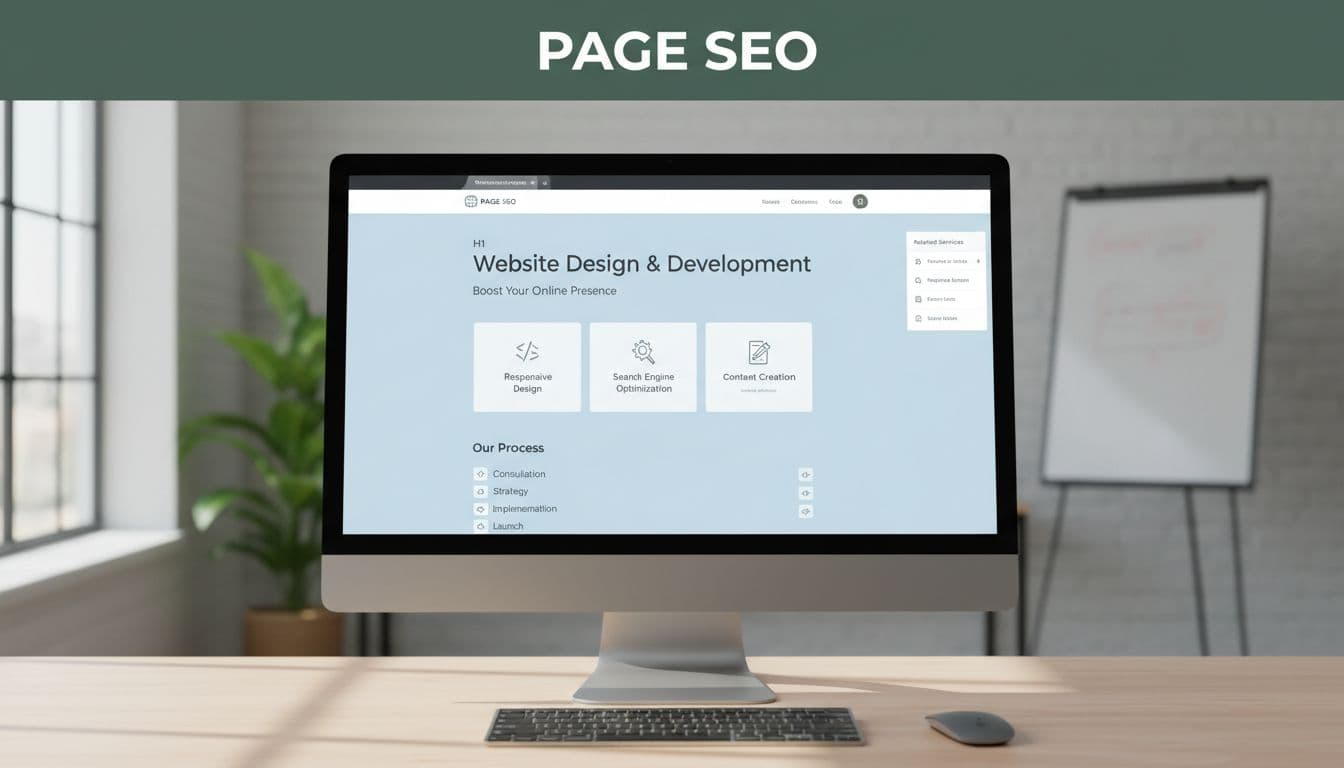
The top of the page should cover four things fast: what you offer, who it’s for, why you’re a safe choice, and how to start. A useful page layout often looks like this, optimizing on-page SEO and enhancing user experience:
- A direct H1 with a short value statement under it.
- A clear CTA above the fold.
- A short section on problems you solve.
- A benefits or outcomes section.
- A simple process block.
- Proof, such as customer reviews, results, certifications, or case studies.
- An FAQ section and a final CTA.
This is where many service pages lose momentum. They explain the service, but they don’t remove doubt. A visitor still wonders about price, timeline, experience, service area, or whether the team is reliable. Pages with stronger high-converting service page elements tend to answer those questions before the user asks.
Your subheadings should keep the page moving, incorporating internal linking where appropriate. Examples:
- “What You Get With Our Monthly SEO Service”
- “How Our Website Redesign Process Works”
- “Why Local Businesses Choose Our Team”
- “Questions About Setup, Pricing, and Support”
CTAs need the same level of clarity for effective call to action elements. “Submit” is weak. “Book a Strategy Session” is better. “Get a Free Quote” is better. If your goal is a consultation, make that obvious with a link like Schedule Call.
Trust elements should sit near decision points, not buried in the footer. Add customer reviews snippets near the CTA as social proof. Put licenses, guarantees, response times, or client logos near claims they support. If you say you improve lead quality, show a short case example right below it.
Add local signals, AI support, and fewer conversion barriers
A service page doesn’t live on its own. It works better when the rest of your online presence backs it up, especially for local SEO.
For service area businesses, your service page should connect tightly with your Google Business Profile and Google Maps. Link it to service area pages for better local search visibility. If you have a page for “bathroom remodeling in Austin,” that same service, area, and contact information should line up across your site, your customer reviews, and your social media profiles. Mixed signals weaken local SEO.
Technical basics still matter. Add internal links from related blog posts and service area pages to build topical authority. Use schema markup where it fits, especially LocalBusiness and FAQ markup. Keep it mobile-friendly. A practical service page SEO framework and this service page SEO walkthrough both support the same idea: clarity beats cleverness.
AI can help, but it shouldn’t write your offer for you and call it done. Use AI for research, content gaps, and FAQ ideas. Then rewrite the page so it sounds specific to your business. Vague pages don’t rank well, and they don’t convert.
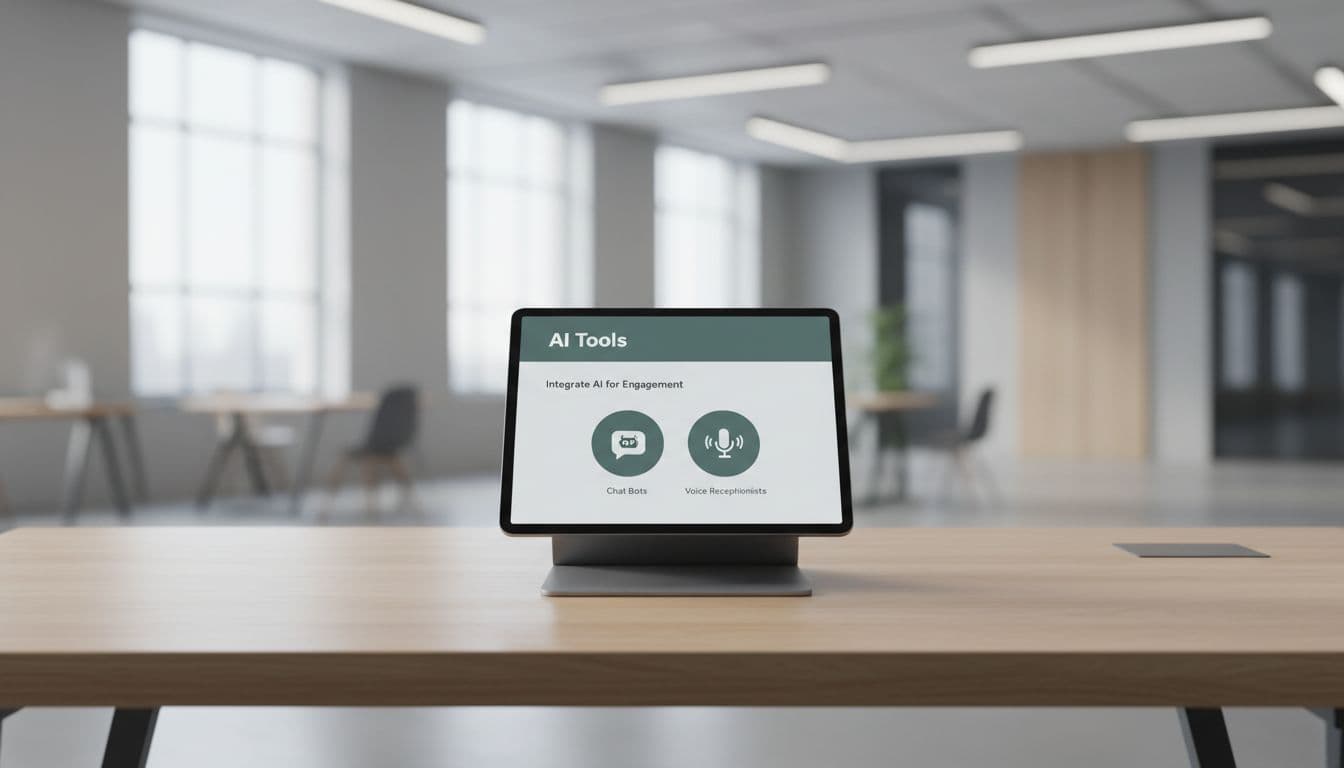
The same applies to response tools. Chat bots can help after hours. Voice receptionists can capture calls when staff is busy. Both can improve lead handling, but only if the page sets expectations. Tell visitors what happens after they click, call, or message. That small detail reduces friction.
A few modern trust builders matter more than ever:
- Link each service page to supporting proof like social proof, not generic claims.
- Show real photos, service areas, testimonials, and turnaround details.
- Keep service information aligned across the website, social media, and local profiles.
Frequently Asked Questions
Why one service per page?
Dedicated pages prevent duplicate content issues and allow unique optimization for each service’s search intent. They’re easier for search engines, users, and AI tools to understand, especially in 2026 with diverse query types like Maps and voice. This focus boosts rankings and conversions over multi-service catch-all pages.
What makes a strong service page headline and meta?
Include the service name plus location keywords, like ‘Kitchen Remodeling in Denver,’ to match searcher intent directly. Avoid generic openers like ‘Our Services’—instead, highlight custom value under the H1. This specificity strengthens title tags, meta descriptions, and ties into local SEO via Google Business Profile.
How should I structure my service page for conversions?
Lead with H1/value statement, above-the-fold CTA, problems you solve, benefits/outcomes, process steps, proof elements, FAQ, and final CTA. Use subheadings that guide like a conversation, such as ‘How Our Process Works’ or ‘Why Choose Us.’ Place trust signals like reviews near decision points to remove doubt and boost lead generation.
How do local signals improve service page SEO?
Connect pages tightly to your Google Business Profile, Maps, and consistent service area info across site, reviews, and social. Add internal links, LocalBusiness schema, and mobile optimization for better visibility. Alignment eliminates mixed signals, enhancing local search rankings and user trust.
What role does AI play in service pages?
Use AI for research, content gaps, and FAQ ideas, but rewrite for business-specific voice—vague AI copy ranks poorly and doesn’t convert. Pair with tools like chatbots for lead capture, always setting clear next-step expectations. Focus on human clarity over automation gimmicks.
Conclusion
A high-performing service page does two jobs at once. It helps search engines understand the page through service page SEO and local SEO, and it helps a buyer feel ready to act.
The strongest improvement is usually not more copy. It’s better alignment between search intent, page structure, proof, and CTA. When those parts match, service page SEO stops being a traffic exercise and starts driving lead generation with improved conversion rates.