
Local SEO Success Starts with Picking the Right Business Location
Choose a business location close to your most profitable customers while ensuring it meets Google’s eligibility guidelines for storefronts or service areas. Prioritize real, accessible premises that support smooth operations over simply expanding your profile’s geographic range. Measure local search visibility alongside actual customer inquiries to optimize your local SEO strategy effectively. Your business should support profitable operations and meets Google’s eligibility rules. Strong local search coverage starts with a real operating base, not a longer list of cities on your profile.
The cheapest lease can become expensive if customers struggle to reach you or employees spend hours driving between appointments. Compare customer demand, competition, accessibility, and operating costs before committing to an address.
Key Takeaways
- Locate near customers you can serve profitably, rather than choosing an address solely for rankings.
- Use a legitimate business location and follow Google’s storefront or service-area requirements.
- Measure visibility across neighborhoods, then connect those results to qualified inquiries and booked work.
What Local Search Coverage Actually Measures
Local search coverage describes how consistently your business appears for relevant searches across the areas you serve. It includes Google Maps visibility and local website results, which require separate measurement.
Your business might rank well near its office but appear less often in neighboring communities. Google’s local results depend on relevance, distance, and prominence. Municipal boundaries don’t create a fixed ranking boundary, as our guide to Google Maps near city borders explains.
Consumer behavior makes these differences important. SOCi’s 2024 Consumer Behavior Index reports that 80% of U.S. consumers search for local businesses weekly and 32% search daily. It also reports that 76% visit a related business within a day.
Fit Small Business reports that, in 2024, 81% of consumers used Google to research local businesses. It also reports that 63.6% were likely to check Google reviews before visiting.
These figures support investing in local visibility, but broad consumer statistics can’t show which neighborhoods will produce profitable customers for a specific business. A local search service can assess that question using your business’s demand and lead data.
Compare Customer Proximity, Competition, and Costs
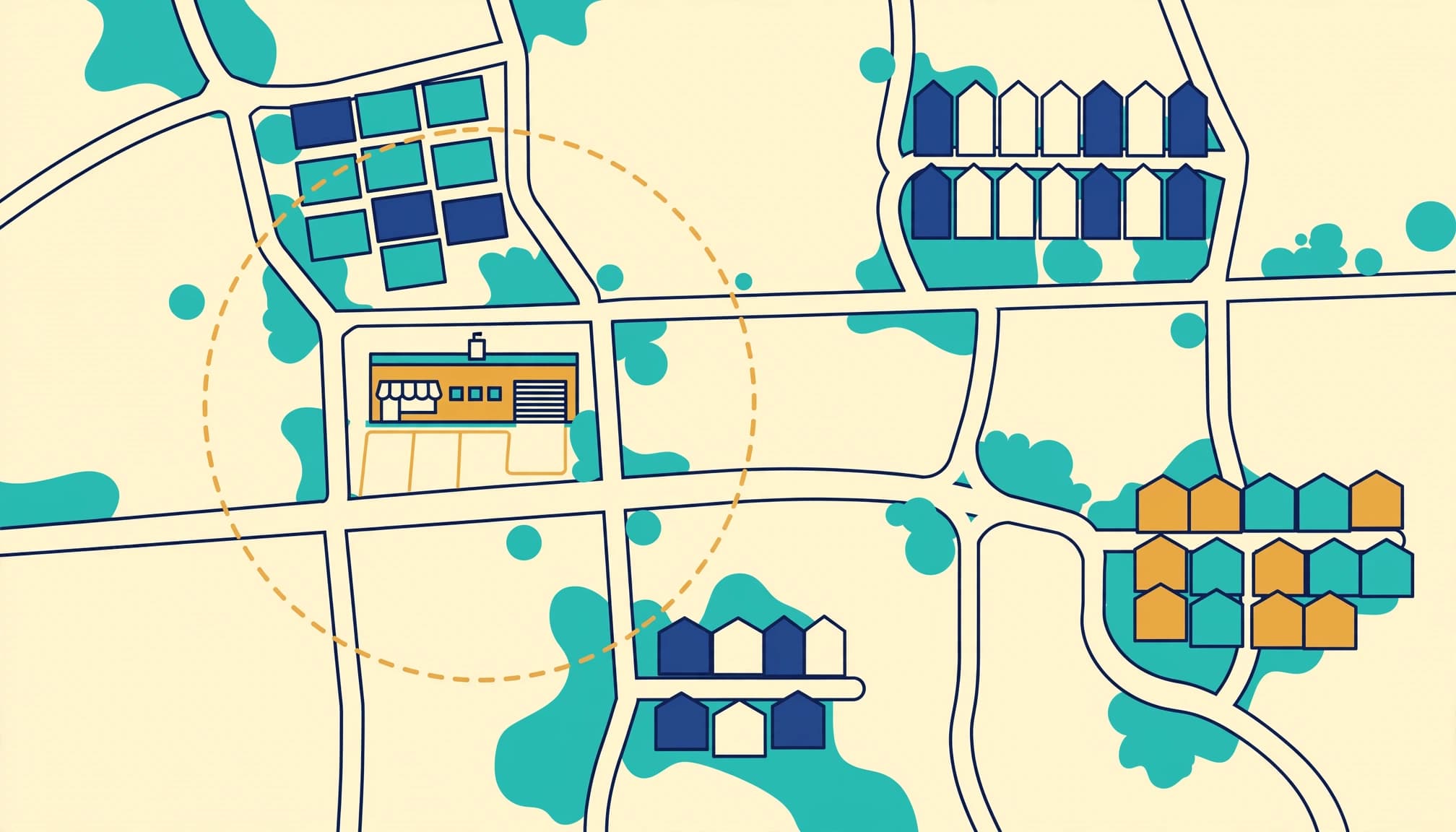
Start with the neighborhoods producing your best customers or documented demand for your services. Then evaluate available premises against those areas.
Evaluate Demand and Competitor Density
Use customer ZIP codes, appointment records, and service requests to identify where demand concentrates. For a new business, examine neighborhood demographics, nearby complementary businesses, and competitors offering the same services.
Compare sites using evidence rather than assumptions.
| Factor | Evidence to compare | Business implication |
|---|---|---|
| Customer proximity | Customer addresses and travel times | Easier visits or shorter service routes |
| Competition | Relevant competitors and their reviews | Difficulty winning attention |
| Accessibility | Parking, entrances, transit, and road access | Customer convenience |
| Operating costs | Rent, utilities, staffing, and travel | Sustainable margins |
A busy commercial district can offer demand while also creating stronger competition. Few competitors may indicate an opportunity, but that alone doesn’t establish customer demand.
Balance Accessibility Against Total Cost
A storefront needs a convenient entrance, suitable parking, and access during advertised hours. A mobile service business needs efficient routes, equipment storage, and dependable dispatch access.
Compare total monthly occupancy and delivery costs, not rent alone. Include build-out expenses, insurance, utilities, and employee travel time. When comparing a Massachusetts site with one in another state, check each state’s workers’ comp requirements and premiums. Don’t rely on a national estimate. A more central address can justify higher rent if it improves operations, but rankings alone shouldn’t justify the premium.
Choose an Address That Meets Google’s Requirements
A candidate address and operating model must meet Google Business Profile eligibility rules and fit how your business operates. An address purchased only to appear closer to customers creates eligibility problems.
Storefronts Need a Genuine Customer-Facing Presence
Businesses displaying an address should receive customers there during their stated hours. Permanent business signage and a staffed presence support a legitimate storefront.
Google’s business representation guidelines exclude P.O. boxes and virtual offices that don’t function as actual business locations. A coworking address requires the appropriate signage, customer access, and staffing by your business.
For an existing company moving premises, update the existing Google Business Profile rather than creating a duplicate. Check for duplicate listings after the update. Google may require verification again.
Service-Area Businesses Must Describe Their Real Operations
A service area business travels to customers and doesn’t receive them at its base. It must hide its home or private-office address from the public profile.
Under Google’s service-area guidance, you can specify up to 20 areas, including cities, postal codes, or counties. Those selections describe where you work; they don’t purchase visibility there.
As a planning guideline, keep your core territory within roughly a two-hour drive. Define a practical service area based on road access, job value, and appointment capacity instead of targeting every town within 100 miles.
Hiding your address doesn’t erase your operating location. Adding service areas doesn’t create new branches or a selectable ranking radius.
Measure Local Search Coverage Before You Commit
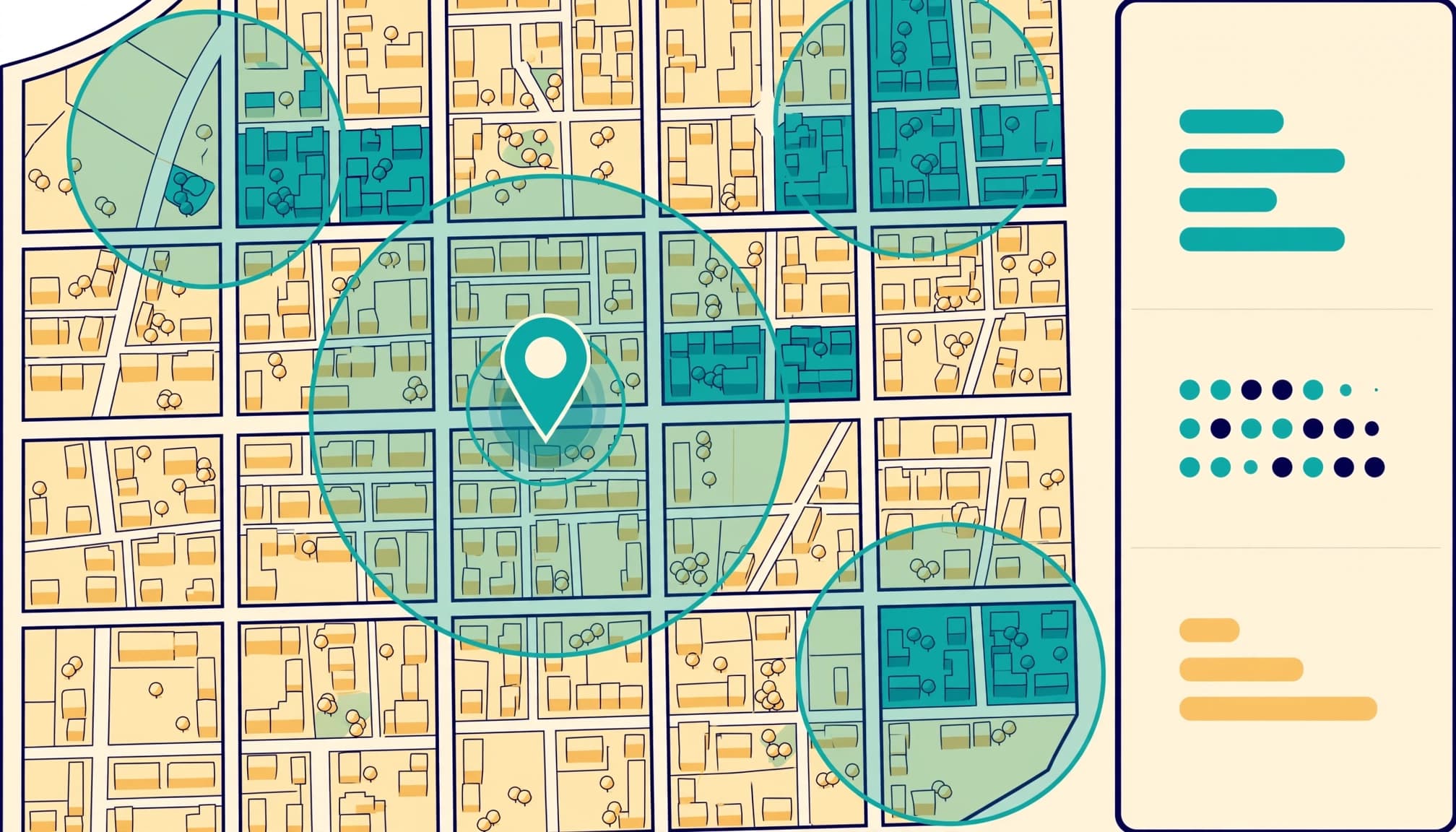
A geo-grid scan samples rankings at multiple geographic points. Tools such as Local Falcon and BrightLocal’s Local Search Grid help reveal differences that a search from your office won’t show.
Use this repeatable process when comparing neighborhoods:
- Select searches tied to your actual services, such as your primary business category and highest-value service.
- Set a consistent grid across neighborhoods you can serve profitably. Keep the same points and search terms for later comparisons.
- Record which competitors appear around each candidate site. If your business already operates, record its positions too.
- Calculate sampled top-three coverage by dividing top-three placements by total sampled points. Keep different search terms separate.
- Repeat the scan and compare the results with inquiries and booked jobs by area, rather than relying on one snapshot.
On a 5-by-5 grid, there are 25 sampled points. Each point accounts for four percentage points of sampled coverage. This measures visibility within that scan, not total market share.
For unopened premises, evaluate competitors rather than creating placeholder business profiles. A scan can’t promise where your future profile will rank.
For an existing location, review its Google Business Profile performance data in Business Profile performance data. Profile interactions add context, but they aren’t completed leads.
Support Your Location With Accurate Local Signals
Your address influences distance, but the surrounding information helps customers and search engines understand your business. Strengthen those details before expanding your geographic targets.
Maintain Listings From One Master Record
Moz describes local search as a geographic ranking system that combines location information with business attributes. Conflicting name, address, phone, and website information, often called NAP+W, can reduce search-engine confidence.
Maintain a master record for each location as part of your citation management. Include hours, categories, landing pages, and approved contact details. Then correct outdated information in local listings across Google, Apple Maps, Bing Places, industry directories, and social media.
Businesses with several locations often benefit from listing-management software. Prioritize accurate, up-to-date information across relevant platforms.
Build Pages That Explain Local Service
Create location pages only where you have useful information to offer. Each location page should include distinct details about services, scheduling, access, or genuine local work, not just a changed city name. Create service area pages only for areas where you can provide relevant details about availability, travel, or local work.
Use local schema markup, including LocalBusiness schema for business details. Service markup can describe the service type and geographic area through properties such as areaServed. Keep structured information consistent with the visible page, without exposing a private home address.
Request Reviews Through a Consistent Process
A consistent review management process supports reputation management. For customers who agree to receive messages, send a review request within an hour of completing the job. Follow up by email a day or two later with a direct Google review-form link.
Request honest feedback without incentives or screening for satisfied customers. Authentic reviews help prospective customers assess your business, while legitimate local links and community mentions can support prominence.
Track Qualified Leads Alongside Visibility
Search coverage matters when it produces suitable customers at a sustainable cost. Review results every 28 days, using consistent reporting periods.
Track call-button interactions in Google Business Profile’s Performance report, formerly called Insights. These interactions aren’t the same as completed calls or booked appointments.
Use Search Console to identify queries, location pages, and other landing pages gaining organic visibility. Google’s guidance on Search Console and Analytics data explains how the tools complement each other.
In GA4, configure form submissions and website telephone-link clicks as events, then mark meaningful actions as key events. A telephone-link click indicates intent, not a completed conversation.
AI tools such as voice receptionists and chatbots can help capture inquiries after people find your business. They don’t change your physical proximity or guarantee Maps placement.
Get help with a local search audit to identify geographic visibility gaps and prioritize improvements through our Proximity Gap Solutions.
Frequently Asked Questions
Will Moving Closer to Customers Guarantee Better Rankings?
No. A closer location may improve the distance factor for some searches, but relevance, prominence, and competition still affect results.
A move can also weaken proximity to customers near the old address. Compare both markets before deciding. Google retains control over rankings, verification, and reinstatement, so no agency can promise a particular outcome.
When Does a Second Location Make Sense?
A second location makes sense when demand, staffing, service capacity, and margins support a genuine additional operation. It shouldn’t exist only as an address for another profile.
For multi-location businesses, choose marketing support that maintains each branch’s profile, location page, listings, and reporting separately. Assign someone to communicate changes before outdated hours or contact details spread across platforms.
Choose a Location That Supports Profitable Reach
The strongest location decision connects customer proximity with practical operations. An eligible address, manageable service territory, and clear access create a foundation your marketing can support.
Measure coverage and qualified leads together. That helps distinguish a visibility problem from a location that costs too much to serve.
Schedule a No-cost discovery call to discuss your location, target neighborhoods, and local SEO priorities with us.