AI marketing data privacy ensures small businesses control what customer information AI tools collect, share, and retain to prevent privacy risks and legal issues. By regularly reviewing data flows, minimizing data collection, and matching consent to applicable laws, businesses can protect customer trust while leveraging AI-powered marketing. This checklist helps create a repeatable process to manage privacy across all AI marketing systems.
Your marketing tools may know more about a customer than your front desk does. AI marketing data privacy means deciding what those systems can collect, retain, infer, and share before a campaign creates an avoidable problem.
When AI connects website forms, CRM, email, analytics, and advertising accounts, AI-enabled marketing privacy requires reviewing how those records combine. Small businesses don’t need a legal department to improve control, but they do need a repeatable review process.
Key Takeaways
- Inventory every AI marketing tool, integration, data source, and downstream recipient so you know what customer information is collected and shared.
- Apply data minimization, role-based access, retention limits, anonymization, and human review before customer data enters AI systems or campaigns.
- Match consent, disclosure, opt-out, access, and deletion processes to the laws that apply where your customers live, including GDPR, CCPA, CPRA, and other state privacy laws.
- Keep sensitive customer information out of public AI prompts, and ask vendors about training-data use, subprocessors, retention, deletion, security, and customer-rights support.
- Treat privacy as a recurring workflow: update your inventory, policies, consent settings, and vendor reviews whenever tools, purposes, or data-sharing practices change.
Why AI Marketing Data Privacy Needs Its Own Workflow
Artificial intelligence can help you write email campaigns, route leads, score prospects, summarize calls, and improve follow-up. It can also tailor campaigns while copying customer records into places your team doesn’t regularly review.
Marketing data collection now covers more than names and email addresses. It can include phone numbers, IP addresses, website behavior, purchase history, SMS replies, call recordings, chat transcripts, appointment details, and ad audience lists.

Privacy risks grow when an integration gives a chatbot, voice receptionist, CRM, or analytics system more information than its task requires. A chatbot may access CRM notes, while a voice receptionist may create call summaries. An analytics platform may connect browsing activity to an email address. These systems may receive customer data beyond what they need, but each connection can be useful with a clear business reason and limited access.
A privacy policy can’t undo a prompt that already sent an unredacted customer message, health detail, or payment issue to an outside AI model.
Set a rule that staff should never paste sensitive information into public generative AI tools. That includes private social media messages, Google Business Profile messages, legal questions, medical details, payment data, and unedited call transcripts. Ask whether prompts or connected records are retained as training data, since that affects vendor review and disclosure obligations.
For custom AI deployments, federated learning can keep raw records near their source while models learn from distributed data. Most small businesses won’t need to build a custom model.
Personalized marketing can use only the minimum information needed to deliver a relevant message, helpful response, or timely follow-up.
Match Consent and Customer Rights to Where People Live
Data privacy regulations often depend on where customers live, how you target or monitor them, and how you use their information. This matters when cross-border digital marketing strategies reach people in other regions, even if your business is based in the U.S.
The General Data Protection Regulation (GDPR) requires a lawful reason to process personal data. Consent is one option, but opt-in consent must be clear, informed, specific where required, and easy to withdraw. People may also make a data subject access request or seek deletion in some situations. The highest level of GDPR fines can reach 20 million euros or 4% of global annual turnover, depending on the violation. Use a documented GDPR compliance checklist for U.S. companies when your campaigns reach European customers.
| Privacy framework | What marketers should focus on |
|---|---|
| GDPR | Document a lawful basis, honor access and deletion requests, and get valid consent where required. |
| California Consumer Privacy Act (CCPA) and CPRA | Provide notice, give consumers rights over their data, and offer opt-outs for data sales or sharing. |
| Other U.S. state laws | Check thresholds, targeted-advertising opt-outs, sensitive-data rules, and required risk assessments. |
California does not use the same broad opt-in structure as the GDPR. The CCPA and CPRA place stronger emphasis on notice, consumer rights, and the ability to opt out of the sale or sharing of personal information. Your privacy policy should describe relevant collection, sharing, and consumer choices. Extra protections apply to minors and certain sensitive data uses. Other state privacy laws create compliance challenges around thresholds, targeted-advertising opt-outs, sensitive-data rules, and risk assessments.
A consent management platform can document data collection by region, record the time and source of consent, pass preferences to website tags, and suppress opted-out audiences. It can also help control nonessential third-party cookies and tags where required. These tools do not fix a weak process by themselves. Your team still needs to know what data it collects and why.
The Federal Trade Commission also treats misleading AI claims as a consumer protection issue. Don’t claim an AI tool is more accurate, more profitable, or more capable than you can prove. Do not present AI-generated testimonials as genuine customer feedback.
For jurisdiction-specific requirements and their legal implications, review your process with qualified legal counsel.
Printable AI marketing data privacy Checklist
Print this checklist, assign an owner to each item, and review it whenever you add a new tool or automation.
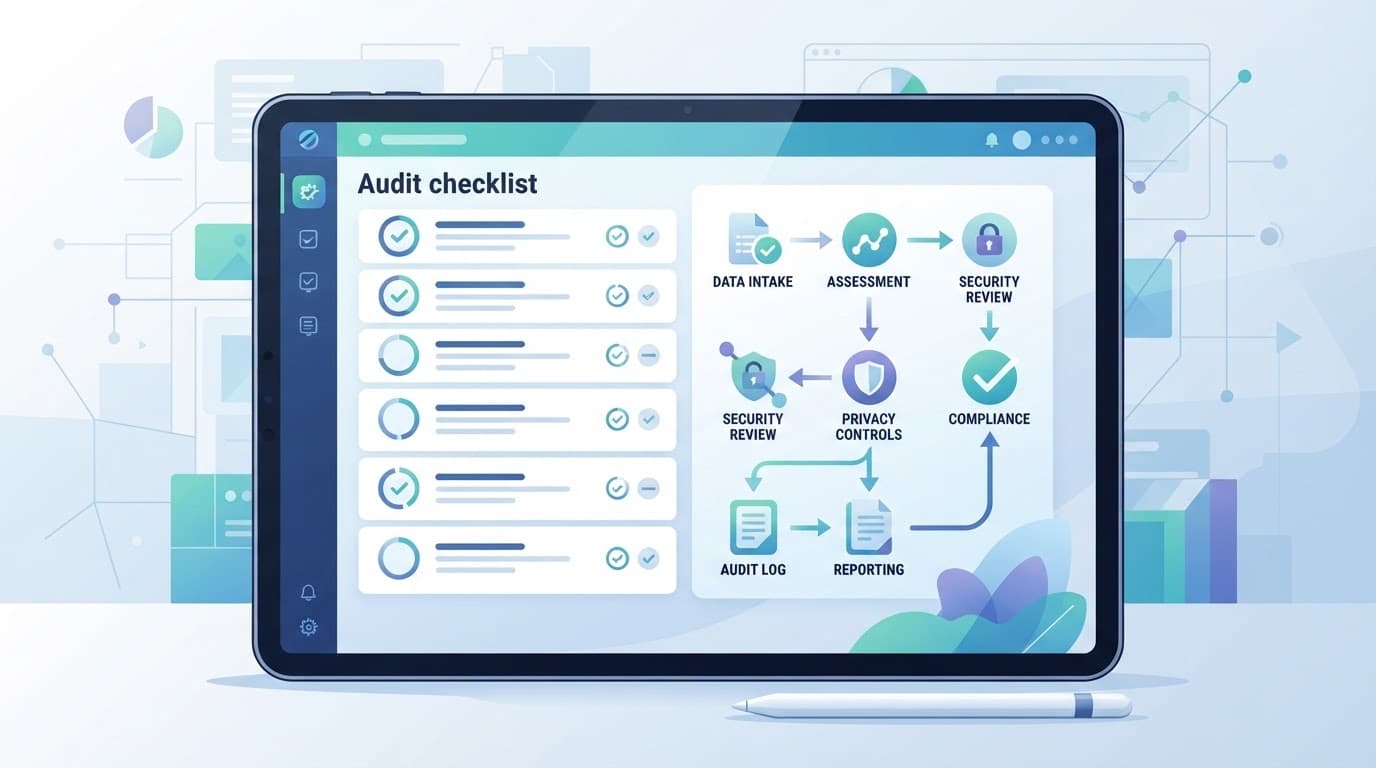
- Create a data collection inventory. List every AI tool, browser pixel, CRM integration, chatbot, voice receptionist, and reporting platform your team uses.
- Map the information each tool receives. Include form entries, email addresses, phone numbers, ad identifiers, SMS messages, meeting recordings, and support requests.
- Write down the purpose for each data point. A contact form may need a name, email, and phone number. It rarely needs a date of birth or full account history.
- Review website cookie settings, third-party cookies, and advertising tags. Make consent choices clear before nonessential tracking starts where the law requires it.
- Verify that consent management settings are recorded and passed to downstream tools. Change a preference and confirm each platform receives the correct status.
- Test Global Privacy Control and other opt-out signals on your own site. Confirm that an opted-out visitor is not added to retargeting or data-sharing workflows.
- For a mobile app, test App Tracking Transparency separately from website cookie controls. Confirm that a denied choice prevents advertising identifier sharing.
- Use data anonymization before reports, exports, or model inputs leave the source system. Review direct identifiers and combinations of quasi-identifiers, not merely names, before release.
- Create a retention schedule. Delete old lead exports, unused ad audiences, and call recordings when the approved business purpose ends.
- Limit access by role. Marketing staff may need campaign reports, but they may not need access to full customer-service notes or payment records.
- Turn on multi-factor authentication for CRM, email, analytics, and AI vendor accounts. Remove access when an employee or contractor leaves.
- Keep unredacted customer records out of public AI prompts. Use a secure business account with clear data controls when a vendor must process internal information.
- Review AI-generated ads, emails, and review responses before publishing. A human should check accuracy, disclosure needs, and customer tone.
Current 2026 privacy compliance updates show why this needs recurring review, not a one-time setup. Update your privacy policy when tools, purposes, sharing, or rights processes change.
If your data is scattered across staff accounts and marketing platforms, a No-cost discovery call can help identify the first fixes that matter most.
Questions to ask every AI vendor
A vendor’s privacy page is not enough. Ask direct questions before connecting records to a new platform.
- Do you use our prompts and submitted files as training data for your generative AI models? Can we disable that use?
- Which subprocessors receive our data, and in which countries do they store or process it?
- What customer data is pulled through our CRM, email, calendar, analytics, or ad-platform connections?
- Can we set retention periods and permanently delete data, including backups and generated outputs?
- How do you support access, correction, deletion, and opt-out requests from customers?
- Will you sign a data processing agreement or service-provider agreement that matches our legal obligations?
- What is your data breach process, including notification timing, investigation support, and customer communication responsibilities?
- Does the platform support federated learning or another architecture that avoids centralizing raw records? Ask what the contract and account settings actually provide.
Look for clear answers in the contract, security documentation, and account settings. “We take privacy seriously” is not a usable answer. For California-focused workflows, this CCPA compliance checklist is a useful reference for data mapping, rights requests, and policy updates.
Personalize Campaigns With Less Customer Data
Effective personalized marketing often starts with first-party and zero-party data. First-party data comes from direct interactions, such as a quote request, purchase, or email click. Zero-party data is information a customer chooses to share, such as a preferred service, location, or communication channel.
Use broad segments when they can do the job. Limit data collection to the fields needed for each segment. A home-services company can send seasonal maintenance reminders based on service type and region, without building detailed profiles from every website visit. SEO reporting for digital marketing strategies can rely on aggregated search, conversion, and campaign data. It rarely needs an individual’s full contact record.
Data anonymization can prepare training data for reports or model development, but it may not prevent reidentification. Removing a name alone is not enough. A ZIP code, date, purchase detail, and browsing history can identify a person when combined. Aggregate data, remove direct identifiers, and reduce overly detailed fields before analysis.
Federated learning can suit larger custom AI projects because machine learning algorithms train near where records are held. This approach shares model updates rather than raw records. Most small businesses will get better results by limiting collection and keeping a human review step.
Strong data governance supports better marketing decisions. Privacy-first marketing depends on data minimization, human review, and transparent use. These practices help protect the trust that makes customers willing to share information.
Frequently Asked Questions
What is AI marketing data privacy?
AI marketing data privacy is the process of controlling what AI-enabled marketing systems collect, retain, infer, and share. It includes reviewing how customer information moves between forms, CRMs, email platforms, analytics tools, advertising accounts, and AI vendors.
Can small businesses use AI marketing tools without collecting too much customer data?
Yes. Start with data minimization by collecting only the information needed for a specific marketing purpose and using broad segments when possible. First-party and zero-party data can support personalization without building overly detailed customer profiles.
What should businesses ask AI marketing vendors?
Ask whether the vendor uses prompts or submitted files for model training, which subprocessors receive the data, where it is processed, and how retention and deletion work. Also confirm support for access, correction, deletion, opt-out requests, data processing agreements, and breach notifications.
How often should an AI marketing privacy checklist be reviewed?
Review it whenever you add a new tool, integration, automation, data purpose, or sharing practice. A recurring review should also confirm consent signals, access permissions, retention schedules, privacy policies, and customer-rights processes still work as intended.
Protect Customer Trust Before Campaigns Go Live
Turn the checklist into a routine by maintaining a data inventory, assigning data governance ownership, and establishing consent management. Review data collection and legal implications whenever you add a tool or automation, seeking advice when requirements are unclear. Advanced workflows may also use federated learning to reduce the need to centralize raw records.
A privacy-conscious process can still support personalized marketing without collecting more information than you need. Honest disclosures and careful handling build consumer trust, protect campaign quality, and strengthen your reputation over time.