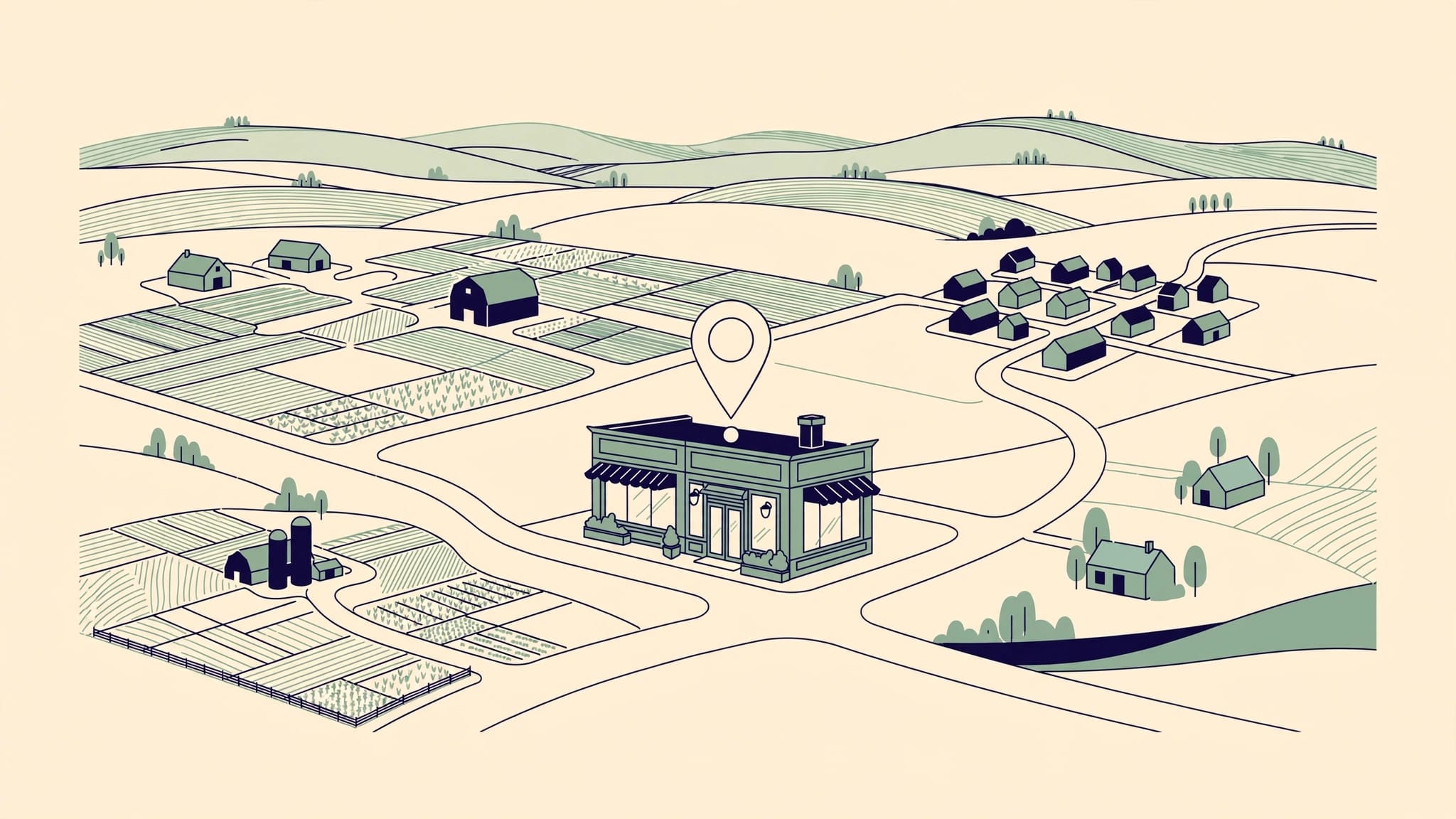
Your rankings can look fine while your phone stays quiet. That is the fundamental problem with local rank tracking in 2026.
Search results have evolved significantly. AI answers, map packs, Local Service Ads, reviews, and videos now crowd the page. If you only monitor one average ranking number, you miss what customers are actually seeing in their specific neighborhoods.
That is why small businesses need a sophisticated approach to tracking that connects your local search visibility to actual calls, physical visits, and booked work.
Key Takeaways
- Local rankings now fluctuate based on specific city blocks rather than just the city as a whole, which is why precise geo-grid tracking is essential for success.
- A sudden drop in organic clicks does not always mean your SEO strategy is failing; often, the search engine results page layout has simply changed.
- To get a complete picture of your performance, data from your Google Business Profile, such as calls, direction requests, and assisted conversions, should sit alongside your standard rank reports.
- Service-area businesses, physical storefronts, and multi-location brands require unique local rank tracking setups tailored to their specific market reach.
- You do not need an overly complex software suite; a simple stack consisting of free Google tools paired with one reliable paid local rank tracker is often enough to stay competitive.
Why local rank tracking changed in 2026
A local search result is no longer a tidy list of ten blue links. Google still leads, but local SEO has evolved because nearby search behavior now spreads across Google Maps, the Google Business Profile, the local pack, AI summaries, Local Service Ads, videos, and even discovery paths that begin on social media.
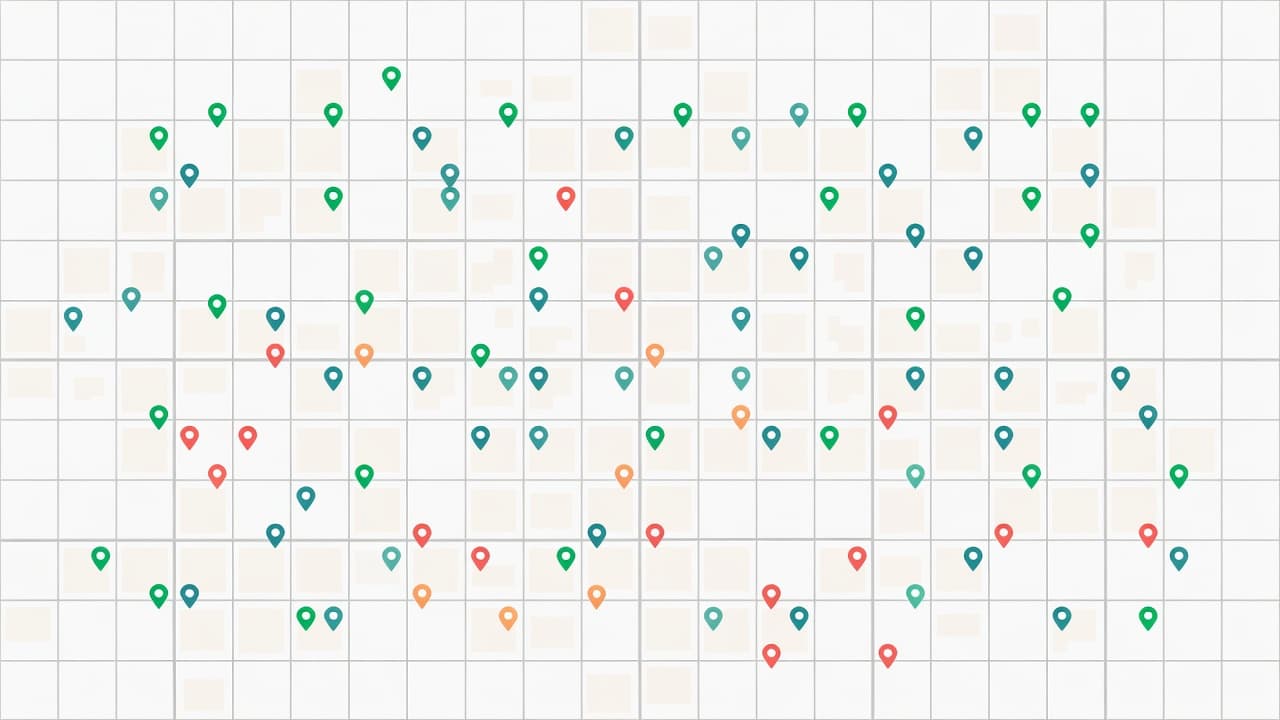
That matters because people do not search from one fixed point. They search from home, the office, a parking lot, or while driving across town. A bakery may rank first two blocks away and seventh three miles out. A plumber may look strong in one ZIP code and invisible in the next. That is why older citywide ranking reports often feel clean on paper and useless in practice.
The other shift is page layout. AI answer boxes often sit above organic search results. Reviews, FAQs, ads, and map features take more screen space, which significantly impacts how both desktop and mobile users interact with the page. Top-of-page visibility now matters more than ever because lower placements disappear fast on smaller screens.
That is also why rising impressions with a weaker click-through rate is not always bad news. Sometimes your business is still showing, but the page is answering part of the query before the click happens. A smart report separates the realization that we lost visibility from the fact that the result page simply changed.
If you want a practical overview of current local tactics, BrightLocal’s local SEO strategy guide is a solid reference. The core point is simple: track where you appear, how often you appear, and whether that visibility leads to real business actions.
What to measure when rankings alone are not enough
Average position is a starting point, not the finish line. A small business needs a short set of numbers that explain both visibility and outcome. When you move beyond simple keyword ranks, you gain a more complete picture of your digital footprint.
This is the scorecard that works best for most local teams:
| Metric | Where to check it | Why it matters |
|---|---|---|
| Local pack and map visibility score | Geo-grid tracking | Shows how rankings change across neighborhoods using local search grid heat map visuals |
| Website clicks, calls, and form fills | GA4 and call tracking | Connects visibility to actual leads and sales |
| Google Business Profile actions | Google Business Profile | Tracks calls, direction requests, and views to see how local search turns into engagement |
| Branded search volume | Search Console | Confirms whether awareness is rising based on accurate data |
| Competitor performance | Rank tracking software | Helps perform a regular competitor analysis to compare your standing against nearby rivals |
| Assisted conversions | GA4 or CRM reports | Captures leads that return later or convert through another channel |
| Impression share | Google Ads or LSA reporting | Explains whether visibility is strong even when click-through rates are soft |
More impressions and fewer clicks can mean the page layout changed, not that your SEO efforts stopped working. This is where many small businesses go wrong. They see a lower click-through rate and assume the campaign failed. In 2026, that is too simple. If impression share is healthy and your position in the local pack remains steady, the issue may be page composition, not your reach.
Using geo-grid tracking is essential because it allows you to visualize your presence across specific service areas. By reviewing heat map visuals, you can identify exactly where you are winning and where your competitors are pulling ahead. This level of detail allows for a much more effective competitor analysis than looking at a single, national-level keyword rank.
Branded search volume is another overlooked signal. If your content, reviews, email, and social media work together, more people search for your business by name. That trend often shows up before revenue reports tell the full story.
Local reporting should also include conversion friction. If your rankings are up but calls are flat, check the basics. Does the page load in under three seconds? Is the phone number tap-to-call on mobile? Is the contact form short enough to finish in under a minute? Remember that traffic without response is just noise. Relying on accurate data ensures that every adjustment you make is based on real user behavior rather than vanity metrics.
Rank tracking for different local business models
Not every local business should read the same report. The right setup depends on how customers find you and where you serve them.
Service-area businesses
Plumbers, roofers, HVAC companies, electricians, and mobile detailers need neighborhood-level tracking. Because a service area business operates differently than a storefront, the physical business address is less important than the wider radius where revenue is generated.
Track location keywords by city, ZIP code, and service intent. Focusing on specific phrases like “emergency plumber near me” provides more actionable insights than a broad phrase with weak buying intent. High-intent terms often lead to phone calls rather than empty clicks, and you should ensure your local citations are consistent across these target zones to boost your visibility. For these businesses, call handling is part of the SEO picture. If rank tracking shows strong evening visibility, but no one answers after 5 p.m., missed demand becomes lost revenue. This is where missed-call text back, voice receptionists, and after-hours routing start to matter.
Multi-location businesses
Dental groups, med spas, auto repair chains, and franchises need location-by-location reporting. One blended report hides weak branches and prevents effective multi-location management.
Each location should track its own rankings, reviews, landing pages, and GBP activity. Compare locations by category, not only by total leads or search volume. A branch with lower search volume may still have better map visibility, which highlights that the problem might be weaker front-desk follow-up rather than SEO. This is also where local page quality matters. Duplicate pages, inconsistent citations, and sloppy location data can split authority between branches.
Brick-and-mortar shops
Restaurants, salons, gyms, pet stores, and boutiques need tight tracking around the store itself. Nearby rankings, direction requests, review velocity, and photo engagement on Google Maps often matter more than broad metro coverage.
If your team still treats the Google Business Profile like a one-time setup, you are probably leaving visibility on the table. Fresh photos, accurate hours, review responses, and category choices all affect local performance. For storefronts, those details show up directly on Google Maps, which is exactly where most local buying decisions happen.
Choosing tools, budgets, and reporting that stay practical
Most small businesses do not need an enterprise stack. They need accurate data, useful reports, and a budget that makes sense for their bottom line.
Start with the free basics: Google Business Profile, Google Search Console, and GA4. That gives you visibility data, branded search trends, and on-site actions. Add call tracking if phone leads matter, which is true for most local businesses.
Then choose one paid tracker based on your model. BrightLocal is a strong all-around option for local rank tracking, serving as a reliable citation builder for managing local citations, reviews, and reports. Local Falcon is excellent when you need geo-grid views across a service area. Whitespark remains a go-to choice for businesses prioritizing their citation builder needs. For growing teams and SEO agencies, platforms like Semrush Local offer white-label reporting and broader capabilities, while some teams prefer a daily rank tracker to ensure they have real-time results.
A realistic 2026 budget often looks like this:
- Single location with basic needs, free tools plus one paid rank tracker, about $20 to $50 per month.
- Growing local business with citation and review needs, about $40 to $80 per month.
- Large multi-location setup, higher costs due to tracking volume, automated reports, and reporting complexity.
If you are comparing options, this tested review of local SEO platforms and this 2026 local SEO tools roundup offer useful side-by-side context.
Reporting should stay simple. A monthly owner report and a lighter weekly check-in is enough for many businesses. Include map visibility, top terms, calls, form leads, GBP actions, review growth, and one short action list. If the report does not lead to decisions, it is too crowded.
A quick No-cost discovery call can help if you are not sure which local SEO or local rank tracking stack matches your budget.
Turn ranking data into local actions that win calls
Effective local rank tracking should provide a clear roadmap for what to do next. If your dashboard only produces static charts, the data is incomplete. To rank higher on Google, you must move beyond observation and start taking decisive action.
When your visibility drops in a specific area, start with a thorough competitor analysis to identify why others might be outperforming you. Review the matching location page first. Tighten your service descriptions, add recent photos, improve internal links, and ensure your content matches how people search. If a keyword shows demand but weak conversion, rewrite the title and opening copy to better align with specific location keywords. Simultaneously, check your NAP consistency across the web to ensure your name, address, and phone number are accurate, which strengthens your authority in organic search results and Google Maps.

If your map visibility is solid but leads lag, look beyond basic rankings. Page speed, response time, and how your site functions on desktop and mobile usually deserve immediate attention. Trust signals are equally vital, including high-quality real photos, short contact forms, recent testimonials, and a healthy portfolio of local citations.
AI-powered insights can help here, but they should remove friction rather than add it. Use these tools to spot review themes, group location-level ranking changes, or suggest content updates, though you should always have a human approve the final message. The same rule applies to chat bots; they work best when they answer common questions quickly and pass high-intent leads to a person.
For phone-heavy businesses, voice receptionists can close the gap between visibility and response. If your rank tracking reveals high demand outside office hours, an automated voice system or a missed-call text back can keep that lead warm until staff follows up, ensuring you never miss a potential customer.
By utilizing real-time results and automated reports, you can better understand the full customer journey. This is also where SEO meets the rest of your marketing strategy. A rise in branded searches after email campaigns or social media activity often signals that awareness is improving, even before organic clicks catch up. Local search does not live in a vacuum; it is part of a wider ecosystem.
If your rankings are strong but your calls are still weak, it may be time to Schedule Call and review the full path from search to lead.
Frequently Asked Questions
Why does my ranking look good, but I am not getting more calls?
Rankings are often based on a single point of reference that does not account for the specific neighborhood where your customers actually search. You may rank highly in one part of town while remaining invisible just a few blocks away, and if your landing page lacks a clear call-to-action, high traffic will not result in more phone leads.
How often should I check my local rankings?
A weekly check-in is typically enough to spot meaningful trends without getting distracted by minor daily fluctuations. Focus on monthly reports for strategic planning, and only look at daily numbers if you have recently launched a new campaign or noticed a sudden drop in lead volume.
Do I need expensive software to track my local performance?
Most small businesses can get by with a simple, affordable stack of tools. You should rely on free data from Google Business Profile and Google Search Console, then add one specialized paid tool for geo-grid tracking to see exactly where you are winning or losing by neighborhood.
Does a change in page layout affect my rankings?
Yes, modern search results include AI answers, maps, and ads that push organic results further down the page. If your impressions remain steady but your clicks drop, it usually means the search layout has changed rather than a problem with your website’s performance.
Conclusion
Local search visibility in 2026 is more uneven, more crowded, and more tied to mobile behavior than it used to be. That is why effective local rank tracking has to go beyond a single average number.
The best reports connect neighborhood level rankings with calls, clicks, reviews, and real lead outcomes. When you track the right signals as part of your broader local SEO strategy, your digital presence becomes easier to manage and much easier to trust.
Small businesses do not need more dashboards. They need clearer answers about where they show up, where they do not, and what steps to take next to turn their local rank tracking data into actual growth.