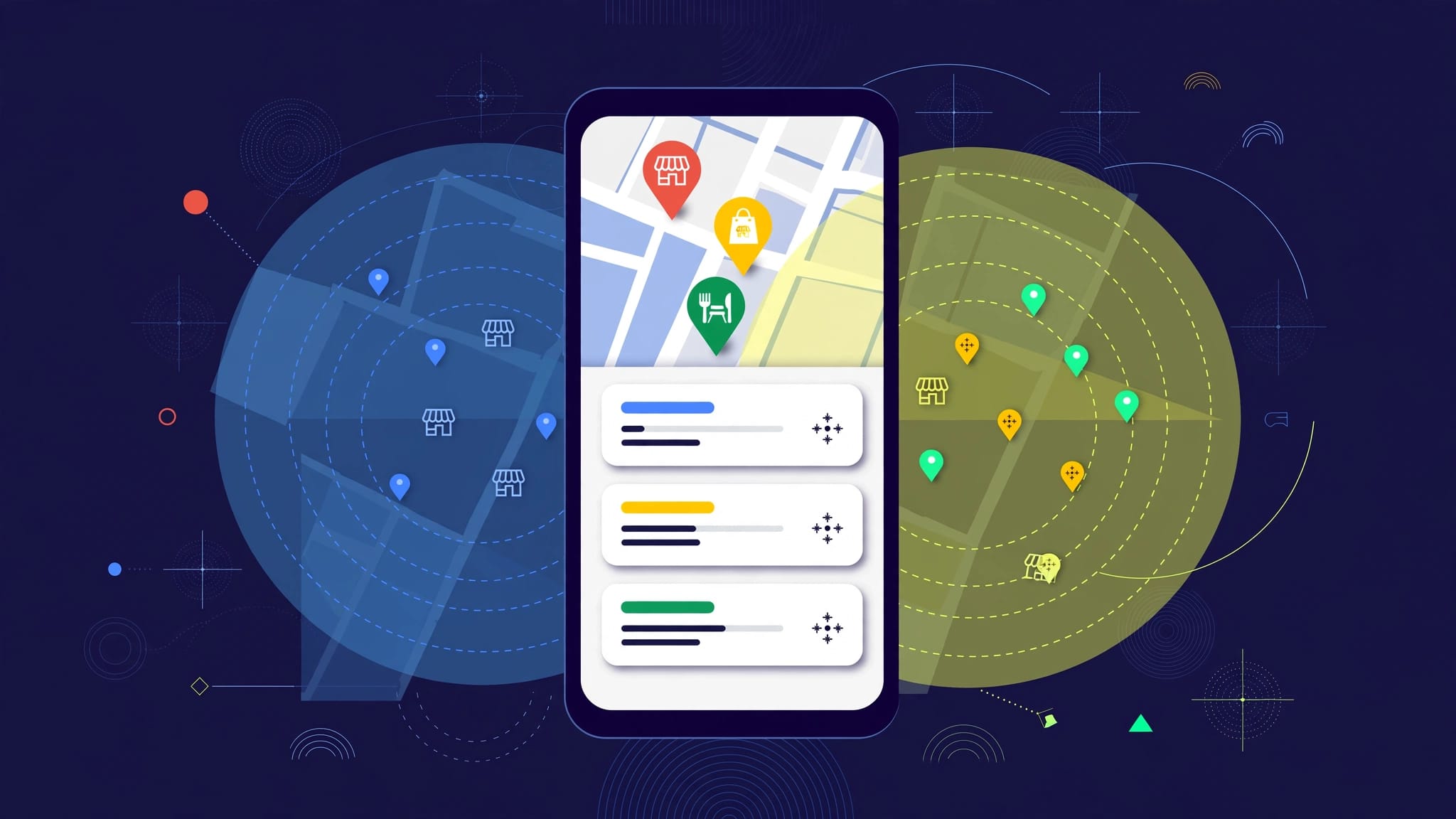
Finding your business by name on Google feels reassuring, until you search for the service you sell and see competitors instead. Branded visibility and service keyword rankings reflect different customer searches.
Your website may help Google identify your company without clearly explaining why it belongs in broader service results. Improving search visibility starts with service relevance, accurate local information, and focused search engine optimization.
First, understand what your branded rankings are telling you.
Why Are Business-Name Searches Easier to Rank For?

Branded searches have a clear destination
Someone searching your business name usually wants your website, phone number, hours, or reviews. Google has a clear business to find, especially when your name is distinctive.
Your homepage, business listing, and other mentions can help connect your name with your company. Ranking prominently for it is useful, but it doesn’t establish your visibility among people who haven’t heard of you.
A referral may already know which company to contact. Someone searching for a service is still choosing.
Service searches require stronger relevance
A search for drain cleaning or emergency dental care asks Google to compare providers. Your business competes with companies that have relevant pages, local visibility, customer reviews, and established websites.
Google also considers what the searcher needs. A repair query may favor service providers, while a maintenance question may favor educational content.
Branded rankings in organic search can bring people who already know your business. Non-branded service rankings help new customers discover providers through their needs.
How to Diagnose Weak Service Keyword Rankings
Start with evidence before rewriting pages or buying keyword ranking tools or an SEO platform. Separate website visibility from Google Maps visibility.
Check queries and pages in Search Console
Open Google Search Console’s Performance report. Review queries after filtering out your business name and recognizable brand variations.
Look for the services customers request, then check which pages receive impressions. If the homepage appears for every service, see whether dedicated pages exist and whether Google can index them.
Low impressions call for checks of indexing, relevance, and competition. Impressions without many clicks call for a review of position, search intent, and presentation. Use rank tracking over time to monitor changes.
Our guide to Google Search Console for local SEO explains how to connect query data with page improvements.
Compare the search results customers see
Search your main services with relevant city names. Note the SERP features Google displays, including ads, the Map Pack, service pages, directories, and informational articles.
Review the providers that appear consistently. Use competitor analysis to compare their page coverage, profile categories, local proof, and contact options. Domain authority may appear in competitor reports, but it’s a third-party metric, not a Google ranking factor.
A keyword rank checker can report a position, but it doesn’t replace checking local results. Location affects rankings, so a single search from your office isn’t a complete baseline. Use rank tracking for consistent query and location comparisons, and check relevant neighborhoods with consistent location and device settings for better tracking accuracy. A local tool can also support position tracking.
Search Console measures website search performance. It doesn’t provide a Google Maps ranking report.
Need help interpreting the gap? Call EarningCoach Marketing at (732) 523-2600 for help reviewing your service pages and local visibility.
Build Service Pages That Match Customer Needs
Your homepage introduces the company. Dedicated service pages give customers enough information to evaluate a particular offering.
Give each major service a clear purpose
Create focused pages for distinct services you actively want to sell. Drain cleaning, water heater repair, and sewer repair address different customer problems.
Use keyword research to identify services customers search for, then weigh keyword difficulty alongside customer needs and business value.
For effective on-page SEO, use straightforward service wording in the page title and main heading. Include your location when it accurately describes the market you serve.
Explain the service scope, common problems, availability, and what affects pricing. Add relevant project photos and customer feedback when available.
Use content gap analysis to compare useful details on competing service pages and identify what customers still need to know.
Google’s SEO Starter Guide describes practices that help search engines crawl, index, and understand content. Clear pages also help customers decide whether to contact you.
Add useful local detail instead of copied city names
Create location pages only for areas you genuinely serve and can describe meaningfully. Each page should offer information beyond a different city name.
Useful details include actual neighborhood coverage, relevant property types, completed projects, and service conditions that affect customers there.
Avoid publishing dozens of nearly identical pages. Substantially similar location pages can create a poor experience and may fall into doorway abuse when built primarily to capture search traffic.
Our approach to service page SEO connects service details, local proof, and clear contact options.
Finish each page with an obvious next step, such as requesting an estimate or calling for availability.
Remove Technical Barriers to Search Visibility
A useful service page needs to be accessible before it can compete. Check important URLs with Search Console’s URL Inspection tool to see whether Google has indexed them.
A site audit can help organize these technical checks. Review accidental noindex directives, incorrect canonical tags, broken links, mobile usability, and redirects pointing customers to unrelated pages. Indexing doesn’t guarantee rankings, but an excluded page needs attention before content improvements can help.
Next, connect your service pages through navigation and relevant links. A page buried without meaningful links is harder for customers and search engines to discover.
Effective internal linking for local SEO connects supporting articles and location pages with the services they discuss.
Test the website on a phone. Contact details should be visible, buttons should work, and important content should load without unnecessary delays.
Google’s technical SEO guidance covers mobile accessibility and other search requirements. If indexing problems remain unresolved, Google’s SEO support resources can help you investigate further.
Align Your Google Business Profile With Your Services
Your website and Google Business Profile affect different parts of local visibility. Improving one doesn’t automatically solve problems with the other.
Google identifies relevance, distance, and prominence as the main local ranking factors. You can improve business information and credibility, but you can’t control a customer’s location.
Choose the most accurate primary category. A plumbing business should use “Plumber” when that describes its core operation. Add genuine services, accurate hours, current contact information, and real photos.
Service entries help customers understand your offerings. They don’t guarantee higher rankings.
If customers can’t visit your staffed location, hide the street address on your profile. Don’t use virtual offices or rented addresses solely to create extra listings.
List only places you genuinely serve. Adding cities doesn’t create equal ranking coverage across those areas.
Keep your real-world business name. Adding service or city keywords solely to influence rankings can violate Google’s naming guidelines.
Our guide to local SEO with Google Business Profile covers the relationship between accurate profile information and local visibility.
Treat profile accuracy as an ongoing responsibility. Outdated hours, misleading services, and inconsistent contact details can also cost you qualified inquiries.
Strengthen Local Credibility Beyond Your Website
Customers want evidence that your business can do the work. Relevant reviews, real project photos, and accurate listings help them evaluate your company.
Ask customers for honest reviews without offering incentives or asking them to include keywords. Respond professionally and use feedback to improve your service.
Check important directories for outdated phone numbers, incorrect business names, and misleading addresses. For service-area businesses, keep address settings aligned with each platform’s rules.
Earn relevant links through genuine relationships with local organizations, industry associations, and business partners. Use backlink analysis to review link sources for relevance and quality. Domain authority scores are estimates, not Google ranking factors or substitutes for local credibility. Avoid buying links to manipulate rankings.
Social media can distribute project photos, customer stories, and service updates. It supports awareness and referral traffic, but it doesn’t replace focused website pages.
Prioritize evidence connected to the services and areas where you want more qualified leads. Broad visibility has limited value when it attracts the wrong customers.
Track Search Visibility and Qualified Leads Separately
You don’t need an expensive SEO platform or rank tracking suite to establish a baseline. Start with Search Console, Business Profile performance data, and a spreadsheet.
Track a manageable set of priority services and locations. Keep branded and non-branded performance separate so company-name traffic doesn’t hide weak service search visibility.
Match each question with an appropriate measurement.
| Business question | Measurement |
|---|---|
| Are service pages appearing? | Non-branded impressions and clicks |
| Are we visible nearby? | Maps positions across consistent locations |
| Are visitors contacting us? | Calls, forms, and bookings |
| Are inquiries valuable? | Qualified leads and closed revenue |
A higher position matters when it helps produce relevant business opportunities.
Search Console’s average position summarizes recorded impressions; it isn’t a fixed ranking for every customer. A keyword rank checker also reports an estimate, not a customer-specific result.
Third-party rank tracking can monitor selected queries through position tracking. Set consistent location and device settings, including mobile and desktop, and check the tool’s update frequency. A keyword rank checker reports estimates under those settings, not each customer’s exact results. Use rank tracking to interpret trends over time, rather than treating every position as fixed.
Some platforms report domain authority, a third-party metric. White-label reporting is a presentation feature, not evidence of results.
AI visibility monitoring measures mentions or citations in generated answers. An AI visibility score or share of voice can summarize those mentions. Generative engine optimization focuses on visibility in AI answers, which is separate from traditional organic search rankings.
AI voice receptionists can answer missed calls, while chatbots can qualify website inquiries. These tools support lead handling, but they don’t raise rankings by themselves.
Key Takeaways
- Treat business-name visibility and service visibility as separate measurements.
- Improve the pages, profile information, and local proof that match your priority services.
- Review rank tracking as one indicator alongside qualified inquiries to see whether SEO supports business growth.
Focus first on the service and location combination with the strongest business value. Use that page and its performance data to guide the next improvement.
Frequently Asked Questions
How long does improving service rankings take?
There’s no reliable timeline that applies to every business. Competition, indexing issues, existing website strength, and the scope of improvements all affect progress.
Set a baseline with rank tracking, then review impressions, clicks, local visibility, and qualified inquiries consistently. Check your tool’s update frequency before interpreting reported changes. Avoid judging results through repeated searches for your own company.
Can paid ads improve unpaid rankings?
Buying Google Ads or Local Services Ads doesn’t improve your unpaid rankings. Eligible businesses can use Local Services Ads to generate inquiries while working on organic visibility.
Keep paid and unpaid reporting separate. Evaluate advertising through lead quality and cost, and evaluate SEO through service visibility and business outcomes.
Turn Service Visibility Into a Focused Growth Plan
Ranking for your name helps existing customers find you. Reaching new customers requires clear service pages, accurate local information, and credible evidence of your work.
Start with one priority service, confirm its indexing and relevance, then use rank tracking to assess progress alongside qualified inquiries.
If you want help choosing the right next steps, book a No-cost discovery call with EarningCoach Marketing. We’ll discuss your current visibility and the opportunities that matter to your business.