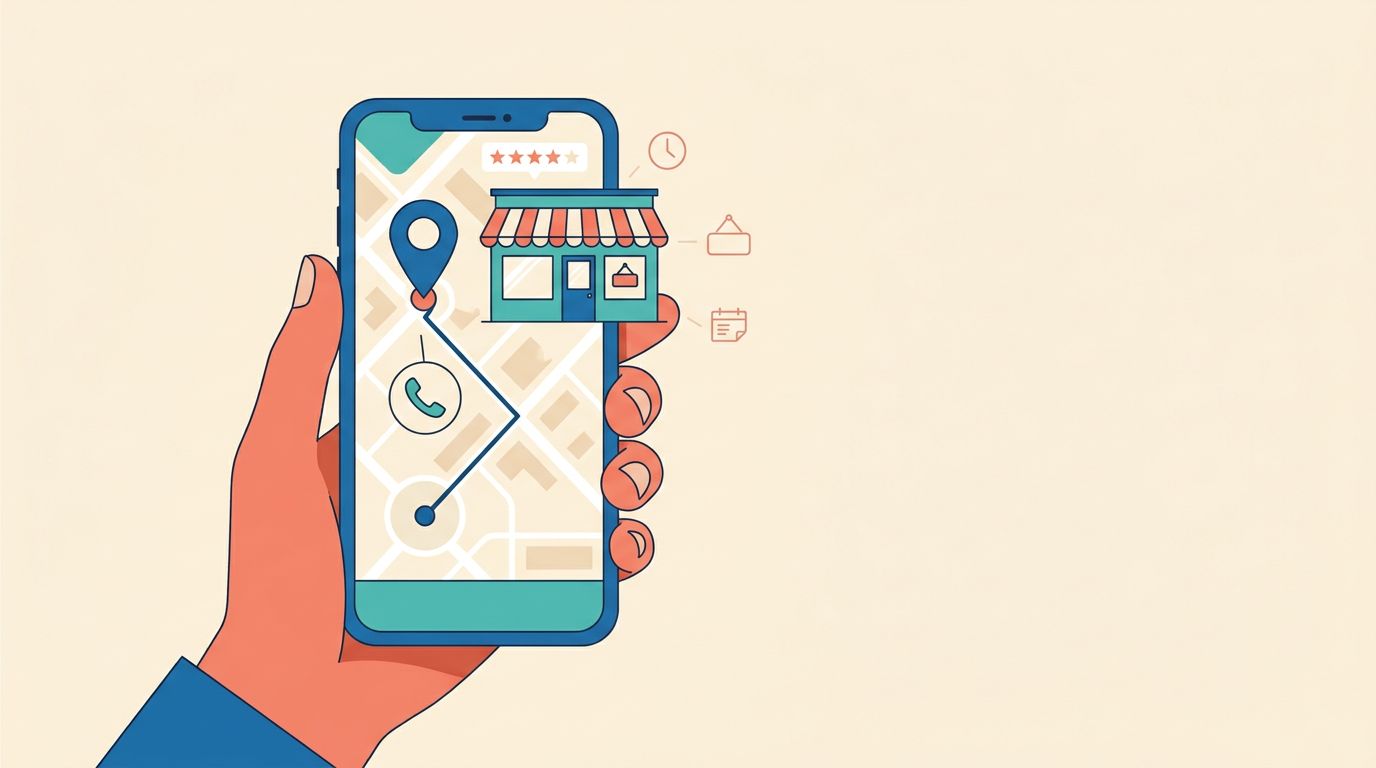
A quiet phone can create instant concern, especially when calls drive a large share of your revenue. When fewer profile-generated calls appear, don’t change categories, rewrite your description, or blame SEO before checking what changed.
A decline can reflect reporting changes, phone-path failures, lower visibility, or conversion friction between a search and a real conversation. Audit those four areas in order, using evidence instead of assumptions.
Key Takeaways
- A decline in Google Business Profile calls may reflect fewer call-button clicks, fewer connected calls, reporting changes, phone-path failures, lower visibility, or conversion friction.
- Start with a 28-day comparison and review GBP Performance alongside phone records, GA4, Search Console, and CRM data to separate demand changes from tracking or technical issues.
- Test every listing like a customer would, including the phone number, hours, routing, voicemail, tap-to-call links, and after-hours handling before changing SEO elements.
- Stable profile views with fewer calls usually point to a contact-path or conversion issue, while declines across views, calls, website clicks, and directions may require a broader visibility review.
- Replace lost native call history with consistent call tracking, UTM tags, CRM source fields, and reporting for answered calls, qualified leads, appointments, and revenue.
When Google Business Profile Calls Decline, Start With the Data
The decline can have more than one cause. First, determine whether you saw fewer call-button taps, fewer connected calls, or fewer qualified phone leads.
Google removed call history, not the ability to call
The former Google My Business interface no longer provides customer-level call history reports. Google removed Business Profile chat and individual call history on July 31, 2024. The call button still works in Search and Google Maps, but businesses can’t review a customer-by-customer call log inside the profile. Google’s documentation confirms the removal of Business Profile call history.
The current Performance report still includes Calls, but treat that figure as aggregate call-button clicks, not completed conversations. A person can tap Call, hang up, hit a bad connection, or reach voicemail. Another customer may see your number and dial it manually, which the report may not capture.
A measurement change can make a chart look alarming without proving demand disappeared. If the decline is a sudden cliff rather than a gradual pattern, verify the definition and date range before treating it as a customer-loss problem.
Give every report one clear job
Use a 28-day comparison rather than reacting to one slow day. Compare the same period last year when seasonality matters, especially for home services, healthcare, hospitality, and other demand-driven businesses.
| Data source | Access needed | What it can confirm |
|---|---|---|
| GBP Performance | Business Profile owner or manager access | Call clicks, website clicks, direction requests, and business activity trends |
| Phone system or carrier records | Admin access to your phone platform | Connected calls, missed calls, abandoned calls, and call times |
| GA4 | Analytics access | Website sessions and conversions after profile website clicks |
| Google Search Console | Verified website property | Organic search queries, landing page clicks, mobile issues, and indexing problems |
| Call tracking platform | Account access | Source, call duration, recording settings, lead outcome, and routing details |
Google’s guide to Business Profile performance and insights is useful for reviewing profile interactions. Your phone records, not profile click totals, confirm whether calls actually connected.
Rule Out a Broken Phone Path First
Before diagnosing visibility, confirm that customers can reach you without hitting a dead end. A small technical issue can erase calls while the listing still receives views.
Test the listing like a customer would
Search your business name on mobile devices in Google Search and Google Maps. Then test a service query in Google Maps from your actual service area, such as “emergency plumber near me” or “roof repair in [city].”
Check the phone numbers, hours, primary category, appointment link, website link, and map pin. Tap the call button and listen for the correct greeting, routing menu, voicemail, or live answer.
For multi-location businesses, test every listing separately. One branch may route callers to an outdated department, the wrong number, or an unattended voicemail box.
Don’t make broad profile edits during this review. Changing your business name, category, address, or service area without a clear reason can make diagnosis harder.
Compare call clicks with actual call records
Pull a few matching dates from GBP Performance and your phone system. Match the time zone, location, and number. Then look for patterns:
- Call clicks stayed steady, but actual inbound calls dropped.
- The number of missed or abandoned calls increased.
- Calls arrive after hours and route to voicemail.
- A new phone tree, receptionist schedule, or forwarding rule created friction.
- A tracking number was removed or replaced during a website or listing update.
Google doesn’t state that unanswered calls to a standard listing create a direct local-ranking penalty. However, missed calls still cost revenue and can reduce customer trust. A caller who reaches silence is unlikely to wait around and compare your reviews.
Check Visibility Before Changing Your SEO
A decline in profile call clicks does not always reflect lower local SEO rankings. Look at the other actions around the same dates before concluding that your map visibility has fallen.
Read the pattern across profile actions
If views, website clicks, and direction requests on Google Maps stay stable while call clicks fall, the issue is more likely conversion friction, a call-path problem, or changing customer behavior.
If views, calls, website clicks, and direction requests all dropped together, investigate visibility issues, search demand, competing profiles, business hours, recent listing edits, and map citations. A seasonal slowdown can also affect every metric at once.
Review recent promotions, local events, and social media activity. Compare lead activity from Google Ads and Local Services Ads separately from organic profile activity. If a campaign ended or your business paused a popular offer, a call decline may reflect lower demand rather than a profile problem.
Stable profile visibility with fewer calls usually points to a contact-path or conversion issue before it points to a ranking loss.
Use Search Console for website context
Google Search Console does not report Maps positions or call button taps. It does show website visibility and organic traffic that support local search results. Search-result changes such as AI Overviews can also alter clicks without proving a ranking decline.
Compare the last 28 days against the previous period. Review clicks, impressions, average position, and top pages. Filter by mobile because that is where many local customers make contact decisions.
If your key local pages lost clicks and impressions while profile actions also fell, you may have a broader SEO issue. Check indexing, broken pages, weak title tags, slow mobile pages, and recent site changes.
Google explains that local rankings are based on relevance, distance, and prominence. You cannot control distance, but you can improve listing signals, strengthen local pages, encourage review engagement, and build a better reputation over time.
Remove Friction Between Search and a Real Conversation
A profile can receive plenty of attention and still fail to produce phone leads. Customers compare photos, reviews, hours, services, pricing signals, and response options in seconds.
Make mobile contact options easy to use
Open your profile’s website link on cellular data, not only office Wi-Fi. Check how quickly the page loads and whether the number appears before a visitor has to scroll.
Your contact path should be simple:
- Keep a tap-to-call number visible in the mobile header or near the first service details.
- Remove pop-ups that cover the number or make the page difficult to close.
- Keep forms short, especially for urgent services.
- Match your business name, address, phone number, and hours across your profile and website.
- Confirm that after-hours callers hear a useful message and know what to do next.
A page that loads slowly or buries contact details wastes the search intent your profile already earned.
Give customers a reason to choose you
High views with low calls and low conversion rates can mean the profile is visible but not persuasive. Add current photos, accurate services, clear hours, and a description that explains what makes your business relevant to local customers.
Customer reviews matter here. Good review engagement means asking for honest feedback, responding professionally, and monitoring activity without scripting language or gating reviews. A thoughtful response to a concern may not change rankings by itself, but it can build customer confidence for the next visitor.
AI Overviews and changing search layouts can also affect how people move through results. Searchers may visit your website, message you, or compare options before calling. Chat bots can capture questions from website visitors, while voice receptionists can handle after-hours calls. Track those outcomes separately so they don’t disappear from your lead reporting.
Replace Lost Call History With Better Attribution
The loss of native call history reports means businesses need a more complete system for tracking phone leads. Older Google My Business documentation may still use the former name for the same listing product, not a separate platform. A phone number alone cannot show which calls were answered, qualified, booked, or lost.
Use call tracking without creating listing confusion
A third-party call-tracking platform can record the source, location, duration, agent, missed-call status, and lead outcome of incoming calls, replacing the individual detail Google no longer provides. For a useful overview of options after the change, see Invoca’s guide to Business Profile call-tracking alternatives.
Do not casually replace published phone numbers across every platform. Keep the primary number documented and accurate across the profile, website, directories, and map citations. Map each tracking number to the correct location and campaign.
If you record calls, confirm that your process follows applicable consent and privacy requirements. A tracking platform should improve customer service and reporting, not create risk.
Connect GBP, GA4, and your CRM
Add UTM tags to the website link in your profile, and separate Google Ads traffic from profile-generated leads. Review profile website clicks against GA4 sessions, form submissions, booking events, and click-to-call events from the site.
Your CRM should also track lead source and outcome. A useful monthly report includes:
- GBP call clicks
- Tracked inbound calls
- Answered and missed calls
- Qualified leads
- Booked appointments
- Revenue or estimated pipeline value
Ask staff to record how callers found you when practical. A customer may first see a local service page, return later through a branded search, then call directly. Last-click attribution often misses that path.
A 30-Day Recovery Plan for Declining Calls
For local business owners, the right response when Google Business Profile calls decline is a focused review with assigned owners and measurable checkpoints. Avoid changing ten things at once because you will not know what helped.
- Days 1 through 3: The marketing lead exports GBP Performance data, pulls phone records, and tests every location’s call route in Google Maps and on mobile. Checkpoint: Every location has a documented baseline and completed call-path test.
- Days 4 through 7: The operations owner fixes incorrect numbers, forwarding errors, missed-call handling, after-hours greetings, and broken tap-to-call links. Checkpoint: All test calls reach the right team during business and after-hours scenarios.
- Week 2: The local marketing owner reviews profile accuracy, website mobile speed, local landing pages, service details, review engagement, and contact-page visibility. Checkpoint: The checklist is complete for every location, with no unresolved accuracy issues.
- Week 3: The CRM owner adds call tracking or improves CRM source fields. The team also sets up a clear missed-call follow-up process for fast lead response. Checkpoint: Every inbound call has a source field, and every missed call receives documented follow-up.
- Day 30: The reporting owner compares call clicks, answered calls, qualified phone leads, website conversions, and missed-call rates against the original baseline. Checkpoint: A location-by-location report shows the change from baseline for each metric.
If multiple locations, tracking tools, and reporting systems are involved, a No-cost discovery call can help define the audit scope and priorities. For a focused review of listings, call routes, and conversion data, Schedule Call.
Frequently Asked Questions
Does Google Business Profile still show call data?
Yes, the current Performance report still shows aggregate call-button clicks. It does not provide the customer-level call history that Google removed on July 31, 2024, and clicks do not confirm that a call connected.
What should I check first when Google Business Profile calls decline?
Test the listing and phone path on mobile in Google Search and Google Maps before changing your profile or SEO. Confirm the number, hours, routing, voicemail, tap-to-call links, and after-hours handling for every location.
Do fewer profile calls mean my local rankings dropped?
Not necessarily. If profile views, website clicks, and direction requests remain stable while calls decline, investigate conversion friction, call routing, and customer behavior before assuming a ranking loss.
How can I track calls after Google removed call history?
Use phone-system records or a call-tracking platform to measure connected, missed, abandoned, and qualified calls. Connect that data with GBP, GA4, UTM tags, and your CRM so you can track leads through appointments and revenue.
How long should I monitor changes after fixing the call path?
Use the original baseline and compare results after a defined period, such as 30 days. Review call clicks, answered calls, qualified leads, website conversions, and missed-call rates rather than relying on one slow day.
The Phone Is Only One Part of the Customer Journey
A quiet phone does not automatically mean your rankings disappeared. The data or call route may have changed, and customers may have chosen another contact option. AI Overviews and other search interfaces can alter the path before contact, without signaling an SEO failure.
Treat call button clicks as an early signal, then compare them with actual phone records, website conversions, and CRM outcomes. This replaces guesswork with a clearer view of where profile-generated calls and other leads are being lost.