Maximize Your Service Business Visibility Across Every Neighborhood in Your City
Ranking evenly across an entire city is challenging due to Google’s proximity-based local search algorithm, which prioritizes businesses closer to the searcher’s location. To improve visibility citywide, focus on maintaining an accurate Google Business Profile, creating genuine service and location pages, and building local prominence through reviews and relevant links. Consistent, honest information and targeted local SEO efforts will help connect your business with customers throughout your service area.
Your service business may cover an entire city, but rankings can shift between neighborhoods. Google proximity ranking helps explain these differences. Near me searches and broader local search results can vary by location.
There’s no guaranteed way to rank across an entire city. An accurate Google Business Profile can support visibility on Google Maps. It can’t guarantee coverage across your service area.
Local SEO starts with helping Google and customers understand your services. Then build stronger evidence of your local experience.
Key Takeaways
- Google proximity ranking depends partly on the searcher’s location, so a business may not rank equally across an entire city. No profile setting or payment guarantees citywide visibility.
- Keep your Google Business Profile accurate and complete, with genuine services and service areas you actually cover. Listing a place doesn’t guarantee rankings there.
- Build useful service and location pages with original details about your work and coverage. Avoid copied city pages or implying you have an office where you don’t.
- Support local prominence with honest reviews, relevant links, and consistent business information. Track inquiries and booked work by area, not rankings alone.
How to Get Your Service Business to Rank Across Your Entire City
Broader visibility comes from strengthening the local SEO signals you can influence. Claiming every neighborhood on your profile won’t create equal coverage, but accurate information helps Google understand where you work.
Make your Google Business Profile accurate and complete
Use one Google Business Profile for your business’s real central base. If customers don’t visit that location, hide the address rather than displaying it publicly. Avoid virtual offices or rented addresses used only to create listings.
Choose the most accurate primary category to help Google understand your services on Google Maps. Add genuine services, current contact details, accurate hours, and real photos. Avoid keyword stuffing in profile fields.
Google allows up to 20 named service areas, rather than radius settings. Set your service area to places you genuinely serve, and keep coverage within about two hours’ driving time. Listing an area doesn’t guarantee rankings there.
Understand how Google proximity ranking affects each search
Google’s local ranking guidance identifies three ranking factors: relevance, distance, and prominence. Relevance is how closely your business matches the search. Distance considers location, while prominence reflects how well-known your business is.
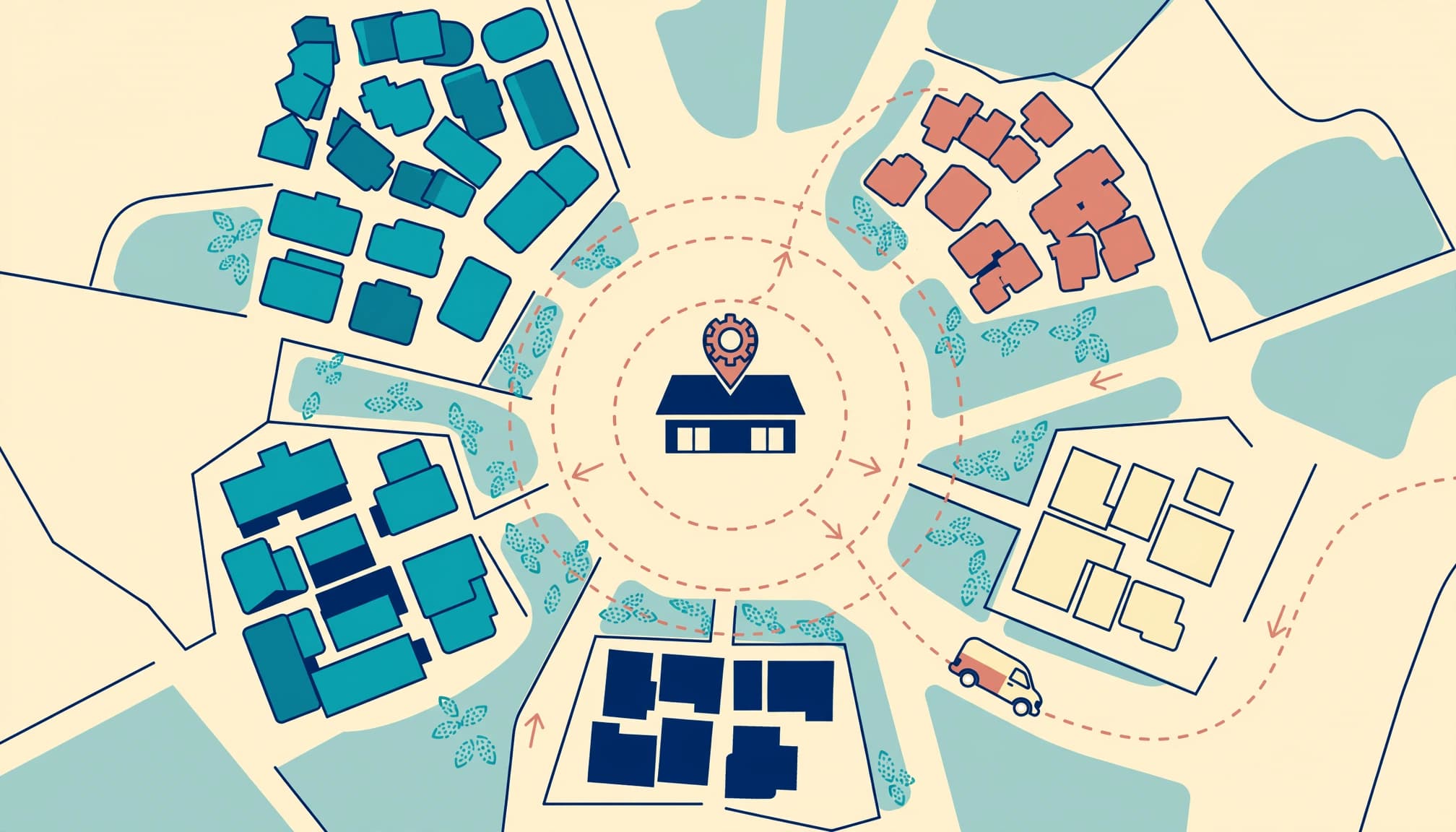
Google proximity ranking matters because distance depends heavily on the searcher’s location or the place named in the search. Google Maps and local pack visibility can differ across local search results, even for identical search queries or near me searches. Local pack placement can also vary as the searcher’s location changes.
The 2021 Vicinity Update highlighted distance as one factor, but it isn’t a complete explanation of every current change to Google’s algorithm. You can’t fully control distance or expect even local rankings across a large city.
Google doesn’t offer a payment option or request process for better local rankings. Focus your effort on accurate categories, helpful content, and a stronger reputation.
Build local relevance with service pages people actually need
Your website should help customers find the right service, understand your work, and contact you quickly. Give each major service its own page, shaped around customer search intent, with clear scope, availability, contact options, and links to related services. Website pages can improve visibility in organic results, while the local pack is influenced by local SEO signals and your Google Business Profile.
Create a few useful city pages, not dozens of name swaps
Create location-specific pages only for important areas you genuinely serve and can describe meaningfully. Prioritize places where you complete work and have useful local information about your service area.
Include neighborhood coverage, relevant property types, common service problems, job photos, and customer feedback from that area. Weather concerns or permit information can help when they affect the service.
Google’s spam policies on doorway abuse caution against substantially similar pages targeting cities or regions. Swapping city names across copied pages can become keyword stuffing without adding value. Never imply you have an office where none exists.
Make every page easy to trust and act on
Give each location-specific page a unique title and headline, clear coverage details, relevant photos, and genuine testimonials or case studies. Add internal links so visitors can find related information. These details help a local business show customers what makes its work relevant to their area.
Put a tap-to-call number or booking option near the top. Check mobile performance with Google PageSpeed Insights, then address oversized images, intrusive pop-ups, or scripts that delay useful content.
For help improving your local pages, call EarningCoach Marketing at 732-523-2600 or Schedule Call for a no-cost discovery call.
Grow local prominence with reviews, links, and steady updates
Genuine reviews and legitimate links can support prominence. Keep business details accurate across your website, Google Business Profile, Yelp, Facebook, and relevant directories. Consistent local citations help people find matching details across platforms. For a hidden-address business, don’t publish a home address simply to match directory fields.
Prioritize useful listings and real relationships. A relevant chamber of commerce listing or local organization link can provide context and discovery opportunities, while relevant local backlinks can strengthen local authority. Prioritize local backlinks over bulk directory submissions, which don’t guarantee stronger rankings.
Build a manageable weekly routine:
- Ask recent customers for honest customer reviews and reply thoughtfully to feedback. Monitor review velocity as part of your online reputation, without treating any single metric as a ranking guarantee.
- Share a recent job photo through Google Posts and correct outdated service or business information.
- Review calls, form submissions, and booked work by service area.
Use Google Search Console to check which pages receive impressions and clicks, and audit local citations for accuracy. For local SEO, compare search visibility in Google Maps across locations. Optional geo-grid tracking can show where visibility varies. Use geo-grid tracking as context, not a substitute for lead measurement. Behavioral signals don’t prove a specific ranking effect, and ranking factors are varied.
High impressions with few clicks suggest reviewing titles and descriptions. Clicks without inquiries call for a closer look at service details and contact options.
Track booked work by area, not rankings alone. Visibility matters most when it connects your business with qualified customers.
Frequently Asked Questions
How long does local SEO take to improve visibility?
There isn’t a dependable timeline for every business. Competition, your starting position, and the improvements required all affect local rankings, so compare results over time rather than expecting an immediate citywide change.
Can Local Services Ads help while organic visibility grows?
For eligible businesses, Google Local Services Ads can provide another route to customer inquiries. They are paid placements, and buying them doesn’t improve your unpaid local ranking.
Should I add city names or services to my business name?
Use the name your business uses in the real world. Adding location or service keywords solely to influence rankings can violate Google’s naming guidelines and put your profile at risk.
Why can my website rank differently from my Maps listing?
Google Maps and organic results aren’t identical systems, so your Google Business Profile may have different visibility in the local pack. A useful service page can appear in organic search even when distance limits your profile’s visibility.
Build Wider Visibility With a Stronger Local Foundation
You can serve the whole city without appearing equally in every neighborhood. Local rankings on Google Maps still reflect Google’s distance limits, so focus on relevance and trust.
Keep your Google Business Profile accurate and your website content relevant. Build trust, then assess coverage and booked work realistically to guide your local SEO improvements.
Want to know where you are not visible in your service areas? Email: mdrobes@earningcoachmarketing.com with the subject line: “Proximity Audit”. We will prepare this free and forward to you at the email you provide.